
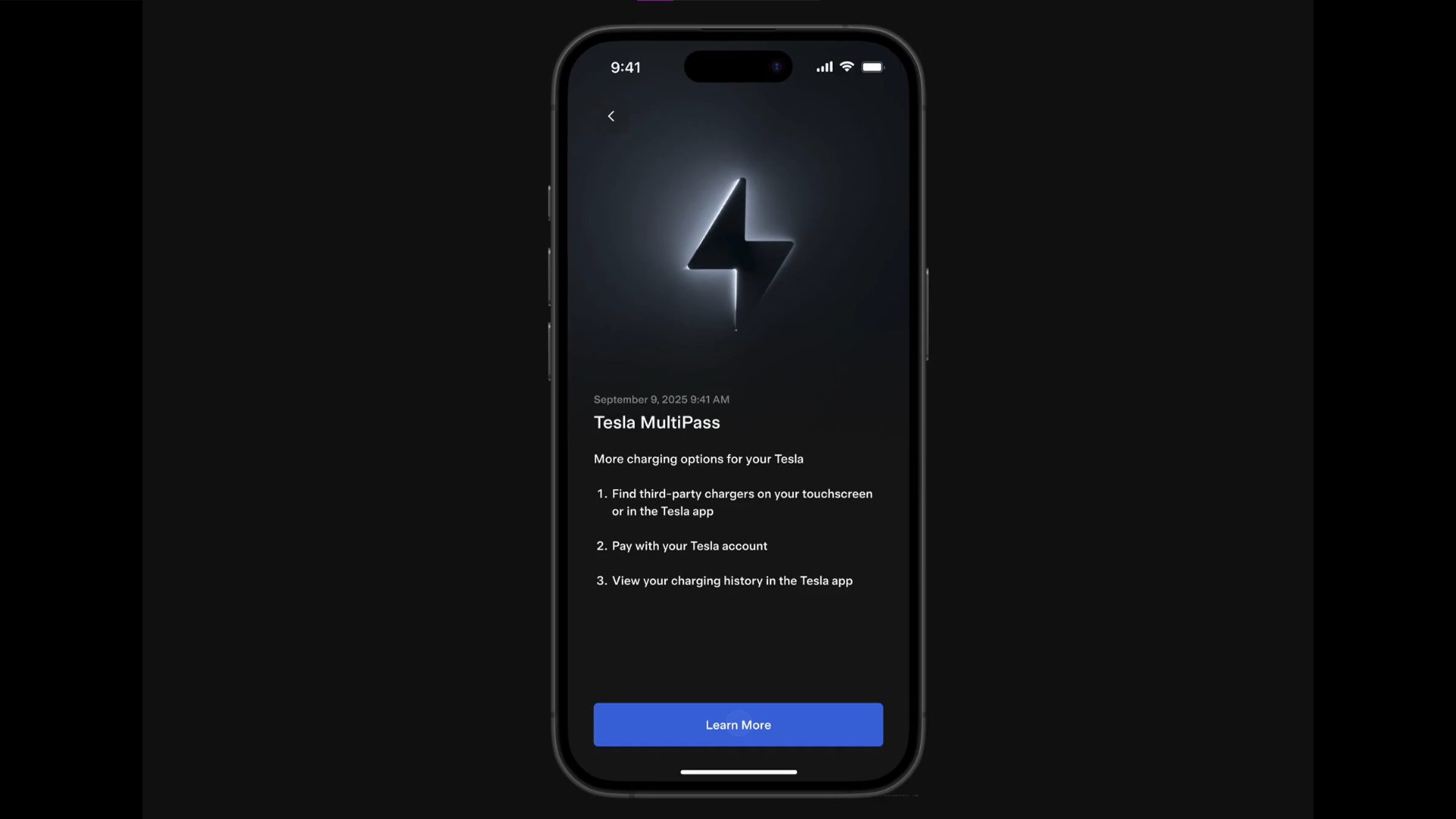
Tesla has recently rolled out a new feature called MultiPass, which allows Tesla owners to utilize their Tesla account to charge at third-party EV chargers. This innovation was announced by the official Tesla Charging account on X, known as @TeslaCharging. MultiPass enables owners to activate charging at non-Tesla stations directly from the Tesla app or by simply tapping their Tesla key card. Additionally, the Tesla app conveniently tracks charging sessions and history, providing drivers with a unified platform to manage all their EV charging activities.
Initially launched in the Netherlands, MultiPass is set to expand to more locations and countries in the near future. This development comes as Tesla has also opened up its Supercharger network to non-Tesla EVs, including brands like Porsche and Audi. By introducing MultiPass, Tesla aims to streamline the process of using third-party chargers for its own drivers, offering a level of convenience similar to that of using a Supercharger.
While third-party EV chargers may not provide certain Supercharger-exclusive features such as automatic battery preconditioning, automatic parking, and virtual queuing, the ability to activate and pay for charging sessions using the existing Tesla account represents a significant enhancement in user experience.
As Tesla continues to expand its global Supercharger network aggressively, MultiPass plays a crucial role in positioning the Tesla app as a central hub for EV charging. By bridging the gap between Tesla’s network and other charging stations, the company is providing drivers with increased flexibility while keeping them within the Tesla ecosystem.
Although MultiPass is currently limited to the Netherlands, Tesla has confirmed plans for broader expansion, ensuring that this added convenience will soon be available in more markets. This development reflects Tesla’s ongoing commitment to innovation and customer satisfaction in the electric vehicle industry. The world of cryptocurrency has been gaining more and more attention in recent years, with Bitcoin leading the charge as the most well-known and widely used digital currency. However, as the cryptocurrency market continues to expand, a new player has emerged on the scene: Ethereum.
Ethereum is a decentralized platform that enables developers to build and deploy smart contracts, which are self-executing contracts with the terms of the agreement directly written into the code. This allows for the creation of decentralized applications (DApps) that run on the Ethereum blockchain, offering a wide range of functionalities beyond just being a digital currency.
One of the key features of Ethereum is its ability to support the creation and deployment of custom tokens, known as ERC-20 tokens. These tokens can represent assets, shares, or even virtual goods, and can be used for a variety of purposes such as crowdfunding, voting, or in-game currency. This has led to a proliferation of token sales and initial coin offerings (ICOs) on the Ethereum platform, as projects seek to raise funds by issuing their own tokens.
Another important aspect of Ethereum is its use of smart contracts, which are self-executing contracts with the terms of the agreement directly written into the code. This eliminates the need for intermediaries and can automate complex processes, such as the transfer of assets or the execution of agreements. Smart contracts are stored on the Ethereum blockchain and are executed by the network of nodes, ensuring transparency and security.
Ethereum also introduced the concept of decentralized autonomous organizations (DAOs), which are organizations run by smart contracts and governed by their members. DAOs allow for decentralized decision-making and fund management, with all actions recorded on the blockchain for transparency.
One of the most exciting developments on the Ethereum platform is the upcoming upgrade to Ethereum 2.0, also known as Serenity. This upgrade aims to improve scalability, security, and sustainability by transitioning from a proof-of-work consensus mechanism to a proof-of-stake mechanism. This will reduce energy consumption, increase transaction throughput, and make the network more secure against attacks.
Overall, Ethereum has had a significant impact on the cryptocurrency space, enabling the creation of innovative DApps, smart contracts, and decentralized organizations. With the upcoming upgrade to Ethereum 2.0, the platform is poised to continue evolving and growing, solidifying its position as a key player in the world of blockchain technology.