
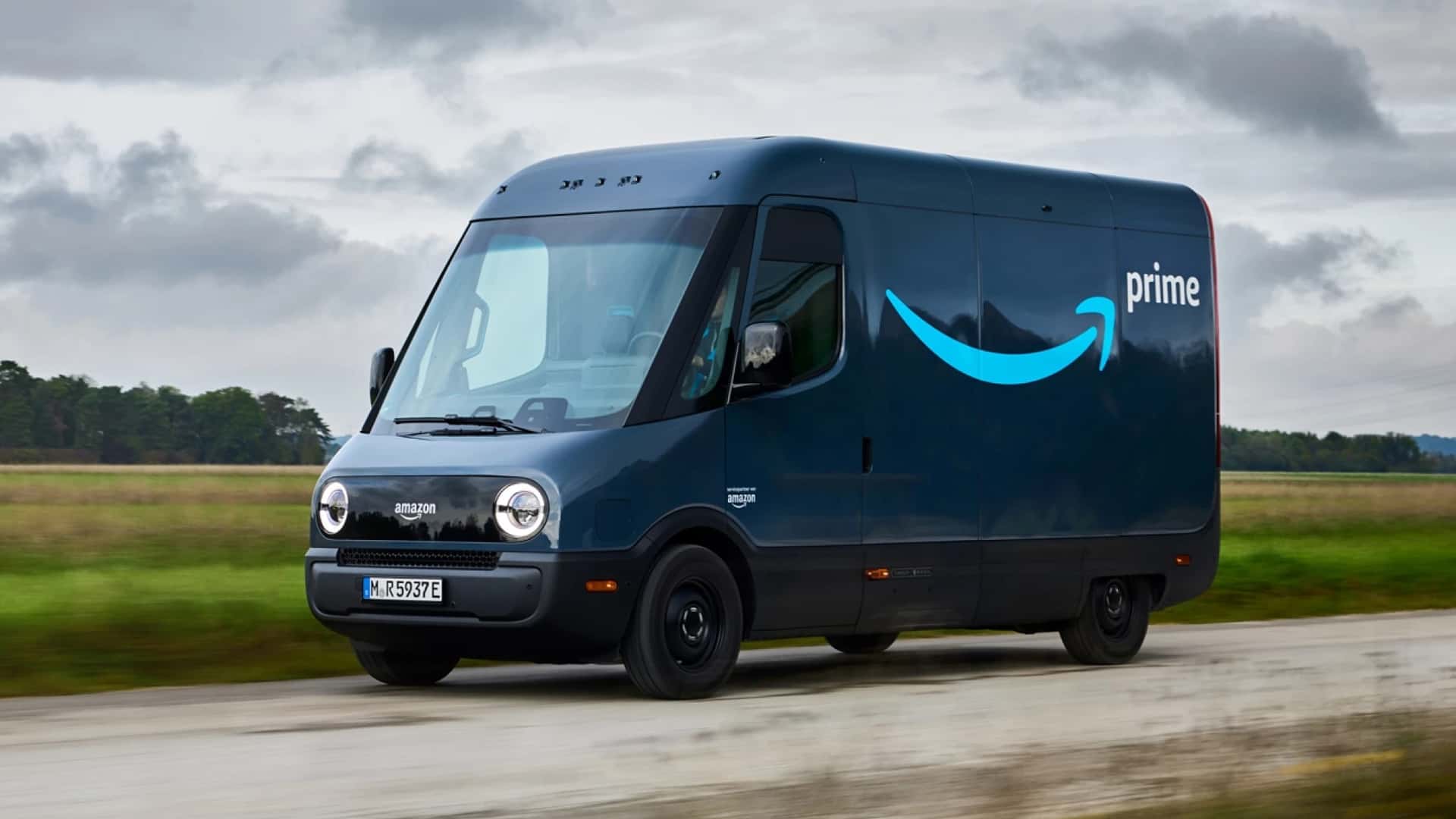
Amazon, the e-commerce giant that has become a household name for its wide range of products and services, has reached an important milestone in its journey towards vehicle electrification. With over 50,000 electric delivery vans now part of its global fleet, the company is making significant strides towards its goal of having 100,000 electric vehicles on the road by 2030.
The majority of Amazon’s battery-powered vans are provided by Rivian, a California-based EV startup that has delivered over 30,000 custom-built Electric Delivery Vans (EDV) to Amazon as part of their collaboration. These vans are specifically designed for parcel delivery, ensuring efficient and eco-friendly transportation of packages.
In addition to the Rivian vans, Amazon has also incorporated thousands of Mercedes-Benz commercial EVs into its fleet. These vehicles, manufactured in Germany and Spain, have been deployed in Europe, where Amazon has seen significant growth in its EV fleet. The expansion of its electric vehicle fleet in Europe includes nearly 5,000 Mercedes-Benz vans, which have been operating in countries like Austria, France, Germany, Italy, and the United Kingdom.
To support its growing fleet of electric vehicles, Amazon has invested in building tens of thousands of charging points across its facilities globally. In Europe alone, the company has thousands of charging stations to ensure that its electric vans and trucks remain powered up and ready to go. In the United States, Amazon operates the largest private EV charging network, with over 17,000 stalls available at delivery centers nationwide.
In addition to vans and trucks, Amazon has also introduced over 100 electric trucks from Mercedes-Benz in Europe, with plans to double this fleet by the end of the year. The company has also incorporated electric cargo bikes, mopeds, and pushcarts into its operations, particularly in European cities where narrow streets and low-emission zones require alternative modes of transportation.
Overall, Amazon’s commitment to electrifying its delivery fleet demonstrates a significant step towards reducing carbon emissions and promoting sustainable transportation practices. With a strong focus on expanding its electric vehicle fleet and charging infrastructure, Amazon is paving the way for a greener future in the e-commerce and logistics industry. The world of technology is constantly evolving, with new advancements and innovations being made every day. One of the most exciting areas of development in recent years has been in the field of artificial intelligence (AI). AI has the potential to revolutionize our lives in countless ways, from improving healthcare and transportation to transforming the way we work and communicate.
One of the most promising applications of AI is in the healthcare industry. AI-powered tools and algorithms have the potential to improve the accuracy and efficiency of medical diagnoses, leading to better patient outcomes. For example, AI can analyze medical images such as X-rays and MRIs to detect signs of disease or injury that may be missed by human doctors. This can lead to earlier detection and treatment of conditions, ultimately saving lives.
AI is also being used to develop personalized treatment plans for patients based on their individual genetic makeup and medical history. This can lead to more effective treatments with fewer side effects, as well as better outcomes for patients. In addition, AI-powered robots are being used to assist surgeons during complex procedures, increasing precision and reducing the risk of complications.
In the transportation industry, AI is being used to improve safety and efficiency. Self-driving cars, for example, rely on AI algorithms to navigate roads and avoid accidents. These vehicles have the potential to reduce traffic congestion, lower emissions, and save lives by eliminating human error. AI is also being used to optimize traffic flow and improve public transportation systems, making it easier for people to get around cities.
In the workplace, AI is changing the way we work and communicate. Chatbots powered by AI are being used to automate customer service interactions, freeing up human agents to focus on more complex tasks. AI algorithms are also being used to analyze large amounts of data and make predictions about future trends, helping businesses make more informed decisions. Virtual assistants like Siri and Alexa are becoming increasingly popular, helping people manage their schedules, search for information, and control smart home devices with just their voice.
While the potential benefits of AI are vast, there are also concerns about its impact on jobs, privacy, and security. Some worry that AI-powered automation will lead to job losses in certain industries, while others are concerned about the ethical implications of using AI to make decisions that affect people’s lives. As AI becomes more integrated into our daily lives, it will be important for policymakers, businesses, and individuals to consider these issues and ensure that AI is used responsibly and ethically.
Overall, the future of AI is bright, with the potential to revolutionize almost every aspect of our lives. By harnessing the power of AI, we can improve healthcare, transportation, communication, and more, making our world smarter, safer, and more efficient. It will be exciting to see how AI continues to evolve and shape the world in the years to come.