
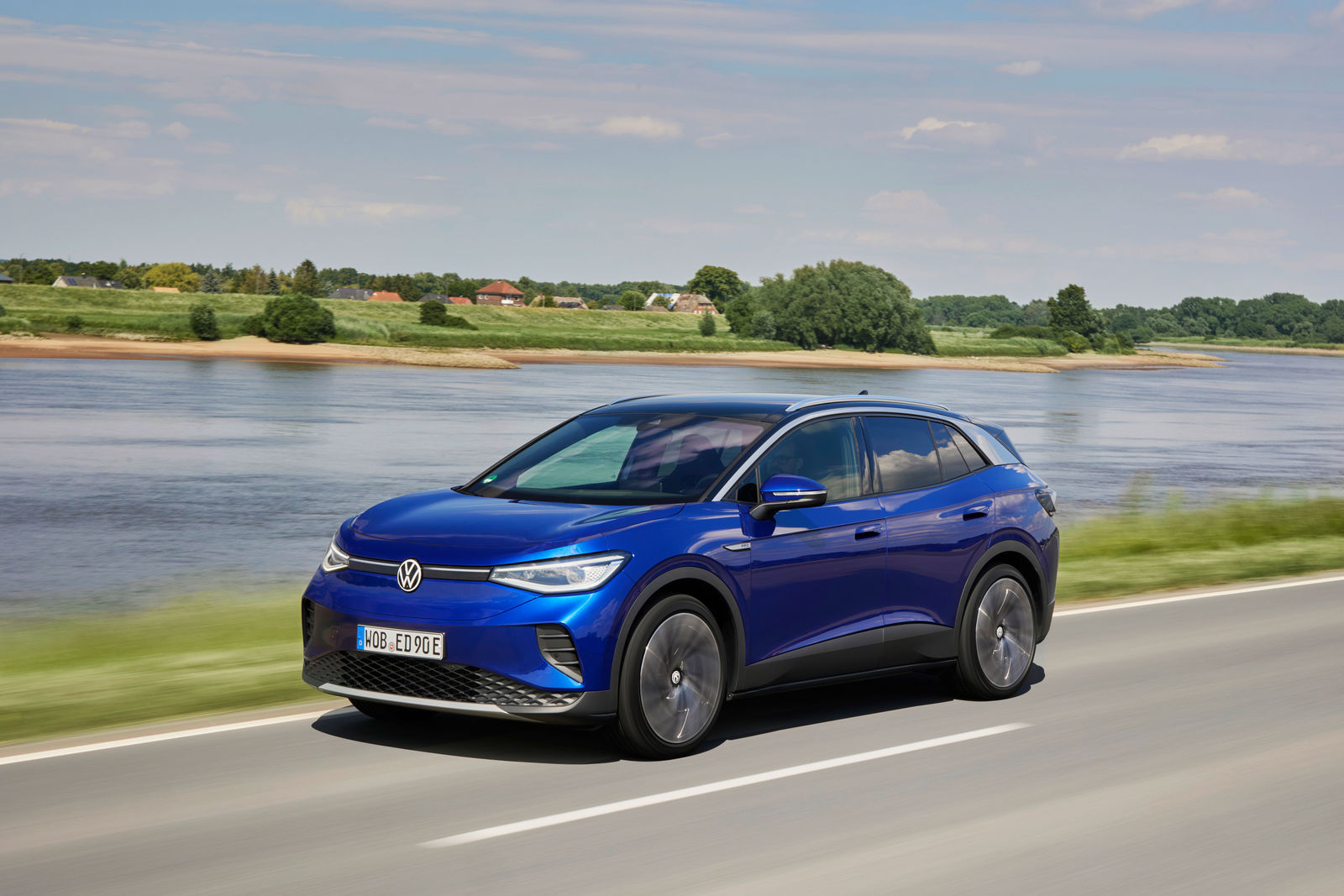
Volkswagen has recently made a significant announcement regarding the future production of its flagship electric SUV, the ID.4. The automaker has revealed that it will cease assembly of the ID.4 at its Chattanooga production facility in mid-April 2026. This decision marks a strategic shift in Volkswagen’s North American strategy, as the company reallocates resources towards higher-volume, gas-powered models.
The focus at the Chattanooga plant will now be on the launch of the all-new, second-generation 2027 Volkswagen Atlas. Production for the redesigned three-row SUV is scheduled to commence this summer, with units expected to arrive at dealerships by the fall. The Volkswagen Atlas has consistently been one of the brand’s top sellers in the U.S., surpassing the ID.4 in sales in recent years.
The primary reason cited by Volkswagen for halting ID.4 production is the “unpredictability” of the current electric vehicle market. Despite being a cornerstone of VW’s electric ambitions in the U.S., the ID.4 has faced challenges in competing with rivals such as the Tesla Model Y. In the final quarter of 2025, ID.4 sales reportedly declined by over 60 percent.
Volkswagen emphasized the need for measured decisions to navigate the volatile EV market landscape. However, customers interested in purchasing an ID.4 need not worry just yet. The existing inventory of the 2026 model year is expected to satisfy customer demand well into 2027.
Furthermore, Volkswagen hinted at a “future version” of the ID.4 planned for the North American market. While no specific timeline or production location was provided, there are speculations that the model may be rebranded under the “Tiguan” nameplate as part of a broader shift away from alphanumeric naming conventions.
Employees at the Tennessee plant have been informed of the production shift. Workers currently assigned to the ID.4 lines will be reassigned to other roles within the facility, primarily to support the ramp-up of the new Atlas. Additionally, Volkswagen is exploring the introduction of another high-volume vehicle tailored for U.S. consumers, although it has not confirmed whether the new model will be electric, hybrid, or gas-powered.
In conclusion, Volkswagen’s decision to halt ID.4 production reflects the company’s strategic response to the challenges and opportunities in the evolving automotive market. The shift towards gas-powered models and the upcoming launch of the new Volkswagen Atlas signify Volkswagen’s commitment to meeting consumer demand and adapting to market dynamics.