
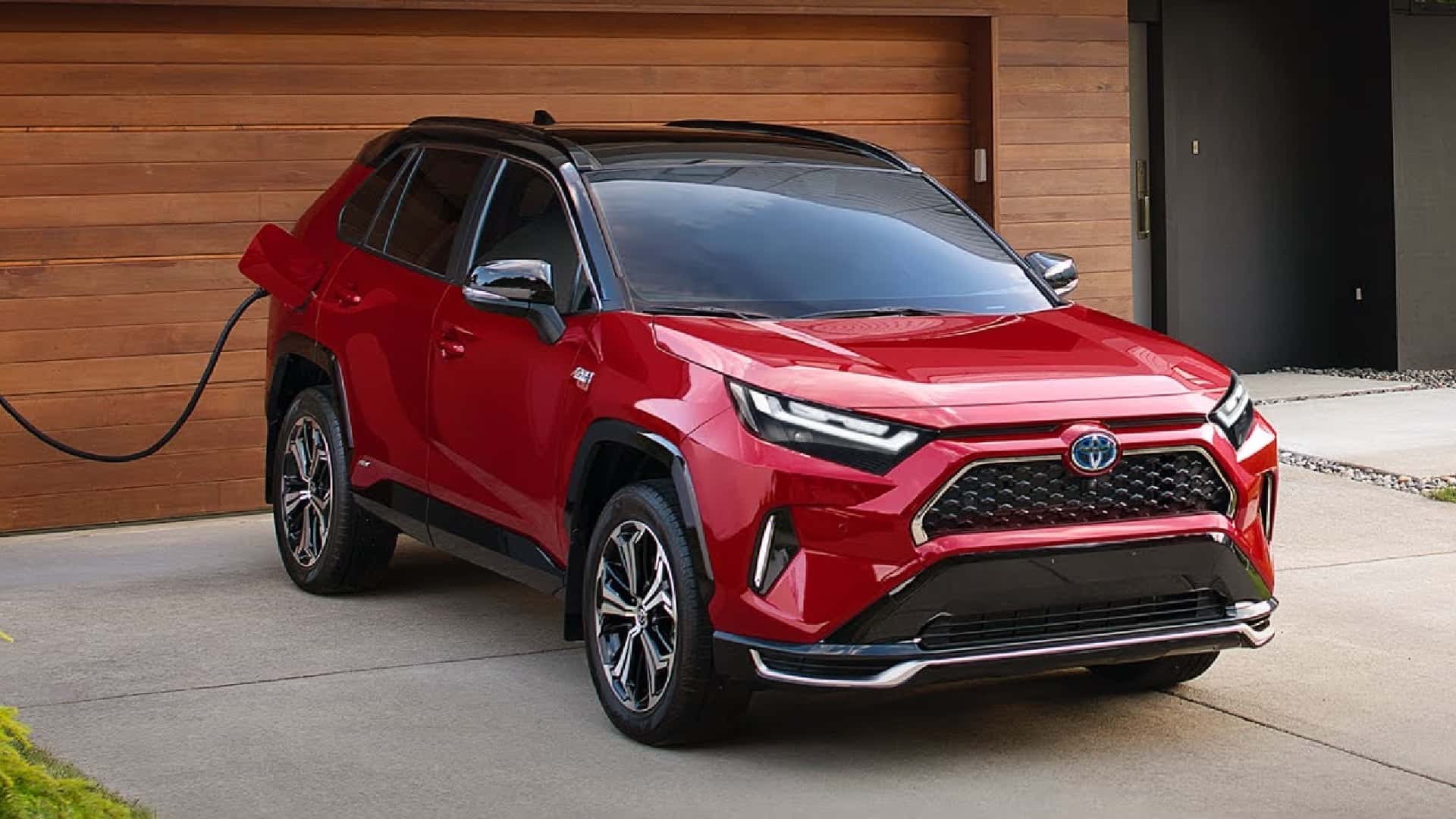
A new peer-reviewed study has shed light on the charging habits of American and Canadian plug-in hybrid electric vehicle (PHEV) owners, revealing a stark difference in behavior compared to their European counterparts. Previous data collected in Europe suggested that PHEV owners rarely utilized the electric powertrains of their vehicles to their full potential. However, the new study, conducted by Karim Hamza and Ken Laberteaux from Toyota Research Institute North America (TRINA), analyzed the charging patterns of over 6,000 PHEV owners in the U.S. and Canada, showing that the majority of these owners do take advantage of their cars’ electric driving capabilities.
Traditionally, automakers have been hesitant to disclose information about PHEV charging statistics, but Toyota has taken a different approach by allowing the researchers to analyze anonymized data from their Toyota RAV4 Prime and Lexus NX 450h+ vehicles. The findings revealed that, on average, Toyota PHEV owners plugged in their vehicles on seven out of 10 driving days, while Lexus owners did so between eight and nine times per 10 driving days. This translates to a charging rate of 70% for Toyota RAV4 PHEV drivers and 80-90% for Lexus PHEV owners. In contrast, only 9% of Toyota drivers and 4% of Lexus drivers in the sample rarely plugged in their electrified crossovers.
These findings present a significant contrast to the charging habits of European PHEV drivers, who have been shown in previous studies to rarely charge their vehicles. The discrepancy may be attributed to factors such as government incentives for company purchases of PHEVs in Europe, leading to vehicles being operated by individuals who may not have access to convenient charging facilities or the motivation to utilize the electric capabilities of their cars.
While the number of North American PHEV drivers who rarely plug in their vehicles was low, the researchers are keen to investigate the underlying reasons behind these figures. They have posited two hypotheses, which echo the concerns of some individuals hesitant to adopt electric vehicles (EVs): the lack of convenient home charging options and the potentially higher cost of electricity compared to gasoline. As a PHEV owner, the challenges of charging while traveling long distances resonate, as the cost of recharging the battery at hotels or public stations can sometimes outweigh the convenience of refueling with gas.
Despite these challenges, many PHEV owners, including the author of this article, have found significant cost savings in fuel expenses compared to traditional gasoline vehicles. Ultimately, the study highlights the importance of understanding the charging habits of PHEV owners and the potential barriers they face in maximizing the efficiency of their vehicles. If you can charge at home for cheap and the daily commute is shorter than the car’s all-electric range, it’s a great choice. Investing in an electric vehicle (EV) has become increasingly popular as people look for more sustainable transportation options. With advancements in technology and infrastructure, EVs are now more accessible and convenient than ever before.
Charging an EV at home is not only convenient but also cost-effective. By utilizing off-peak electricity rates, you can significantly reduce the cost of charging your vehicle compared to traditional gasoline. This makes owning an EV a financially feasible option for many individuals, especially those with shorter daily commutes.
One of the key factors to consider when deciding whether an EV is right for you is the daily commute distance compared to the car’s all-electric range. If your daily commute falls within the range of the EV, you can easily manage your transportation needs without having to worry about running out of battery power. This makes EVs an ideal choice for urban dwellers or individuals who have a shorter daily commute.
Furthermore, with the increasing availability of public charging stations, range anxiety is becoming less of a concern for EV owners. Many cities and towns are investing in charging infrastructure to support the growing number of EVs on the road. This means that even if your daily commute exceeds the car’s all-electric range, you can easily find a charging station to top up your battery.
In conclusion, if you can charge at home for cheap and your daily commute is shorter than the car’s all-electric range, investing in an EV is a great choice. Not only will you save money on fuel costs, but you will also contribute to reducing greenhouse gas emissions and promoting a cleaner environment. With the continued advancement of EV technology and infrastructure, the future of transportation is definitely electric.