
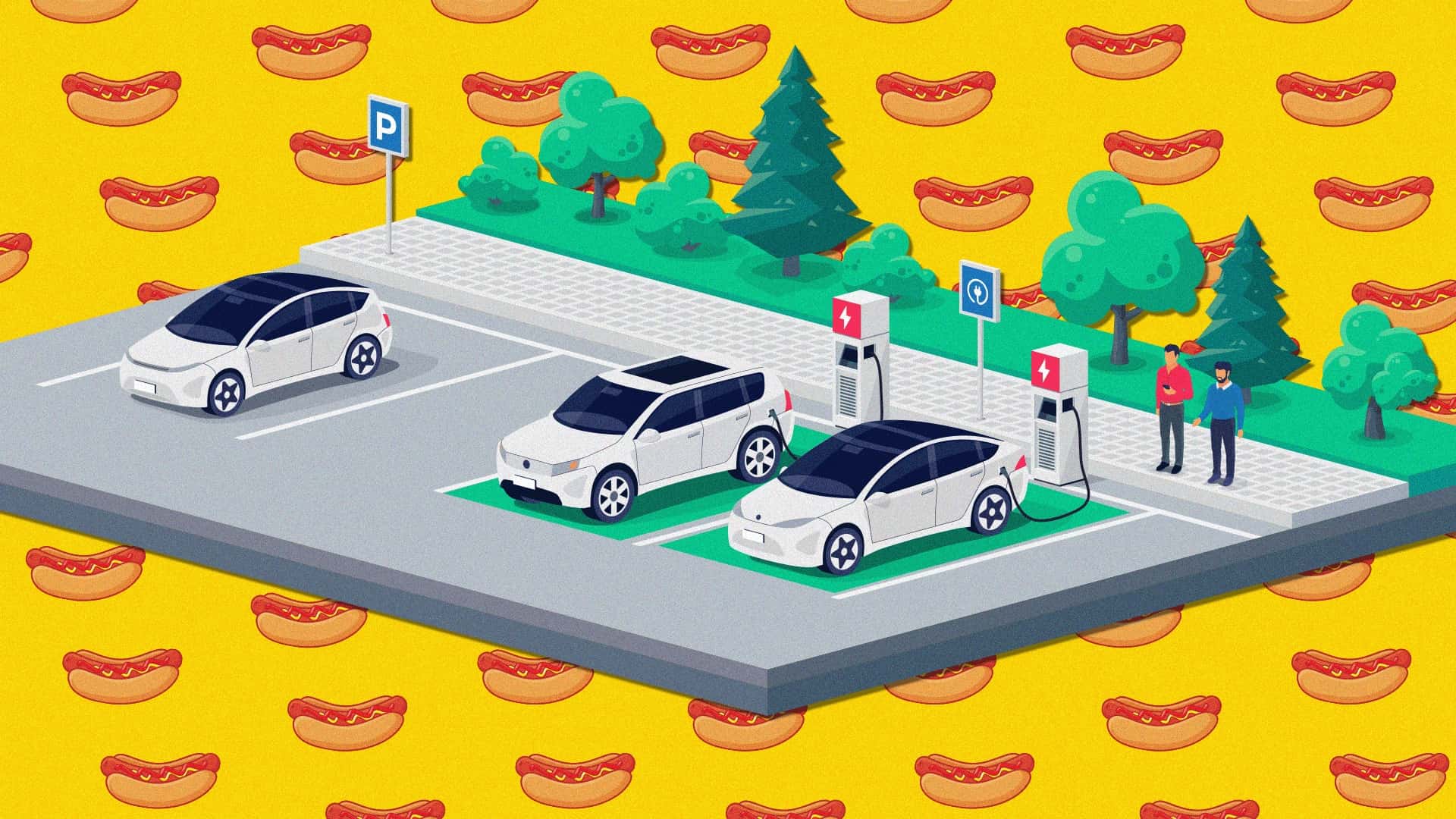
Electric vehicle sales in the United States have seen fluctuations in recent years, but one thing remains consistent: the driving range of new electric cars is better than ever, and fast-charging times are rapidly improving. According to Volvo, this improvement in charging technology has led to a new phenomenon known as “hot dog anxiety.”
Anders Bell, the chief engineering and technology officer at Volvo Cars, explained this concept to reporters at the U.S. debut of the EX60 in New York City. He noted that drivers are now facing a different kind of anxiety when it comes to charging their electric vehicles. Instead of worrying about running out of battery power (range anxiety), drivers are now concerned about overspending on charging due to lingering at charging stations longer than necessary – hence the term “hot dog anxiety.”
The expansion of public fast-charging networks in the U.S. has played a significant role in alleviating the range anxiety that EV drivers once faced. Higher-powered stations are becoming more common, and newer EVs with 800-volt architectures are capable of charging at speeds that were previously unimaginable.
For example, the Volvo EX60 can charge from 10-80% in just 16 minutes at a 350-kilowatt station, while the BMW iX3 can add up to 185 miles of range in 10 minutes with a maximum charging rate of 400 kW. The Mercedes-AMG GT, set to charge at 600 kW, can go from 10-80% in just 11 minutes.
With such rapid charging speeds, Bell suggested that drivers may only need a quick pit stop to get enough range to reach their destination. They may not require a full charge or even the typical 10-80% top-up. Since most EV owners charge their vehicles at home overnight, road trips often only necessitate brief stops along the way. However, drivers may be overlooking how quickly the costs of charging add up.
Bell warned that drivers could end up overspending on charging, turning a quick pit stop into an expensive affair. He emphasized the importance of being mindful of charging times and costs to avoid unnecessary expenses.
While Volvo did not provide specific data to support this trend, Bell’s remarks highlight a broader shift in the industry towards faster charging times and increased convenience for EV drivers. As the technology continues to improve, it is essential for drivers to stay informed and make informed decisions about their charging habits to avoid falling prey to “hot dog anxiety” and overspending on unnecessary charging sessions.
As automakers continue to push the boundaries of electric vehicle technology, the focus on reducing charging times and increasing driving range has become a top priority. With advancements in battery technology and charging infrastructure, achieving 300 miles of range on a single charge is quickly becoming the norm, with many automakers now setting their sights on 400-plus mile targets.
One of the key factors driving this trend is the shrinking charging times for electric vehicles. With the introduction of ultra-fast charging stations, EV drivers can now recharge their vehicles in a fraction of the time it used to take. For example, the Hyundai Ioniq 5 and Kia EV6, both priced at $35,000, can go from 10-80% charge in just 20 minutes, thanks to their 800-volt architecture.
These ultra-fast charging speeds are no longer limited to premium EV models like the Lucid EX60. Affordable options like the Hyundai and Kia models are now offering similar charging capabilities, making long-distance travel more feasible for a wider range of consumers.
However, it’s important to note that not all EV models currently offer ultra-fast charging speeds. For most mass-market EVs, a 10-80% charge still takes around 30-40 minutes. This means that drivers of these vehicles may not be overspending or overcharging, especially if they rely on public charging infrastructure or live in apartments without access to overnight charging.
Overall, the shift towards faster charging times and longer driving ranges represents a significant step forward for the electric vehicle industry. As automakers continue to innovate and improve upon existing technology, we can expect to see even greater advancements in the near future, making electric vehicles an increasingly attractive option for consumers looking to reduce their carbon footprint and embrace sustainable transportation.
Electric vehicle (EV) drivers who rely exclusively on public fast chargers may soon find themselves facing a new kind of anxiety – “hot dog anxiety.” This term, coined by Volvo in reference to the anxiety experienced by drivers waiting for their EVs to charge, highlights the importance of fast charging capabilities in the EV industry.
With the introduction of the Volvo EX60, a new electric SUV boasting impressive range and fast charging capabilities, drivers can now alleviate their “hot dog anxiety” and enjoy a more seamless charging experience. The Volvo EX60 is equipped with a larger battery pack, providing drivers with extra range that is particularly beneficial for those who rely on public fast chargers.
Drivers who depend on public charging stations often face long wait times and limited availability, leading to frustration and anxiety. The Volvo EX60 addresses this issue by offering a longer range, allowing drivers to go further between charges and reducing the frequency of visits to public charging stations. This not only saves time but also offers peace of mind to drivers who may have previously felt anxious about running out of battery power.
The extra range provided by the Volvo EX60 is a game-changer for EV drivers, especially those who rely on public fast chargers for their charging needs. By reducing the need for frequent charging stops, the Volvo EX60 offers a more convenient and stress-free driving experience. With the advancement of fast charging technology and the introduction of vehicles like the Volvo EX60, “hot dog anxiety” may soon become a thing of the past.
As the EV industry continues to evolve and charging infrastructure improves, drivers can look forward to a future where fast charging is abundant and efficient. Until then, vehicles like the Volvo EX60 are paving the way for a more seamless and enjoyable driving experience for EV owners. Those drivers who prefer the extra range provided by the Volvo EX60 will undoubtedly appreciate the convenience and peace of mind it offers, making “hot dog anxiety” a distant memory in the world of electric vehicles.