
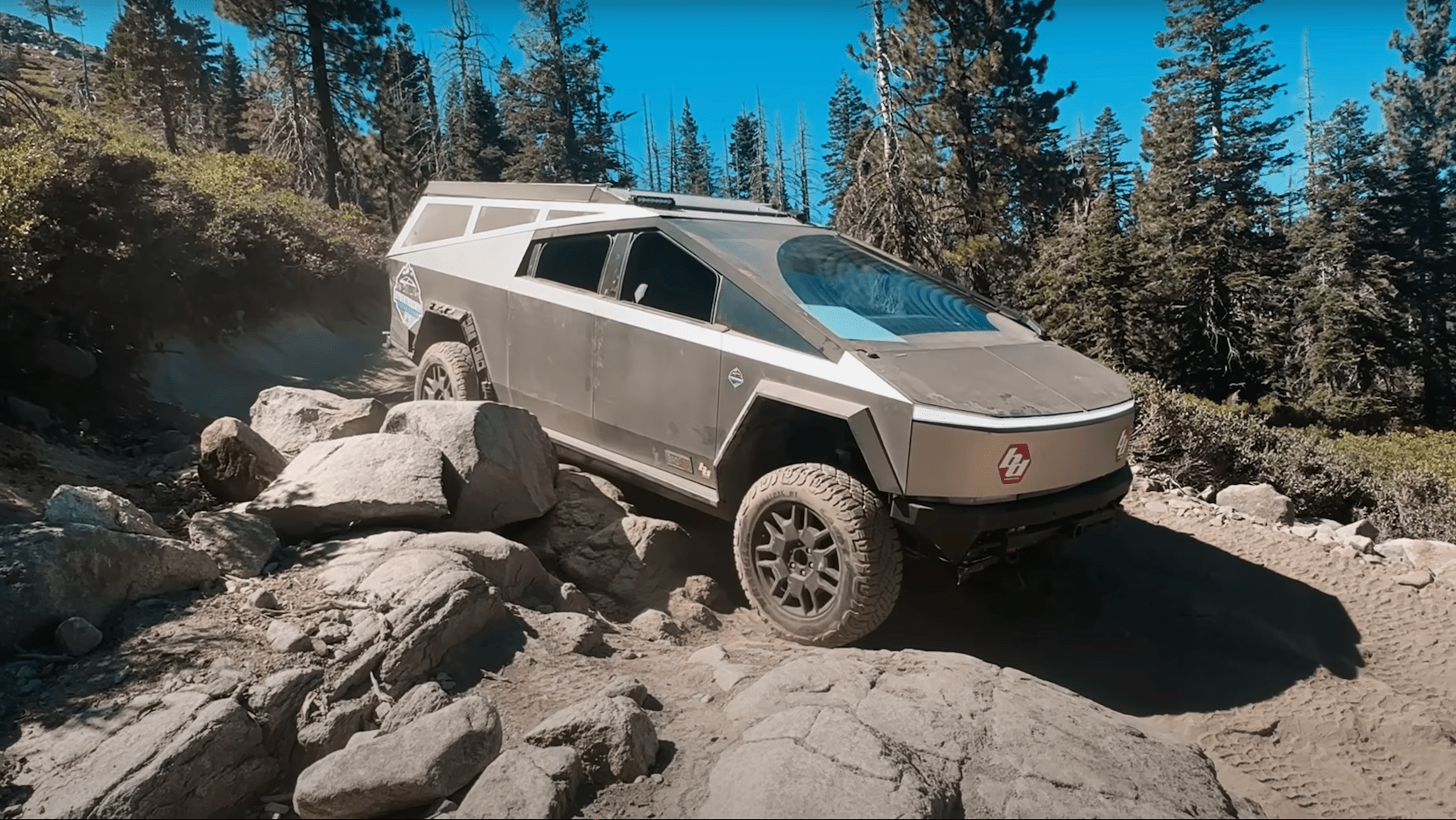
The Tesla Cybertruck’s recent attempt to conquer the Rubicon Trail has garnered a lot of attention after the electric pickup famously got stuck. The journey was documented in a YouTube video on Cybertruck Co.’s channel, revealing the raw and challenging nature of the trek.
The Cybertruck’s owner, Roger Davis, expressed surprise at the difficulty of the trail, noting that he expected more trail between obstacles. The video captures the struggles faced by the Cybertruck, including broken tie rods and steering rack issues that left it stranded for days on Cadillac Hill.
Accompanied by a modified Jeep Wrangler as a support vehicle, the Cybertruck faced numerous challenges along the way. The journey was marked by brief intermissions and spare parts being used up due to the rugged terrain.
It became apparent that the Cybertruck’s size was a significant factor in its difficulties on the Rubicon Trail. While Wrangler owners may have conquered the trail on smaller tires, the Cybertruck’s larger size and weight posed a challenge for its steering and suspension components.
Despite facing a charging issue at Rubicon Springs, the Cybertruck’s crew received help from a generous individual with a generator. They also received assistance from off-road enthusiasts who worked at Tesla, helping them overcome obstacles on the trail.
While some onlookers were supportive, others in the comments were less so. Overall, the Cybertruck’s Rubicon Trail adventure highlighted the unique challenges faced by electric vehicles in off-road terrain, shedding light on the limitations of even a vehicle as innovative as the Cybertruck. The Cybertruck recently made headlines as it attempted to conquer the challenging terrain of the Rubicon Trail. However, the outcome was not as successful as many had hoped. Several off-roaders who witnessed the Cybertruck struggling through certain sections of the trail were critical of the attempt. Even the truck’s owner, Davis, admitted that it was not a smooth journey.
After the experience, Davis shared his thoughts, stating, “I don’t recommend it. It was a dream, it was a bucket list item, but I don’t recommend it.” This candid admission highlights the difficulties faced by the Cybertruck during its off-road adventure.
For those who are curious to see the Cybertruck’s full week-long journey on the Rubicon Trail, a 41-minute video documenting the experience is available for viewing.
Despite the challenges faced by the Cybertruck, the attempt to tackle the Rubicon Trail showcases the vehicle’s capabilities and limitations in off-road settings. The feedback from off-roaders and the owner himself provides valuable insights into the performance of the Cybertruck in such demanding conditions.
For more automotive news and insights, stay tuned to The Drive. If you have any tips or questions for the author, feel free to reach out directly at caleb@thedrive.com.
From covering new car launches to editing in-depth features and reviews, Caleb brings a wealth of knowledge and passion for trucks to his work at The Drive. The world is constantly changing, and with these changes come new challenges and opportunities. One of the most significant changes in recent years has been the rise of artificial intelligence (AI) and its impact on various industries.
AI has the potential to revolutionize the way we live and work, and its applications are limitless. From self-driving cars to virtual assistants, AI is already being used in a wide range of industries to improve efficiency, accuracy, and productivity.
One industry that is particularly benefiting from the advancements in AI is healthcare. With the help of AI, doctors and researchers are able to analyze large amounts of data in a fraction of the time it would take a human to do so. This has led to faster and more accurate diagnoses, as well as more personalized treatment plans for patients.
In addition to improving patient care, AI is also helping to streamline administrative tasks in healthcare facilities. AI-powered chatbots can assist with appointment scheduling, billing inquiries, and patient education, freeing up staff to focus on more important tasks.
Another industry that is seeing the benefits of AI is finance. AI algorithms are being used to analyze market trends, predict stock prices, and detect fraudulent activity. This has led to more informed investment decisions and improved security for financial institutions.
AI is also making waves in the transportation industry. Self-driving cars are becoming a reality, with companies like Tesla and Google leading the way in developing autonomous vehicles. These cars have the potential to reduce traffic accidents and congestion, as well as lower emissions and fuel consumption.
Despite the numerous benefits of AI, there are also concerns about its impact on jobs. Some fear that AI will replace human workers, leading to widespread unemployment. However, many experts believe that AI will actually create new job opportunities, as it will require humans to oversee and maintain the technology.
Overall, the rise of artificial intelligence is changing the way we live and work in profound ways. While there are challenges to overcome, the potential benefits of AI are too great to ignore. As we continue to embrace this technology, we must also ensure that it is used ethically and responsibly to ensure a better future for all. The Rise of Sustainable Fashion: A New Era in the Fashion Industry
In recent years, the fashion industry has undergone a major transformation with the rise of sustainable fashion. This new era in the fashion industry is all about creating clothing and accessories in an environmentally and socially responsible way. The concept of sustainable fashion focuses on reducing the negative impact that the fashion industry has on the environment and on the people involved in the production process.
One of the key aspects of sustainable fashion is the use of eco-friendly materials. Many fashion brands are now using organic cotton, bamboo, hemp, and other sustainable materials in their collections. These materials are grown and harvested in a way that minimizes the use of chemicals and pesticides, reducing the environmental impact of fashion production.
Another important aspect of sustainable fashion is ethical manufacturing practices. Many fashion brands are now working with factories that provide fair wages and safe working conditions for their employees. By ensuring that the people who make their clothes are treated fairly, these brands are helping to improve the lives of workers in the fashion industry.
Sustainable fashion also emphasizes the importance of reducing waste in the production process. Many fashion brands are now focusing on creating clothing that is made to last, using high-quality materials and craftsmanship. They are also implementing recycling and upcycling initiatives to repurpose old clothing and reduce the amount of textile waste that ends up in landfills.
In addition to these practices, sustainable fashion also encourages consumers to make more conscious purchasing decisions. By buying from brands that prioritize sustainability and ethical practices, consumers can support the movement towards a more sustainable fashion industry.
The rise of sustainable fashion represents a shift towards a more responsible and ethical approach to clothing production. It is a movement that is gaining momentum and shaping the future of the fashion industry. With more and more brands embracing sustainable practices, it is clear that sustainable fashion is here to stay.
In conclusion, sustainable fashion is not just a trend, but a necessary evolution in the fashion industry. By prioritizing environmental and social responsibility, fashion brands are creating a more sustainable future for the industry and the planet as a whole. As consumers become more aware of the impact of their purchasing decisions, the demand for sustainable fashion will only continue to grow. It is an exciting time for the fashion industry as it embarks on this new era of sustainability.