
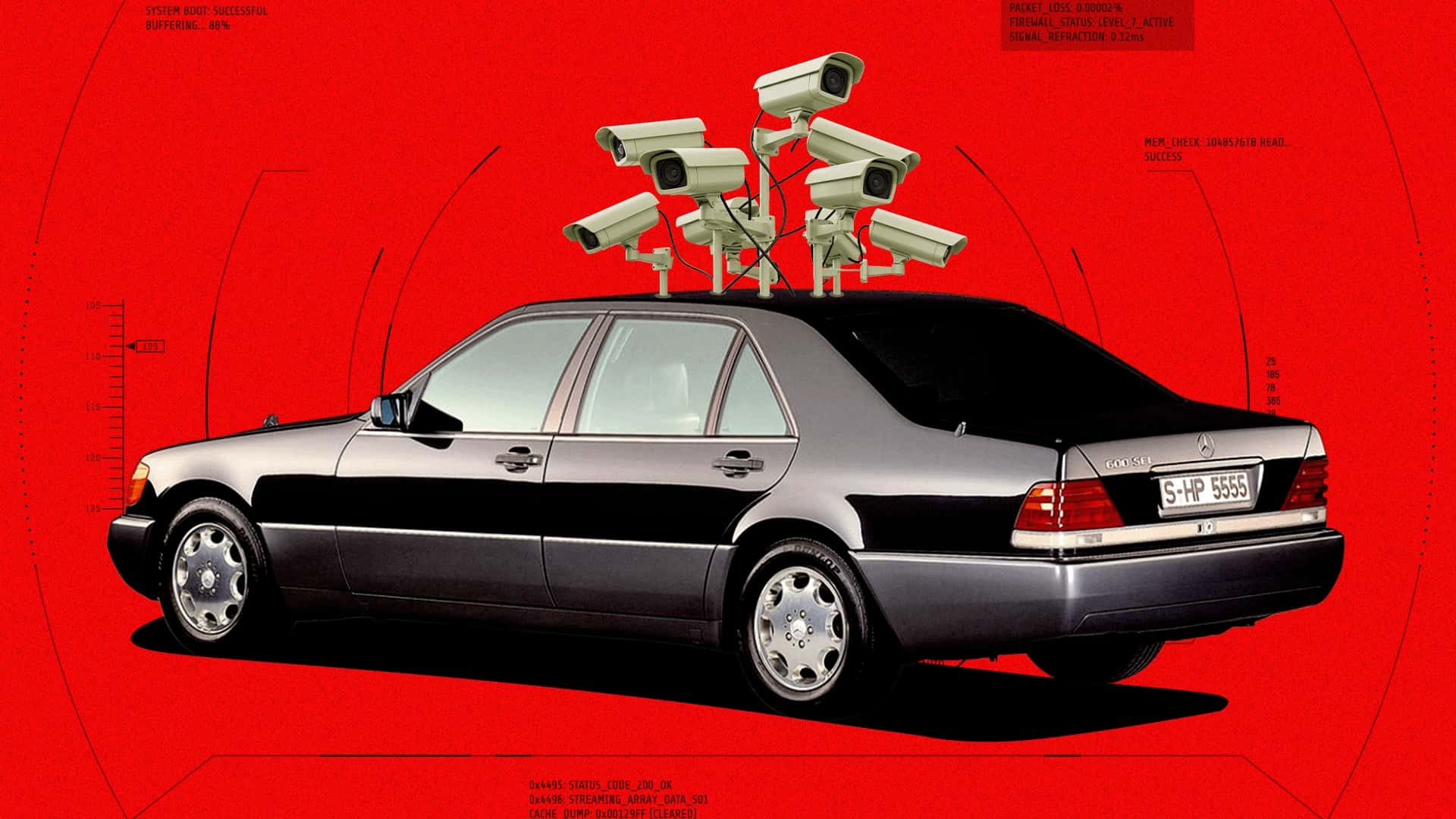
The history of self-driving cars dates back much further than many people realize. While Tesla may be the company most commonly associated with autonomous driving technology, the roots of this innovation go back several decades.
In 1977, the Tsukuba Mechanical Engineering Laboratory in Japan developed an early vision-guided autonomous test vehicle. Equipped with two onboard cameras, this experimental vehicle was able to follow guide features on the road in a controlled environment. While limited in its capabilities, this project laid the foundation for future advancements in autonomous driving technology.
Fast forward to 1987, when Ernst Dickmanns’ VaMoRs research vehicle made headlines by driving autonomously on an unopened stretch of autobahn in Germany. Using cameras, onboard computers, and automated control of steering, throttle, and brakes, the VaMoRs vehicle reached speeds of up to 60 mph and covered over 12 miles. This groundbreaking achievement demonstrated the potential for autonomous driving technology to revolutionize the automotive industry.
The self-driving car story continued to evolve in Europe, with Dickmanns and his team contributing to the Eureka PROMETHEUS project in the early 1990s. This ambitious project involved over 600 companies, including major automakers like Mercedes-Benz, and focused on developing advanced autonomous driving systems. The project’s test vehicles, based on the Mercedes-Benz S-Class, were equipped with cameras and onboard computers that allowed them to monitor surrounding traffic, follow lanes, and make safe lane changes.
In 1994, the PROMETHEUS test vehicles drove autonomously on busy highways around Paris, reaching speeds of up to 80 mph and demonstrating remarkable performance in regular highway traffic. The project’s crowning achievement came in 1995 when the vehicles completed a 1,000-mile journey from Munich, Germany, to Odense, Denmark, and back, with 95% of the trip driven autonomously.
Despite these impressive advancements, the early autonomous driving systems still had limitations. For example, the system struggled to handle construction sites with temporary markings and had difficulty detecting vehicles cutting into its lane at close range. However, these challenges paved the way for future innovations in autonomous driving technology.
Mercedes-Benz’s involvement in the PROMETHEUS project was instrumental in the development of the world’s first adaptive cruise control system, known as Distronic, which debuted on the 1998 W220 S-Class. This technology laid the foundation for the advanced driver assistance systems that are now commonplace in modern vehicles.
In conclusion, the history of self-driving cars is a rich tapestry of innovation and collaboration that spans decades. While Tesla may be at the forefront of the autonomous driving revolution, it is essential to recognize the contributions of early pioneers like Ernst Dickmanns and the researchers at the Tsukuba Mechanical Engineering Laboratory in Japan. These early experiments paved the way for the advanced autonomous driving technology that is shaping the future of transportation. Google’s project eventually became Waymo, which is now one of the leaders in autonomous driving technology. Other tech companies followed suit, with companies like Uber and Apple also investing heavily in self-driving technology.
The push for autonomy in Silicon Valley was not just about safety or convenience. It was also about creating new business models. Companies like Uber saw the potential for autonomous vehicles to revolutionize transportation and reduce costs. By removing the need for human drivers, companies could offer cheaper and more efficient ride-sharing services.
The development of autonomous driving technology was also seen as a way to reduce traffic congestion and emissions. By optimizing routes and driving behaviors, self-driving cars could potentially reduce the environmental impact of transportation.
One of the key challenges in developing autonomous driving technology was the transition from research projects to real-world applications. While the DARPA challenges and university research had proven the concept of autonomous vehicles, scaling up to mass production and deployment required a new set of skills and expertise.
This is where Silicon Valley excelled. The tech companies based in the region had the resources and the expertise to take autonomous driving technology to the next level. They were able to develop the software and hardware needed for self-driving cars, as well as the infrastructure to support them.
Today, autonomous driving technology is closer than ever to becoming a reality. Companies like Waymo and Tesla have already deployed autonomous vehicles on public roads, and more companies are expected to follow suit in the coming years.
The journey from university research projects to self-driving cars on the road has been a long and challenging one. But thanks to the efforts of researchers, engineers, and entrepreneurs, the dream of autonomous driving is now closer than ever to becoming a reality. And it all started with a few visionaries who saw the potential for self-driving cars to revolutionize transportation.
The Evolution of Self-Driving Vehicles
Google’s self-driving project, which eventually became Waymo in late 2016, started with a unique, bespoke, tiny two-door car that had no steering wheel. However, as the project progressed, it shifted towards using existing vehicles that were modified for autonomous driving. This shift allowed for a more practical approach to testing and developing self-driving technology.
Around the same time, Uber also entered the autonomous driving space by offering invite-only rides in Pittsburgh using a fleet of modified Ford Fusion sedans. These vehicles had engineers onboard monitoring the drive from the front seats, ensuring safety and addressing any issues that arose during the testing phase.
In October 2016, Tesla made a significant announcement that all cars produced from that point onwards would be equipped with the necessary hardware for “full self-driving.” However, it would take several more years for Tesla’s Full Self-Driving Beta to be rolled out to a select group of U.S. users. Despite the ambitious name, users of Tesla’s FSD feature are still legally responsible for the vehicle’s actions, highlighting the ongoing challenges in achieving true autonomy.
The Challenges and Future of Autonomous Vehicles
Despite the advancements in self-driving technology, the journey towards fully autonomous vehicles has been a long and challenging one. From early experiments with camera-guided test cars to the development of sophisticated sensor systems, researchers and engineers have tackled the problem of autonomous driving from various angles over the years.
Even as self-driving vehicles become more capable and widespread, there is still hesitancy in labeling them as truly autonomous. While these vehicles may excel in certain environments and driving conditions, regulatory and technical limitations prevent them from being considered fully autonomous in the eyes of the law.
Looking ahead, the next five years are likely to bring us closer to the reality of fully autonomous vehicles. However, the question remains whether these vehicles will truly be autonomous in every sense of the word. Additionally, advancements in autonomous driving technology may not solely come from American companies, as the global race towards autonomy continues to evolve.