
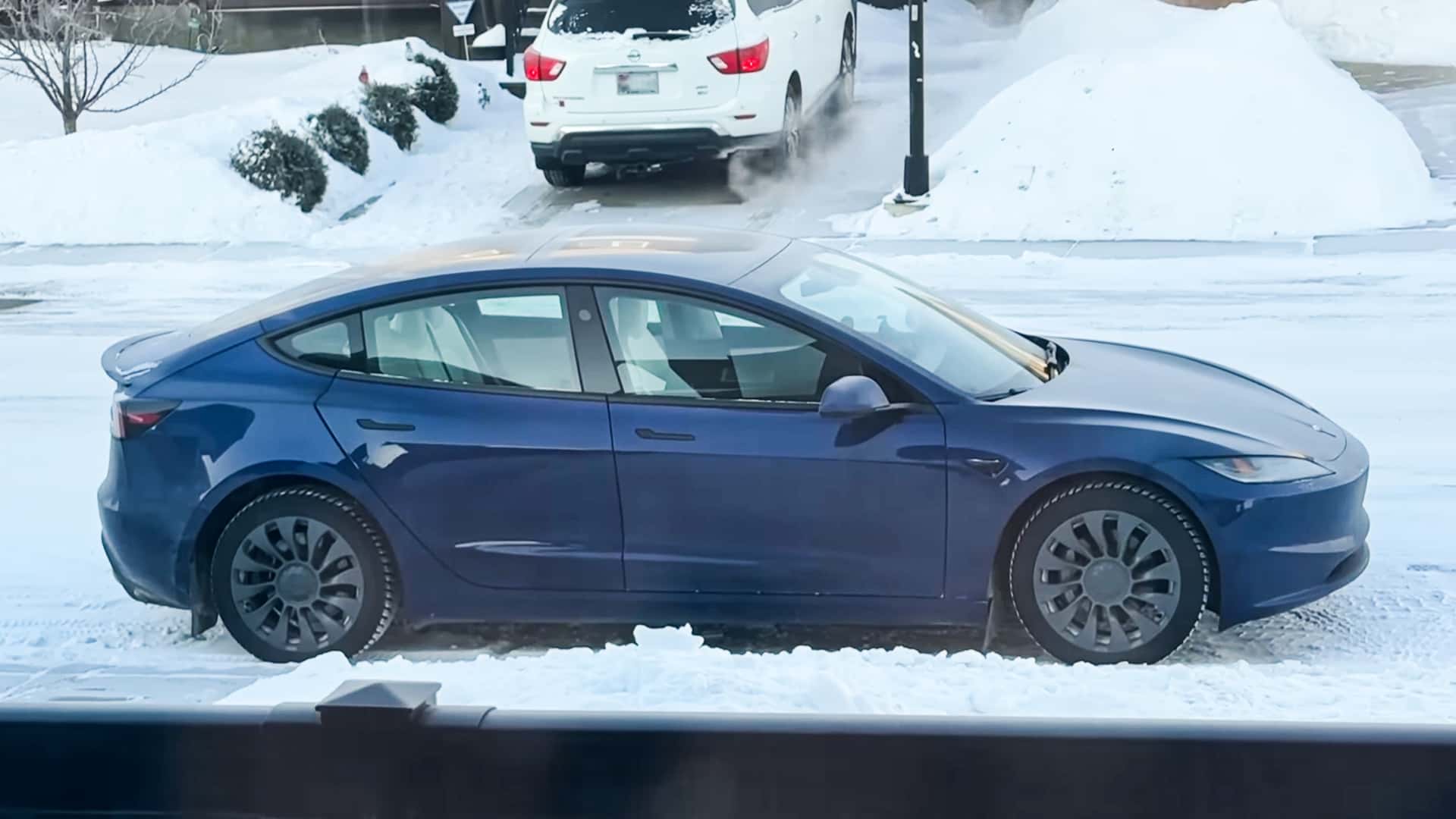
A real world winter test by YouTuber FrozenTesla offers a revealing look at how electric vehicles perform in brutal cold. The experiment focused on a 2024 Tesla Model 3, left outside overnight in a Canadian winter without any battery or cabin preconditioning.
The goal was simple: see how the car behaves when driven and charged in extreme temperatures with no preparation.
Cold Start Conditions
By morning, temperatures were severe.
- High voltage battery temperature: –4°F (–20°C)
- Ambient outdoor temperature: –26°F (–32°C)
Despite the cold, the Model 3 powered on without issue. A brief mechanical noise was heard at startup but disappeared as the vehicle began to warm. Importantly, no faults or warnings prevented operation, reinforcing that modern EVs are fully capable of starting in extreme winter conditions.
Driving Without Preconditioning
The driver then set off for a Tesla Supercharger located 22 miles away. Crucially, the Supercharger was not entered into the navigation system, which meant the vehicle did not preheat the battery on the way.
The results were telling:
- Energy used: 13.7 kWh
- Drive time: ~30 minutes
- Efficiency: 64.2 kWh per 100 miles
- Consumption: 1.56 miles per kWh
At that rate, real world range would fall below 120 miles on a full charge. Most of the energy wasn’t going toward propulsion. It was being diverted to warming the battery pack and heating the cabin, a behavior not unlike gas powered vehicles burning extra fuel during cold starts.
By the time the car arrived at the charger, battery temperature had risen to about 37°F (3°C), but that still wasn’t warm enough for optimal fast charging.
Charging Performance in the Cold
Charging speeds were noticeably reduced. The vehicle estimated 55 minutes to charge from 25 percent to 75 percent, far slower than what drivers typically expect at a Supercharger.
The reason was simple: before accepting high charging power, the battery first had to warm itself to a safe and efficient operating temperature. Until that happened, charging rates remained limited.
The Takeaway
This experiment underscores a critical point for EV owners in cold climates: preconditioning matters.
Electric vehicles can absolutely function in extreme cold. They start, drive, and charge reliably. However, skipping preconditioning comes with real tradeoffs:
- Higher energy consumption
- Significantly reduced driving range
- Slower fast charging sessions
Using scheduled departure times or navigating to a fast charger so the car can preheat the battery dramatically improves efficiency and charging speed.
Cold weather doesn’t break EVs but preparation makes all the difference.