
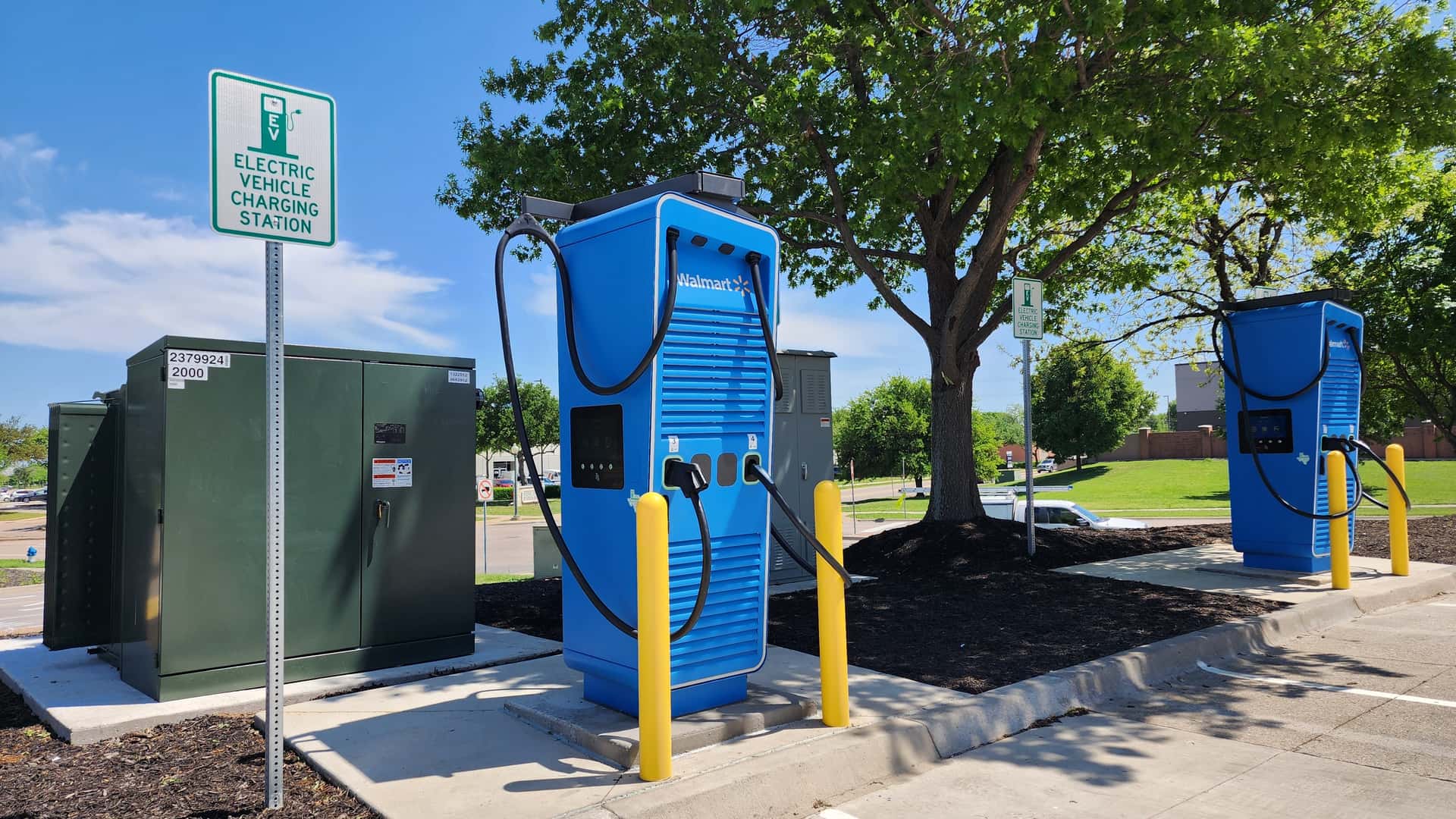
Walmart is making significant strides in expanding its electric vehicle (EV) fast charging network in the United States. The retail giant has increased the size of its EV charging network by approximately 50% in just one month, showcasing its commitment to sustainability and innovation.
Currently, there are over 300 individual ports capable of delivering up to 400 kilowatts at 50 Walmart stores across the U.S. This marks a substantial increase from last month’s 31 stations and 224 high-powered connectors. Walmart is continuously making improvements to its charging network, with plans to add contactless payment terminals to its DC fast chargers. This enhancement will offer customers the convenience of paying without the need for a smartphone app, catering to a wider range of EV drivers.
Moreover, Walmart is offering a 10% discount on charging sessions for Walmart+ members who use the app to initiate and pay for charging. The company does not implement idling fees, ensuring transparency in pricing for customers. While there is no dynamic pricing based on station occupancy, some locations have Time of Use (TOU) rates that vary depending on the time of day.
Although Plug & Charge, a feature that allows EV drivers to charge without using an app or credit card, is not currently supported by Walmart’s DC chargers, the company is considering its implementation. The main challenge lies in how the charger communicates with the car, as Plug & Charge does not allow for discounts like those available through the Walmart app.
In terms of charger specifications, Walmart is installing 400 kW chargers from manufacturers such as ABB and Alpitronic, equipped with a CCS1 and NACS connector. To better accommodate Tesla EVs and other vehicles with a NACS port on the left rear, Walmart will position the NACS cable on the left side of the charger moving forward.
Looking ahead, Walmart’s General Manager for Retail EV charging, Adam Happel, expressed a long-term commitment to expanding the company’s EV charging infrastructure. While an exact number of chargers to be installed remains unspecified, Happel hinted at thousands of chargers being deployed at Walmart and Sam’s Club locations nationwide. This ambitious initiative aims to make EV charging more accessible and convenient for customers, supporting the transition towards sustainable transportation solutions. Walmart, the retail giant, currently operates over 5,200 stores across the United States. With such a vast presence already established, there is ample room for expansion and growth in the future.
The company’s extensive network of stores provides a solid foundation for further expansion into new markets and regions. By strategically identifying areas with high demand and potential for growth, Walmart can continue to increase its market share and reach a larger customer base.
In addition to physical store expansion, Walmart can also explore opportunities in the digital space. With the rise of e-commerce and online shopping, investing in an efficient and user-friendly online platform can help Walmart cater to the needs of tech-savvy customers and stay competitive in the digital marketplace.
Furthermore, Walmart can leverage its existing infrastructure and resources to introduce new services and offerings. For example, the company could expand its grocery delivery and pickup services, introduce innovative in-store experiences, or partner with other businesses to offer complementary services.
By continuously innovating and adapting to changing consumer preferences, Walmart can solidify its position as a leading retailer and continue to grow and thrive in the highly competitive retail industry.
In conclusion, Walmart’s vast store network provides a strong foundation for future expansion and growth. By exploring new markets, investing in digital capabilities, and introducing innovative services, Walmart can further strengthen its position in the market and meet the evolving needs of customers.