
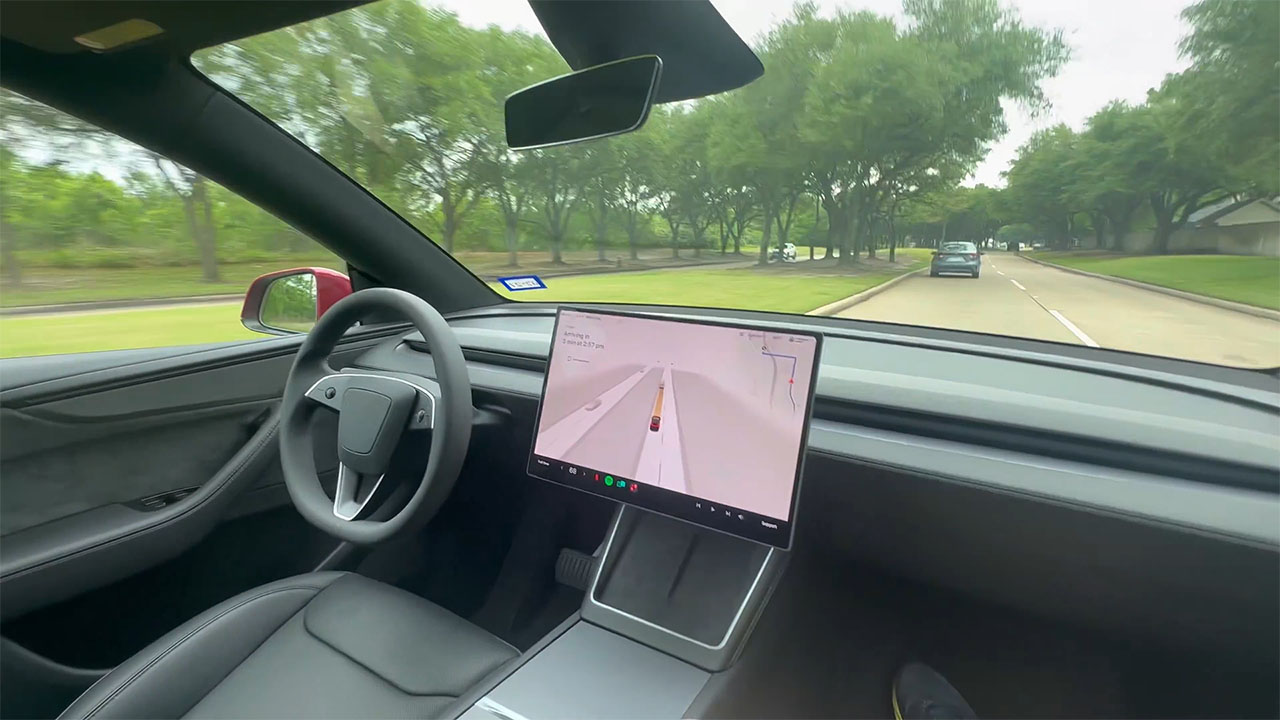
Tesla (TSLA) made a significant move over the weekend by expanding its Robotaxi service to Dallas and Houston, Texas. What sets this expansion apart is that Tesla launched the service with Unsupervised Robotaxis in these new cities right from the start.
Last year, Tesla acquired a state-wide license to operate its Robotaxi service in Texas, paving the way for this recent expansion. The extended permit and more lenient regulations in the state allow Tesla to test and grow its Robotaxi service with relative ease.
The announcement of the Tesla Robotaxi service launch was made through official channels as well as by users who had the chance to experience Tesla’s autonomous ride-hailing service in Dallas and Houston.
One of the most intriguing aspects of using Tesla’s Robotaxi service is the ability to ride in an Unsupervised Robotaxi, where there is no human supervisor present in the driver’s seat. The car autonomously picks up passengers and drops them off at their destination using Tesla’s Full Self-Driving (FSD) AI vision technology.
While the launch of the Robotaxi service in Houston and Dallas was met with excitement, some users reported disruptions in the service within the first 24 hours, possibly due to overwhelming demand exceeding capacity.
The current Tesla Robotaxi service fleet comprises Model Y Juniper electric SUVs, equipped with all the necessary hardware to support both Supervised and Unsupervised FSD capabilities. However, not all deployed Robotaxi vehicles operate without human supervision, with estimates suggesting that only 12% of Tesla Robotaxis in Austin, Texas, currently offer the Unsupervised service.
Users of Tesla’s Robotaxi ride-hailing service are not permitted to sit in the driver’s seat, with a cabin camera monitoring passengers throughout the ride. Only four passengers are allowed in a Tesla Robotaxi, with designated blue-highlighted seats indicated in the Tesla Robotaxi app.
Tesla has also streamlined the pickup process for Robotaxis, reducing the wait time to just 7 minutes. After a 7-minute wait, the Tesla Robotaxi will automatically depart from the pickup location.
In a cost comparison with Waymo, a Tesla Robotaxi user in Dallas reported that Waymo charged more than double the price for a similar trip. The Tesla Robotaxi was approximately 56% cheaper than Waymo for the same 2.25-mile, 7-minute trip, making it a more economical choice for riders.
Another user from Houston shared a payment screenshot from the Tesla Robotaxi app, revealing a total fare of $8.78 for a 4.13-mile, 18-minute trip. On average, the cost of hiring a Tesla Robotaxi in Dallas and Houston ranges from $2 to $3 per mile, with variations based on factors such as time of day, traffic conditions, and route.
Overall, the expansion of Tesla’s Unsupervised Robotaxi service to Dallas and Houston marks a significant step forward in autonomous ride-hailing technology. With competitive pricing and innovative features, Tesla’s Robotaxi service is poised to revolutionize the transportation industry in Texas and beyond.