
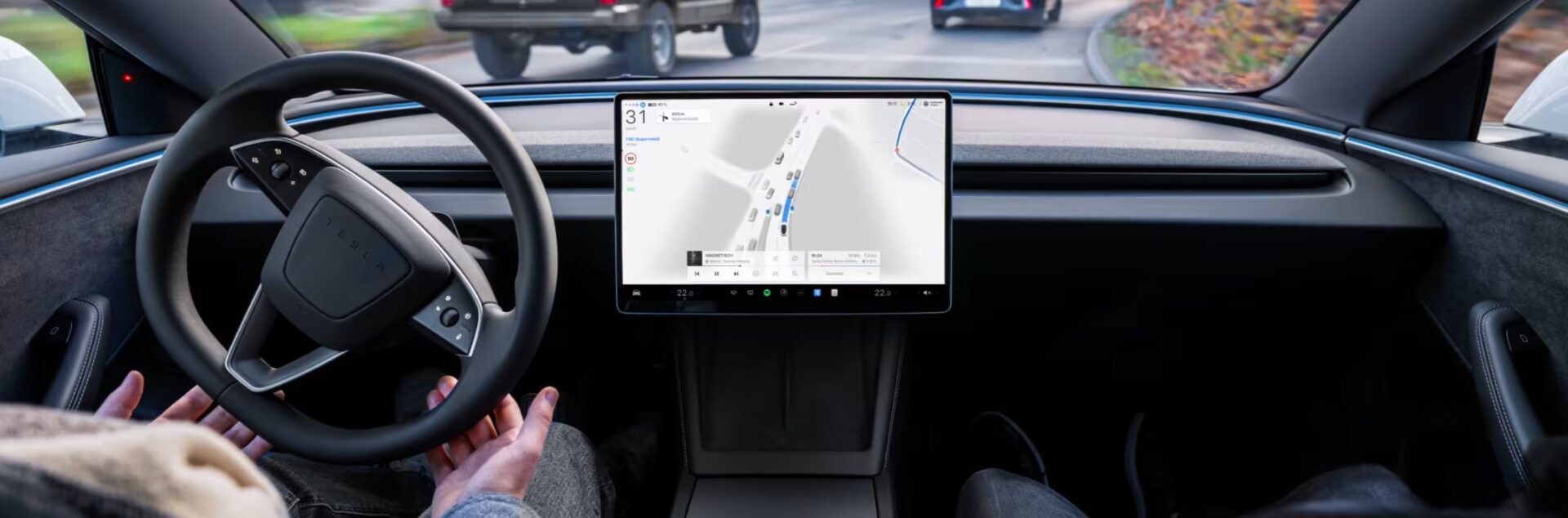
Tesla’s Full Self-Driving (Supervised) program has reached a significant milestone, with owners collectively driving over 7 billion miles using this autonomous technology. This massive amount of real-world data showcases the extensive reach and usage of Tesla’s Full Self-Driving system.
The 7 billion-mile mark includes over 2.5 billion autonomous miles on city roads, highlighting the widespread adoption of this technology by Tesla owners. The company recently launched a dedicated safety page for FSD, complete with a live mileage counter that updates as owners continue to accumulate autonomous miles. It is worth noting that the total mileage may actually be higher due to factors such as a rapidly growing global fleet and recent free trial periods.
Tesla emphasizes on its website that Full Self-Driving (Supervised) enables vehicles to drive almost anywhere with minimal intervention, reducing the likelihood of collisions when engaged and under active supervision. This claim underscores Tesla’s commitment to showcasing the safety and reliability of autonomous driving technology to regulators and the public.
As Tesla expands its Full Self-Driving program internationally, recent milestones in countries like South Korea, where drivers surpassed 1 million kilometers on FSD in just one month, demonstrate the global interest in autonomous driving technology. Tesla has been actively lobbying for broader approval of Full Self-Driving in regions like the EU, even offering ride-alongs to lawmakers and the public to showcase the capabilities of the system.
On the software development front, Tesla continues to iterate aggressively, with recent releases such as FSD v14.2.1 allowing limited texting behind the wheel under specific road and traffic conditions. Additionally, Tesla’s Robotaxi fleet in Austin, Texas, is testing a more advanced “unsupervised” version of FSD, with notable instances of autonomously chauffeuring CEO Elon Musk around the city.
With FSD v14.3 on the horizon and teased as the “last big piece” of the autonomy puzzle by Elon Musk, the growing mileage counter serves as a testament to Tesla’s progress in the self-driving race. Through scale and data accumulation, Tesla aims to further solidify its position as a leader in autonomous driving technology. Tesla has recently launched a new and improved Robotaxi landing page, catering to the growing demand for autonomous taxi services in Austin. This new page comes as a refreshing update to the existing site which was initially launched earlier this year.
The Robotaxi landing page serves as a central hub for customers looking to book a ride with Tesla’s self-driving vehicles. It provides users with all the necessary information they need to know about the service, including pricing, availability, and safety features. The page also features a user-friendly interface that makes it easy for customers to book a ride in just a few clicks.
One of the key highlights of the new landing page is its sleek and modern design. The page is visually appealing and easy to navigate, making it a seamless experience for users. The updated design also reflects Tesla’s commitment to innovation and cutting-edge technology, further solidifying its position as a leader in the autonomous vehicle industry.
In addition to the design improvements, the new landing page also includes enhanced features and functionalities. Customers can now track their ride in real-time, view the estimated time of arrival, and communicate with their driver directly through the platform. These new features make the booking process more convenient and efficient for users, ensuring a smooth and hassle-free experience.
Overall, the new Robotaxi landing page is a significant upgrade from its predecessor, offering a more user-friendly interface, enhanced features, and a modern design. With the increasing demand for autonomous taxi services in Austin, Tesla’s updated landing page is sure to attract more customers and solidify its position as a top player in the self-driving vehicle market.