
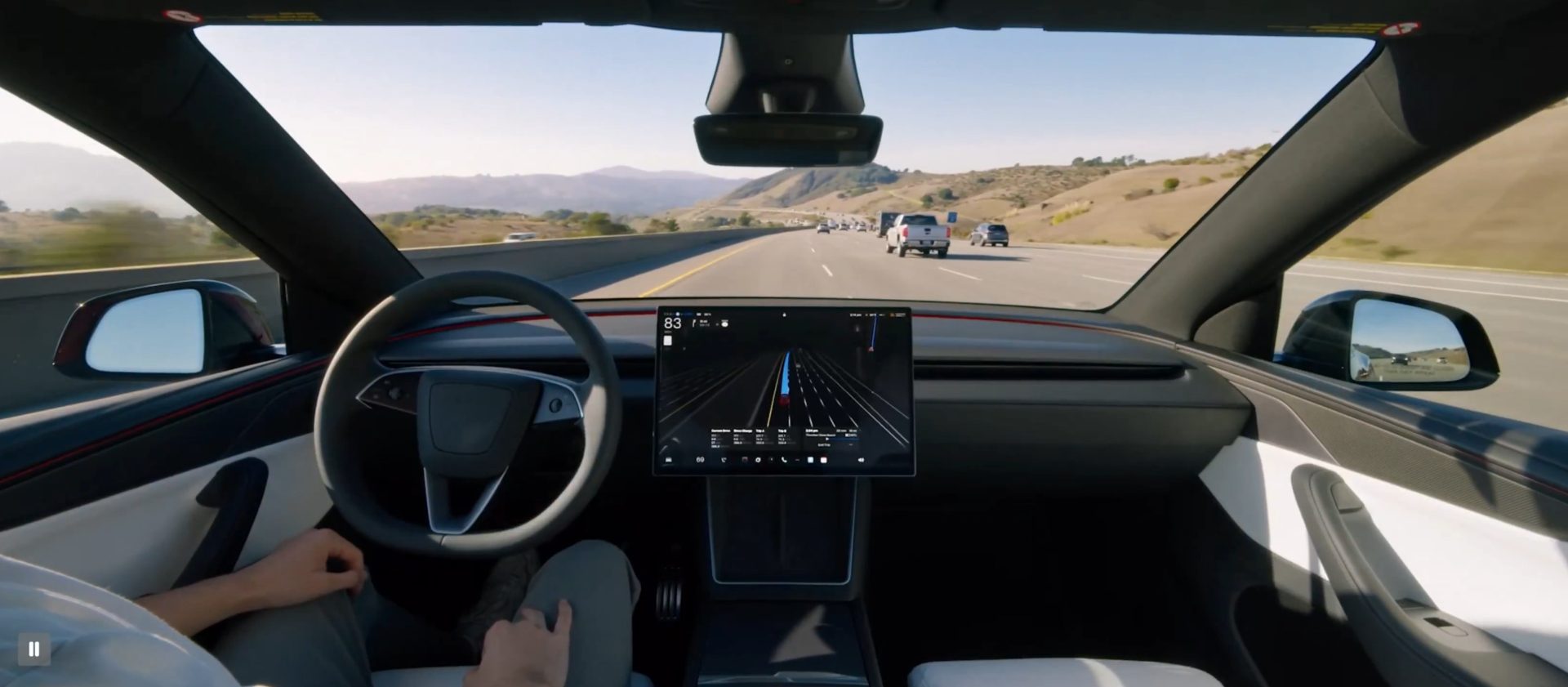
The Norwegian Public Roads Administration (SVV) is taking a cautious approach when it comes to allowing Tesla’s Full Self-Driving (FSD) Supervised on its roads, following the recent approval in the Netherlands. While the Dutch vehicle authority, RDW, has granted national approval for the technology, Norway is pumping the brakes and raising concerns about the system’s ability to handle the harsh Nordic environment.
In a statement provided to Svenn Petter, the SVV stated that they have the opportunity to ask questions before a possible vote at the EU level. They are particularly interested in understanding how the FSD system accounts for typical Nordic conditions, prevents confusion with a self-driving system, handles incident reporting requirements, ensures robustness against manipulation, and addresses other security aspects.
Despite having navigated similar approvals for Ford’s BlueCruise and BMW’s driver assistants in the past, the SVV emphasized that each case requires a unique and rigorous evaluation. They are not rushing into approving Tesla’s FSD Supervised and are prioritizing safety and winter performance considerations.
For Tesla owners in Norway, the wait for FSD activation could be significant. While retroactive activation for existing vehicles is technically possible through a supplementary decision, the SVV stated that the timeline depends on the response from Tesla Norway. They have not provided a specific timeline for when the technology could be activated in the country.
Norway recently achieved a record-breaking 98.4% electric vehicle market share in March 2026, with internal combustion engines becoming almost irrelevant. Tesla played a significant role in this surge, capturing nearly 35% of the total market share. The Model Y and Model 3 saw a massive 178% year-over-year increase in registrations, contributing to Tesla’s success in Norway’s electric vehicle market.
As Norway continues to evaluate Tesla’s FSD Supervised, Tesla owners in the country will have to wait patiently for any updates on when the technology might be approved for use on Norwegian roads. The SVV is prioritizing safety and winter performance considerations, ensuring that the technology meets the specific requirements of the Nordic environment before giving the green light for its implementation.