
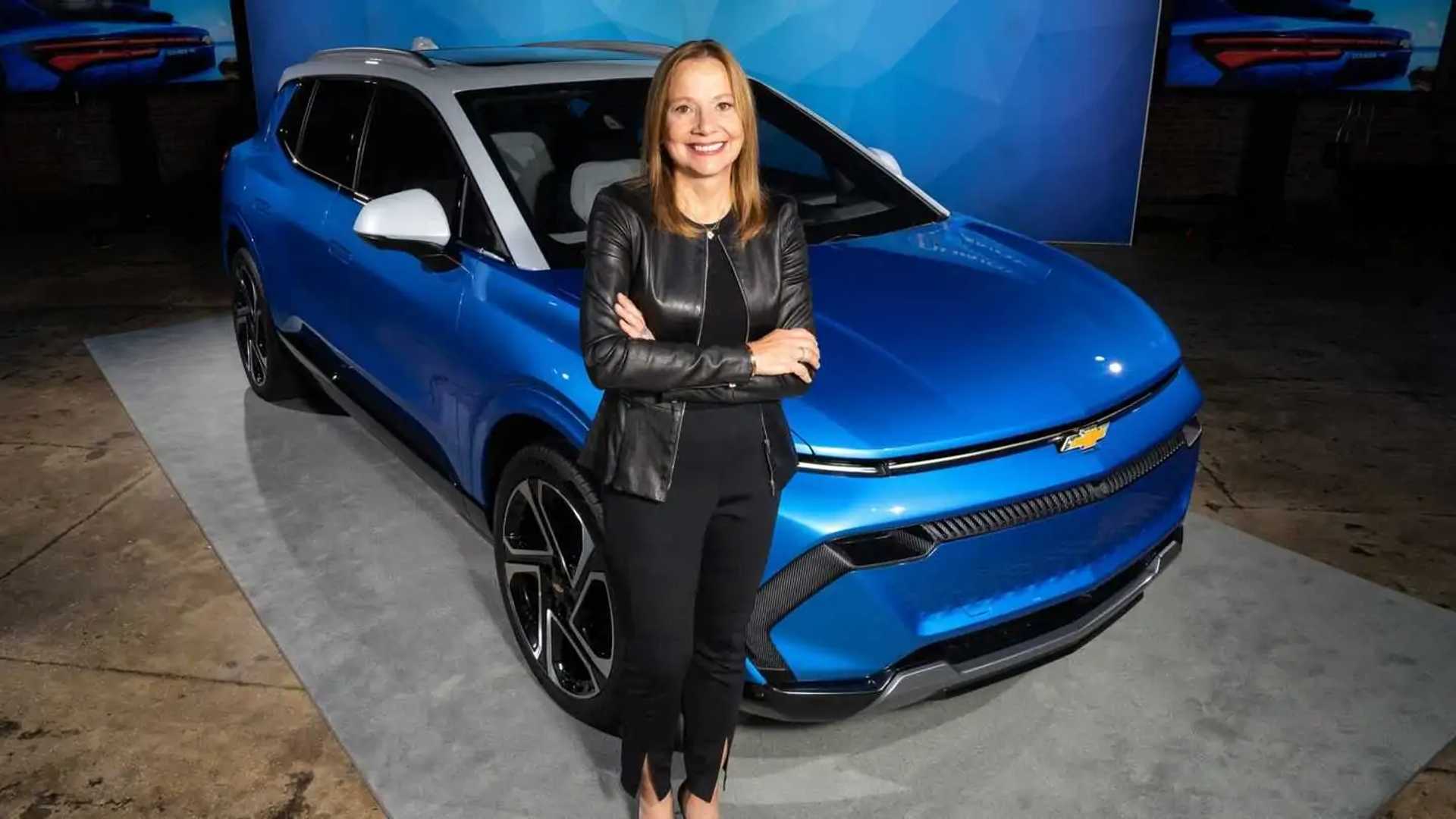
General Motors CEO Mary Barra recently reiterated the company’s commitment to an “an EV future” despite facing challenges in the electric vehicle market. In 2025, GM had a record year for EV sales, but saw a decline in the fourth quarter following the end of the federal tax credits for EV purchases.
Barra acknowledged that the phase-out of the tax credits had an impact on EV sales, but she remains optimistic about the future of electric vehicles. She emphasized that once consumers experience driving an EV, they are more likely to purchase another EV in the future. Barra expressed confidence in GM’s goal of transitioning to an all-electric future.
However, GM had to make some tough decisions last year in response to changing regulations and market conditions. The Orion Assembly Plant in Michigan, originally designated for EV production, will now focus on manufacturing gasoline trucks. Additionally, GM sold its stake in the Ultium Cells battery plant to LG Energy Solution due to a potential decrease in demand for EV batteries.
These decisions were part of a broader trend in the auto industry, as other companies like Ford and Stellantis also scaled back their EV ambitions. Ford incurred significant charges for adjusting its EV plans, including discontinuing the production of the F-150 Lightning. Stellantis announced the discontinuation of its plug-in hybrids in North America.
Despite the challenges, Barra remains hopeful about the future of EVs and GM’s role in shaping the electric vehicle market. She believes that although the transition to an all-electric future may take longer without incentives, it is still achievable over time. Barra’s remarks come at a time when the auto industry is navigating a shifting landscape of regulations and consumer preferences.
As GM continues to navigate the evolving EV market, the company may explore bringing back hybrids in the future. Barra’s vision for GM’s future includes a strong commitment to electric vehicles and sustainable transportation solutions. With a focus on innovation and adaptability, GM aims to lead the way towards a more sustainable and electrified automotive industry. Despite being the top-selling plug-in hybrid electric vehicles (PHEVs) of 2025, Jeep is facing tough competition in the rapidly evolving electric vehicle (EV) market. According to research firm Recurrent, Jeeps have been leading the PHEV market in terms of sales, but that may not be enough to secure their position in the long run.
General Motors (GM) CEO Mary Barra expressed her surprise at the quick advancements made by other automakers in the EV industry. She emphasized the uncertainty of future market trends and the importance of staying ahead of the curve. Barra pointed out that the years ahead could bring significant changes in consumer preferences and technological innovations, making it crucial for automakers to adapt and innovate continuously.
GM, known for its iconic vehicles like the Corvette, has not been actively selling hybrids or PHEVs in the United States. However, there are indications that this may change in the near future. Automotive News reported that GM is evaluating the potential for introducing hybrid and plug-in hybrid models to its lineup, signaling a strategic shift towards electrification.
While Jeep’s current success in the PHEV market is commendable, the brand may need to reassess its EV strategy to remain competitive. With GM and other automakers exploring new technologies and expanding their electric offerings, Jeep will need to innovate and invest in electrification to maintain its market leadership.
As the automotive industry shifts towards electrification, the race to develop and market EVs is becoming increasingly intense. Automakers must anticipate future trends, invest in sustainable technologies, and adapt their product portfolios to meet evolving consumer demands. For Jeep and other brands, staying ahead of the curve in the rapidly changing EV market will be essential for long-term success.