
Testing Hansshow’s Latest Tesla Supercharger Extension Cable: A Detailed Review
As the electric vehicle market continues to grow, more and more non-Tesla EV owners are finding themselves in need of access to Tesla Superchargers. These Superchargers, designed primarily for Teslas, can pose a challenge for other EV owners due to the positioning of their charge ports. To address this issue, Hansshow has introduced an extension cable that promises to make charging at Superchargers easier for non-Tesla EV owners.
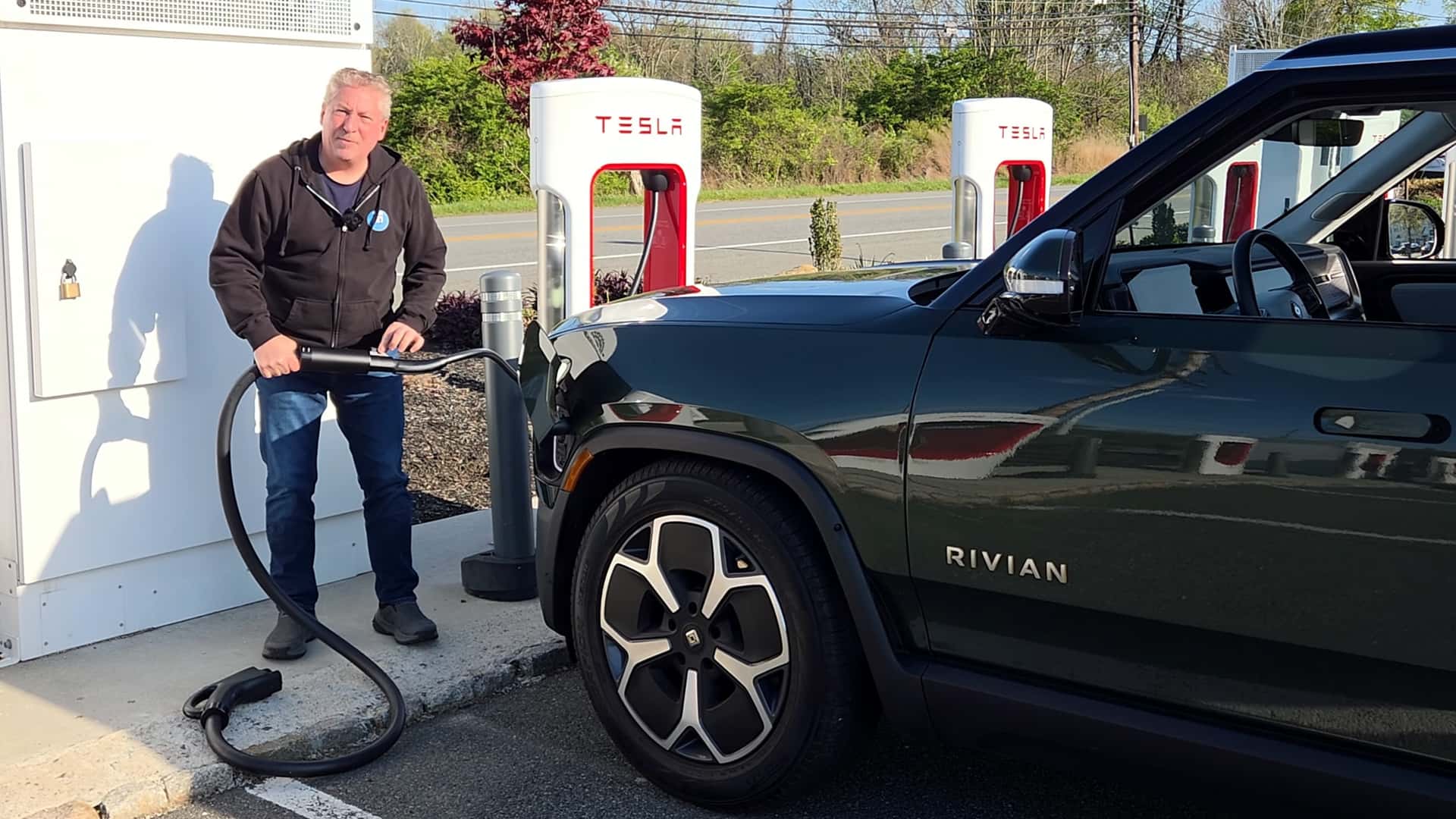
InsideEVs contributor and charging expert Tom Moloughney recently tested Hansshow’s latest Tesla Supercharger extension cable. The cable, which doubles as a DC fast charging adapter, is specifically aimed at non-Tesla EV owners who often find themselves needing to double park at Superchargers.
Real-World Testing Results
In his real-world testing, Tom found that the 8-foot NACS to CCS1 DC fast-charging extension cable fell short of expectations. Despite being designed to make life easier for non-Tesla EV owners, the cable did not perform as well as hoped.
The cable is available in 5-foot and 8-foot lengths and is rated for 1,000 volts and 350 amps. Tom attempted to stress test the 8-foot version by charging his Rivian R1S and Ford F-150 Lightning from a low state of charge. However, the cable failed to deliver as expected, with both vehicles stopping charging prematurely during testing sessions.
Interestingly, Tom noted that the pre-production version of the cable, which closely resembles the final product, performed flawlessly in multiple charging sessions. It remains unclear why the final version of the cable did not meet expectations.
Price and Considerations
One major consideration for potential buyers is the price of the cable. The 8-foot version retails for $729, which is a significant investment for a product that may not deliver reliable performance. Additionally, it’s important to note that using extension cables or charging adapters not approved by the manufacturer can pose risks, as all EV makers advise against such practices.
Overall, while the idea behind Hansshow’s Tesla Supercharger extension cable is promising, the real-world testing results suggest that there may be room for improvement in the product’s performance and reliability. Non-Tesla EV owners looking to utilize Tesla Superchargers should proceed with caution and consider all factors before investing in such a product.
Charging your electric vehicle is a routine task that most EV owners do on a regular basis. However, there are times when things can go wrong during a charging session, and it’s important to be aware of the potential consequences. One key point to keep in mind is that if something does go wrong, your warranty will likely not cover any damages that occur as a result.
When you purchase an electric vehicle, it typically comes with a warranty that covers certain components and systems for a specified period of time. However, this warranty may not cover damages that result from misuse or accidents, including those that occur during a charging session. This means that if something goes wrong while you’re charging your EV and it causes damage to the vehicle or the charging equipment, you may be responsible for covering the cost of repairs or replacements.
There are a few common scenarios where things can go wrong during a charging session. For example, if you accidentally plug the charging cable into an outlet that is not compatible with your EV, it could cause a short circuit or damage to the electrical system. Similarly, if there is a power surge or fluctuation while the vehicle is charging, it could also cause damage to the battery or other components.
To avoid potential issues during a charging session, it’s important to follow the manufacturer’s guidelines for charging your electric vehicle. This includes using the correct charging equipment, ensuring that the charging cable is properly connected, and only charging the vehicle in designated charging areas. It’s also a good idea to regularly inspect the charging equipment for any signs of damage or wear and tear.
In the event that something does go wrong during a charging session, it’s important to take immediate action to prevent further damage. This may include unplugging the charging cable, contacting the manufacturer or a qualified technician for assistance, and documenting any damage that occurred. By taking these steps, you can help protect yourself from potential liability and ensure that your electric vehicle remains in good working condition.
In conclusion, while charging your electric vehicle is a routine task, it’s important to be aware of the potential risks and consequences if something goes wrong. By following the manufacturer’s guidelines and taking prompt action in the event of an issue, you can help protect yourself and your vehicle from harm. Remember, your warranty may not cover damages that occur during a charging session, so it’s always better to be safe than sorry.