
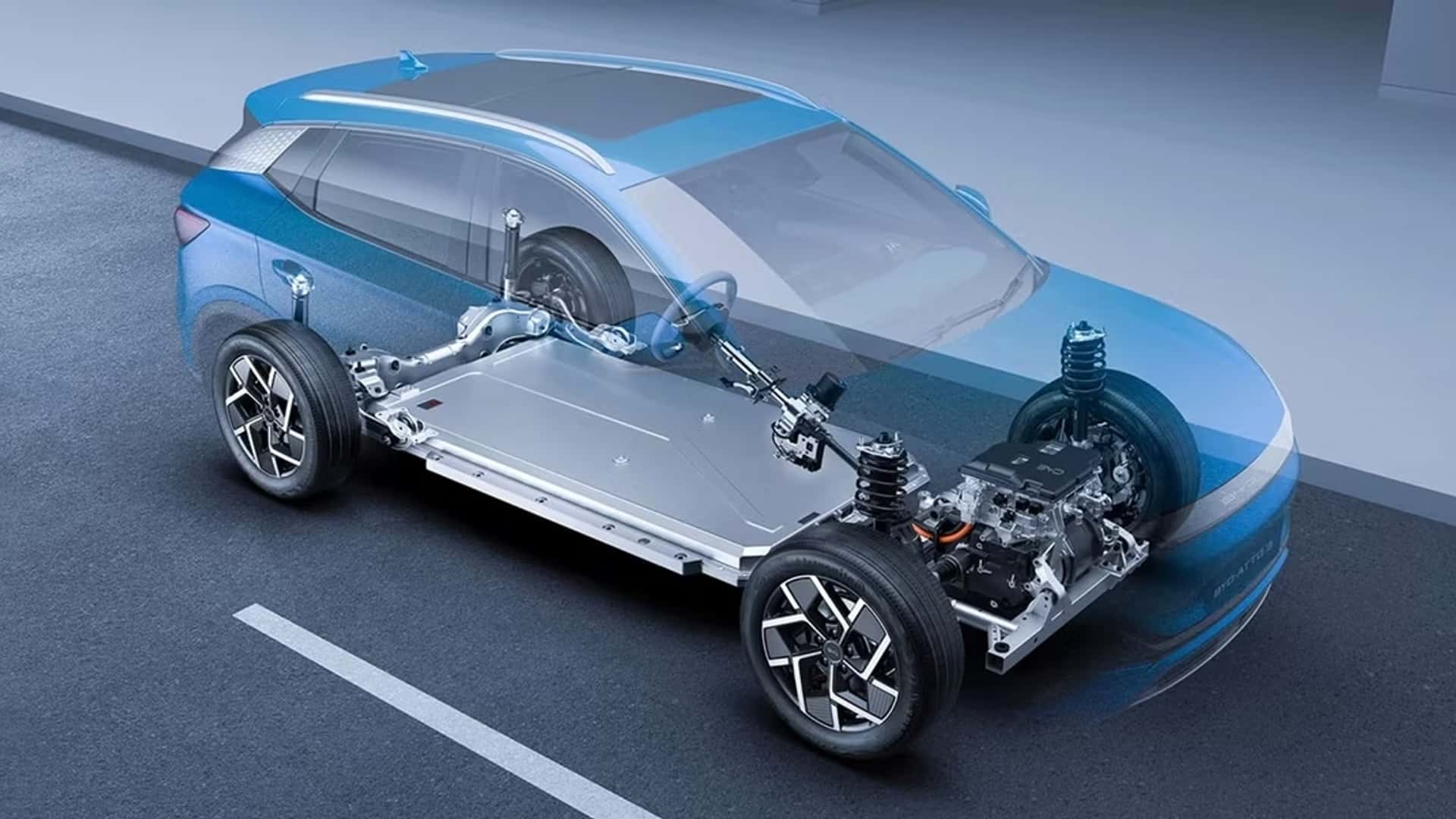
However, the trade-off might be the repairability and recyclability of these advanced battery packs. As EVs become more prevalent on the roads, the need for efficient and cost-effective repair and recycling processes will only continue to grow.
BYD’s Blade battery pack is just one example of the challenges that come with highly integrated battery systems. While they offer benefits like increased efficiency and energy density, they also present obstacles when it comes to servicing and end-of-life disposal.
The use of structural adhesives in the assembly of these packs is a major contributing factor to the difficulty in dismantling and repairing them. These adhesives create strong bonds that enhance the pack’s durability and crashworthiness, but they also make it challenging to access and replace individual components.
Imagine being a repair technician tasked with fixing a damaged battery pack held together by layers of adhesive. The time and labor required to disassemble and reassemble such a pack would undoubtedly drive up repair costs, potentially making it more economical to simply replace the entire pack.
Furthermore, the issue of recycling these complex battery packs poses another set of challenges. Disassembling and separating the various components for recycling becomes a labor-intensive and resource-intensive process, especially when adhesives are involved.
As the EV industry continues to evolve, manufacturers will need to find a balance between innovation and practicality. While advanced battery designs like BYD’s Blade pack offer exciting possibilities for the future of electric vehicles, they also highlight the importance of considering the entire lifecycle of these technologies.
Ultimately, the goal should be to create sustainable and efficient solutions that not only benefit consumers but also minimize the environmental impact of EV production, maintenance, and disposal. Finding ways to improve the repairability and recyclability of advanced battery packs will be crucial in achieving this goal.
As we look towards a future where electric vehicles are the norm rather than the exception, addressing these challenges will be essential in ensuring the long-term viability and success of the EV industry.
It will be interesting to see how manufacturers like BYD and others tackle these issues in the coming years, as the demand for EVs continues to rise and the need for sustainable solutions becomes increasingly urgent.
The automotive industry is constantly striving to make advancements in electric vehicle technology to meet the growing demand for sustainable transportation. One of the key areas of focus is improving battery efficiency, reducing costs, and increasing energy density to enhance the performance of electric vehicles. Techniques such as more efficient packaging, lower cost materials, and denser batteries are being explored to achieve these goals.
While these advancements are crucial for the development of electric vehicles, there is a critical aspect that often gets overlooked – the need for battery servicing. Whether it’s due to an accident or a faulty module in a car beyond its warranty period, there will come a time when batteries need to be repaired or replaced.
This poses a challenge for the industry as it needs to ensure that adequate infrastructure and resources are available for battery servicing. This includes trained technicians, specialized equipment, and proper disposal methods for old batteries. Failure to address these issues could result in delays in servicing, increased costs, and potential environmental hazards.
As the demand for electric vehicles continues to rise, it is essential for the industry to not only focus on improving battery technology but also on establishing robust systems for battery servicing. By addressing these challenges proactively, the industry can ensure the long-term sustainability and success of electric vehicles in the market.