
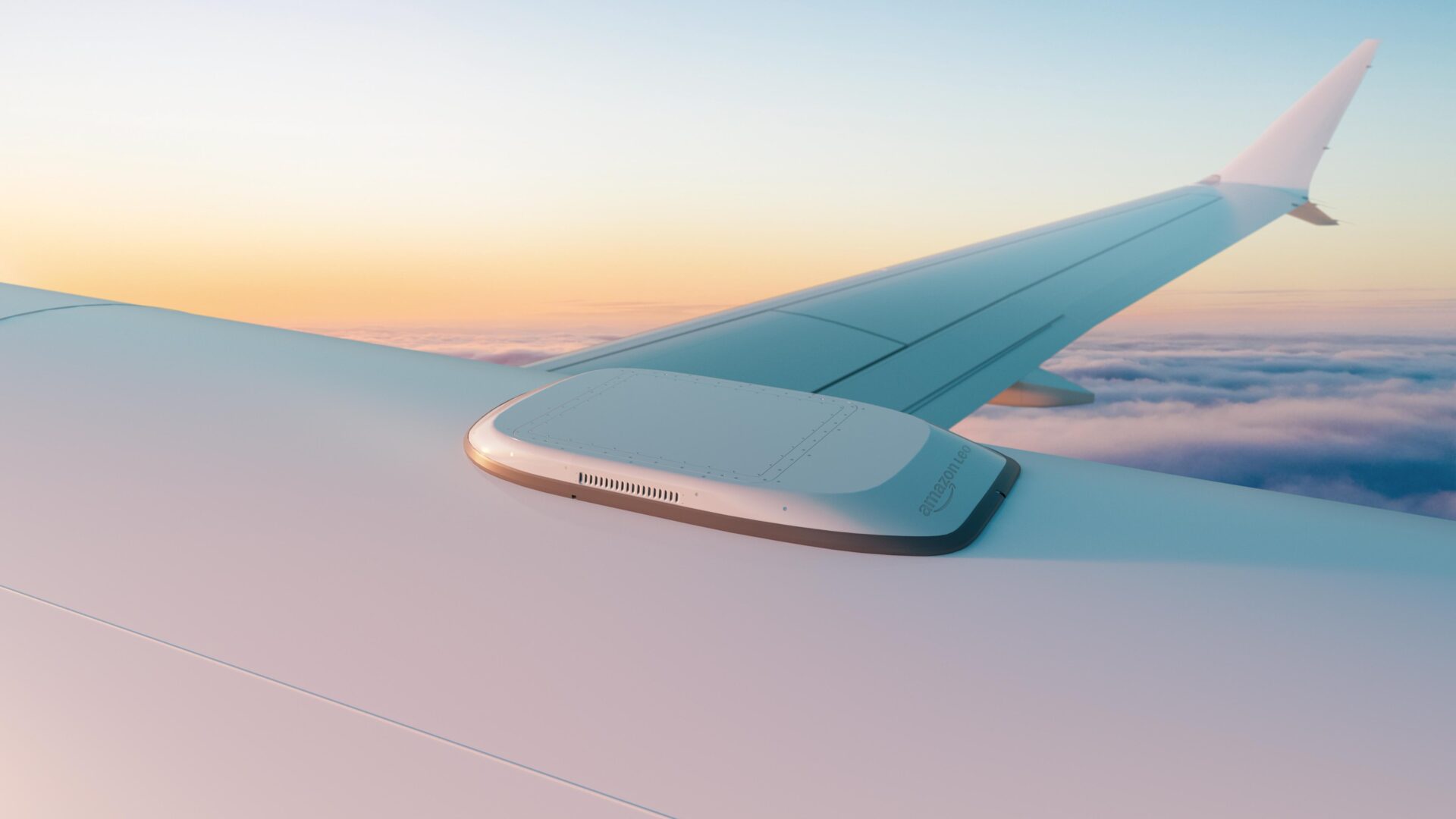
Amazon is making waves in the world of in-flight Wi-Fi with the introduction of its new Amazon Leo Aviation Antenna. This innovative hardware is designed to be mounted on top of commercial aircraft, providing high-speed internet connectivity through Amazon’s upcoming satellite constellation.
Despite Amazon’s enthusiasm for the technology, the company is currently lagging behind Elon Musk’s SpaceX and its Starlink satellite network. Starlink has already deployed thousands of satellites and has secured partnerships with major airlines like United and WestJet. In comparison, Amazon is still in the early stages of launching its satellite constellation, although it has already struck deals with Delta and JetBlue.
The Amazon Leo Aviation Antenna features a sleek and compact design reminiscent of the flat-panel antennas used by Starlink. Measuring 58 inches in length and just 2.6 inches in height, the antenna boasts a slim profile that aims to reduce drag and fuel consumption for airlines. Additionally, the antenna is equipped with no moving parts, allowing for quick installation in a single day and requiring minimal maintenance compared to traditional satellite dishes.
In terms of performance, Amazon claims that the system can deliver impressive download speeds of up to 1 Gbps and upload speeds of 400 Mbps. This level of speed would enable every passenger on a plane to stream 4K video or engage in online gaming without experiencing the usual lag associated with older satellite-based Wi-Fi systems.
To ensure connectivity over remote areas such as oceans or the North Pole, the satellites utilize laser links to transmit data between each other until reaching one of Amazon’s 300 planned ground stations. The company plans to accelerate its satellite launch schedule throughout 2026 in order to kickstart the service.
Amazon faces a tight deadline, as they currently have approximately 240 satellites in orbit but need to reach around 1,600 by the end of July to fulfill their original FCC license requirements. Falling behind schedule, the company has already applied for an extension until 2028 to meet their satellite deployment goals.
In conclusion, Amazon’s entry into the in-flight Wi-Fi market with the Amazon Leo Aviation Antenna promises to revolutionize the passenger experience with blazing-fast internet speeds. While facing stiff competition from Starlink, Amazon’s innovative technology and commitment to expansion suggest a promising future for in-flight connectivity.