
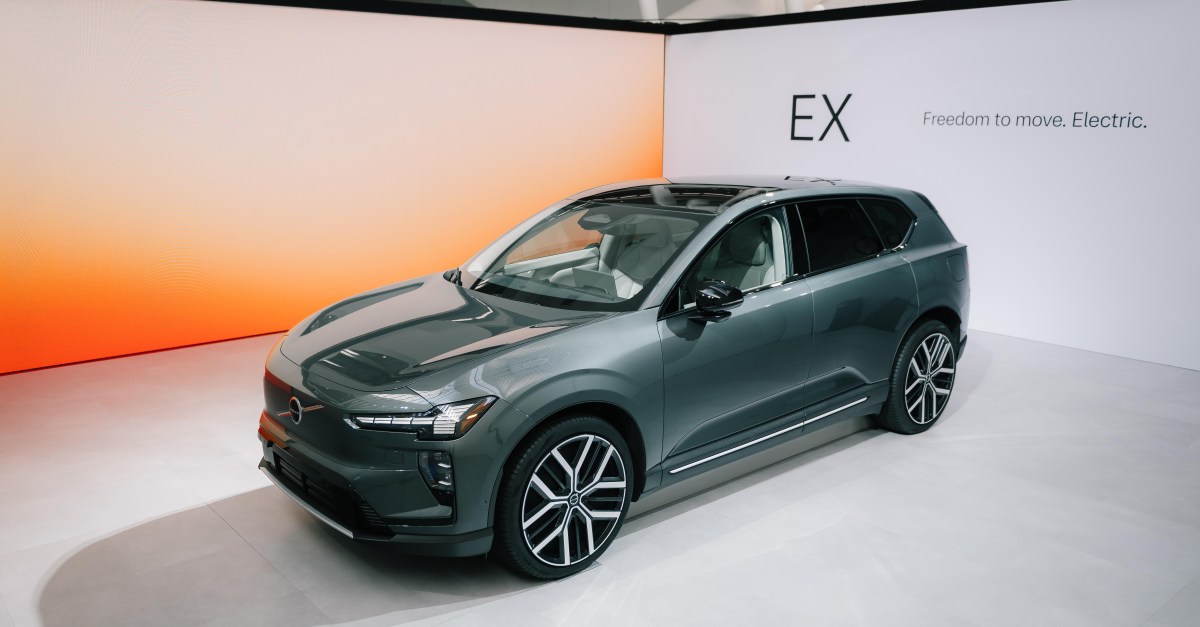
Google and Volvo have announced a groundbreaking partnership that will revolutionize the driving experience for owners of the upcoming EX60 SUV. At the I/O conference, it was revealed that the AI-powered assistant, Gemini, will now have access to external cameras in the vehicle to provide real-time information about the surroundings.
This upgrade is made possible by Volvo’s decision to utilize Google’s embedded Android Automotive as the operating system for the EX60. With this new capability, Gemini will be able to assist drivers in understanding and interpreting road signs, lane markings, and even provide information about nearby landmarks or restaurants.
One of the first use cases for this new feature will be translating complex parking signs, a task that can often be challenging for drivers. Gemini will also be able to inform car owners about parking restrictions, permit requirements, and other important details to make the driving experience more seamless.
Patrick Brady, VP of Android Automotive at Google, expressed excitement about the potential impact of this new feature, stating that Gemini will make driving more helpful by providing valuable insights about the surroundings while on the road.
In addition to Google’s Gemini technology, the success of this new feature also relies on the computing power of Qualcomm’s Snapdragon system-on-a-chip, as well as the EX60’s over-the-air software capabilities. This collaboration between Google, Volvo, and Qualcomm promises to enhance the driving experience for EX60 owners in a significant way.
While the parking sign interpretation feature holds great promise, it is essential that Google ensures its accuracy through rigorous testing. In cities like New York, where parking signs can be notoriously confusing, the stakes are high for Gemini to deliver reliable information to prevent costly tickets or vehicle impoundment.
Furthermore, Google has also announced that Gemini’s integration with external cameras will enhance Google Maps’ navigation capabilities. Volvo will be among the first automakers to receive Google Maps’ new Immersive Navigation feature, which renders routes in 3D with improved graphics for a more lifelike representation of the real world. This will enable more conversational directions that take into account nearby landmarks, providing a more intuitive navigation experience for drivers.
In a correction to an earlier version of this story, it was clarified that the AI-powered features of the EX60 are powered by Qualcomm’s Snapdragon system-on-a-chip, not Nvidia as previously stated. This partnership between Google, Volvo, and Qualcomm marks a significant step forward in the integration of AI technology in the automotive industry, promising a more intelligent and seamless driving experience for consumers.