
.
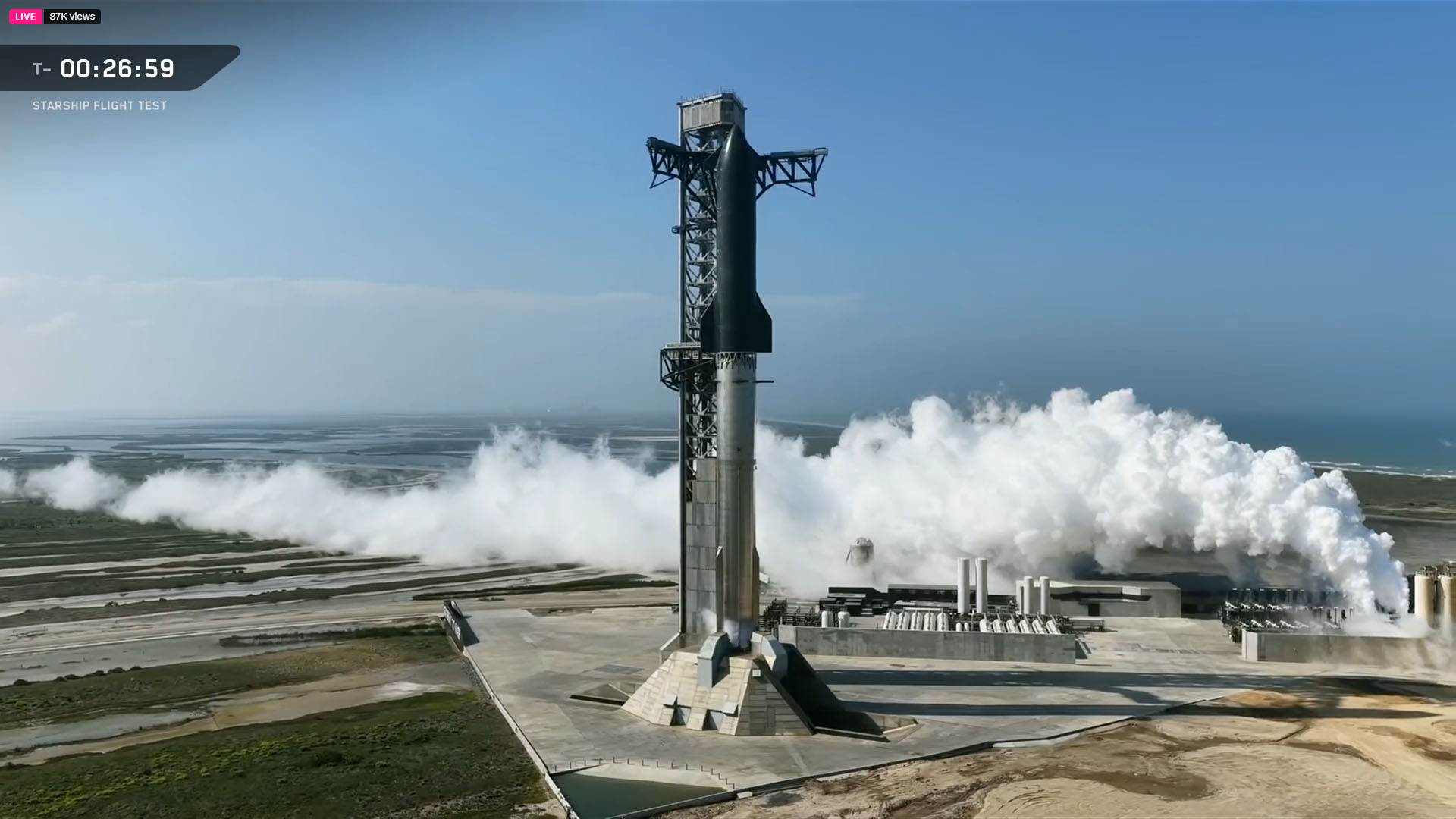
SpaceX has successfully completed the Flight 12 test of the Starship V3 generation. The test, which was initially scrubbed yesterday due to a launch tower quick-disconnect arm detachment failure, was rescheduled for today. The live webcast of the test provided viewers with a detailed look at the launch and landing of the Starship.
The Flight 12 test marked the first launch and landing test of the Starship V3 generation. The fully stacked Starship V3 was mounted on Pad 2 OLM at Starbase, Texas. The major components of the spacecraft were labeled in an image to help viewers understand the terminology used during the webcast.
During the test, SpaceX deployed twenty Starlink V3 dummy satellites and two modified Starlink satellites, internally called Dodger Dogs. The Dodger Dogs serve as a testing platform between V2 and V3 satellites and are part of SpaceX’s transition to laser-linked satellites for deep space communications.
The launch pad for Flight 12 was redesigned to support the V3 Starship launches with 33 Raptor engines igniting simultaneously. The test also involved the landing of the Starship 39 upper stage in the Indian Ocean near the coast of Australia.
The live updates during the webcast provided viewers with real-time information about the test. SpaceX successfully completed the liftoff, stage separation, and deployment of the Starlink and Dodger Dog satellites. The Starship 39 upper stage experienced some engine issues but continued to fire with five out of six engines.
The test concluded with the successful landing of Ship 39 in the Indian Ocean. SpaceX confirmed the success of the test and will now focus on analyzing the data collected during the flight for future improvements.
Overall, the Flight 12 test demonstrated the capabilities of the Starship V3 generation and showcased SpaceX’s continued progress in space exploration. Stay tuned for more updates on SpaceX’s future missions. SpaceX recently conducted a test flight of Starship 39, which included several key milestones and challenges. The mission involved skipping the in-space burn, putting extra pressure on the forward flaps during reentry. This decision added complexity to the landing sequence, as the forward flaps would need to withstand higher stresses.
Additionally, SpaceX attached heat shield tiles to the leeward side of the Starship to gather data on their performance during reentry. This move aimed to increase the understanding of how the heat shield tiles protect the spacecraft from the intense heat generated during reentry.
During the flight, SpaceX successfully completed a stress test on the aft flaps at around T+1 hour and 1 minute, when the Starship was traveling at Mach 7 speeds. This test provided valuable information on the performance of the flaps under high-speed conditions.
At T+1 hour and 4 minutes, Starship 39 was on target for landing in the Indian Ocean. The spacecraft executed a belly-flop maneuver as part of the landing sequence, showcasing its ability to control its descent and position for landing.
The landing burn was performed using two sea-level Raptor 3 engines, followed by a single engine at the end of the sequence. Despite a successful landing, Starship 39 experienced a post-landing explosion. The explosion was attributed to the presence of extra propellant due to skipping the in-space engine burn, leading to a more intense blast.
Overall, the test flight of Starship 39 provided valuable data and insights for SpaceX as they continue to develop and refine their Starship program. The challenges faced during the mission will undoubtedly inform future design decisions and improvements to ensure the success of upcoming launches. Stay tuned for more updates on SpaceX’s Starship program and follow us on Google News, Twitter, Flipboard, WhatsApp, and RSS for the latest news and developments.
Add A Comment