
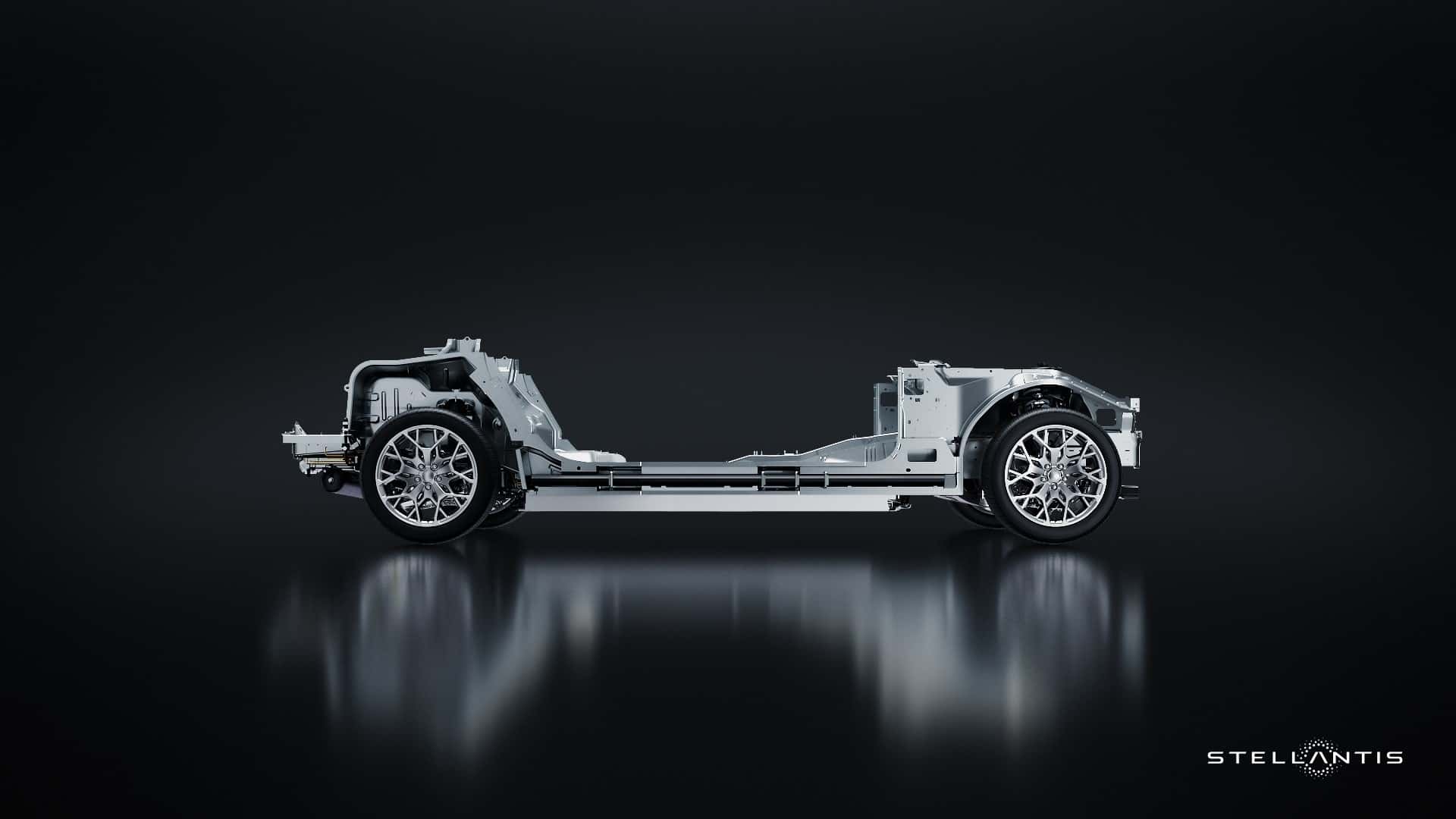
Stellantis, the parent company of popular carmakers like Jeep, Ram, and Dodge, is making a bold move to catch up with its rivals in the electric vehicle (EV) and autonomy race. The company recently unveiled a $60 billion turnaround plan that includes a focus on new EVs, improved software, and higher levels of autonomy.
As part of this plan, Stellantis is set to launch dozens of new EVs and extended-range hybrids by 2030. These vehicles will be built on a brand-new software-defined vehicle (SDV) platform, marking a significant shift in the company’s approach to vehicle development. Additionally, Stellantis is deepening its partnership with Qualcomm to enhance in-vehicle infotainment and advanced driver-assistance systems (ADAS).
One of the key highlights of Stellantis’ plan is the introduction of a new EV platform that will utilize an 800-volt architecture and lithium-iron phosphate (LFP) batteries. This cutting-edge technology will enable faster charging times and improved efficiency, setting Stellantis apart from its competitors.
Stellantis has faced challenges in the EV market in the past, with its sales and profits taking a hit due to intense competition. However, the company is now determined to turn things around by focusing on innovation and sustainability. By launching a total of 29 new EVs, 15 plug-in hybrids, 24 traditional hybrids, and 39 combustion-powered vehicles over the next five years, Stellantis is aiming to position itself as a leader in the EV market.
Central to Stellantis’ strategy is the STLA One platform, a scalable architecture that will consolidate five existing platforms into a single platform. This platform will cover three key segments: subcompact (B), compact (C), and large family-oriented vehicles (D), allowing for greater flexibility and efficiency in vehicle production.
In addition to its focus on EVs, Stellantis is also embracing shared software and electrical architectures to reduce complexity and lower costs. By adopting lithium iron phosphate (LFP) batteries for its EVs, Stellantis is aligning itself with the latest industry trends and reducing its reliance on expensive minerals like nickel and cobalt.
Overall, Stellantis’ ambitious turnaround plan signals a new era of innovation and sustainability for the company. With a strong focus on electric vehicles, improved software, and advanced autonomy features, Stellantis is positioning itself for success in a rapidly evolving automotive landscape. China has been making great strides in the electric vehicle (EV) industry, particularly in the development of Lithium Iron Phosphate (LFP) batteries. Traditionally, LFP batteries have been known for their lower energy density compared to other types of batteries, such as Lithium-ion. However, recent advances in LFP technology in China have significantly narrowed the gap in range and fast-charging speeds, making them a more viable option for EV manufacturers.
One of the key advancements in LFP battery technology is the adoption of a cell-to-body battery-pack design. This innovative approach involves integrating the battery cells directly into the vehicle’s structure, rather than stacking them in separate modules. This not only reduces the overall weight of the battery pack but also simplifies the design and construction process. By freeing up space within the vehicle, manufacturers are able to pack more cells into the battery pack, ultimately increasing the usable energy density of the battery.
In addition to advancements in battery technology, Chinese automakers are also focusing on improving the overall technology and features of their EVs. One example of this is the partnership between CATL (Contemporary Amperex Technology Co. Limited) and Qualcomm. CATL plans to integrate Qualcomm’s Snapdragon Digital Chassis into their vehicles to enhance the infotainment and cockpit experience for drivers and passengers. This partnership aims to provide a seamless and user-friendly interface that rivals the technology found in luxury vehicles.
Furthermore, CATL is also investing in autonomous driving technology through partnerships with Qualcomm and Wayve, a U.K.-based autonomous vehicle startup. By incorporating Qualcomm’s Ride Pilot ADAS platform, CATL vehicles will have access to advanced driver-assistance features that enhance safety and convenience for drivers. Additionally, the partnership with Wayve will enable CATL to offer hands-free, supervised door-to-door automated driving capabilities, similar to Tesla’s Full-Self Driving (FSD) system.
While CATL’s plans for the future of EV technology are ambitious, there is always a risk of delays or cancellations that could cost the company billions. However, with the rapid advancements in LFP battery technology and strategic partnerships with industry leaders, CATL is well-positioned to lead the way in the next generation of electric vehicles.