
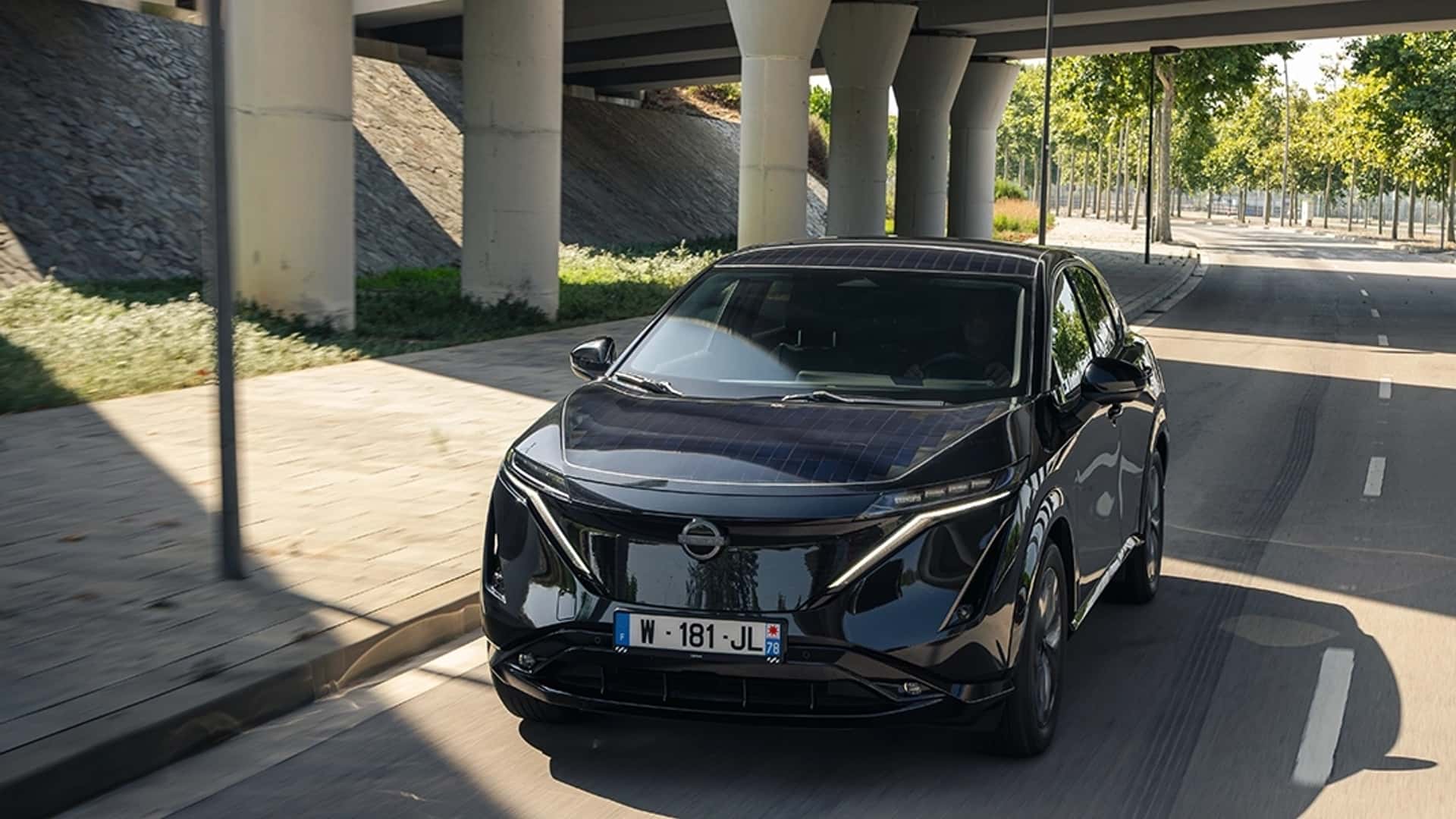
Nissan has recently unveiled a one-off prototype of the Ariya that features solar panels, allowing for an additional 14.3 miles of range per day in optimal sunny conditions. This experimental car, equipped with 40.9 square feet of solar panels on its hood, roof, and tailgate, can generate up to 13.2 miles of range per day in sunny Dubai or 6.3 miles in cloudier cities like London.
During a 50-mile drive on a sunny day, the Ariya prototype was able to generate 0.5 kilowatt-hours of electricity, translating to approximately 2 miles of extra range trickling into the battery. While this may not seem like a significant amount, it does provide some “free” range harnessed from the sun and can reduce the frequency of charging by 35% to 65% over the course of a year, depending on usage patterns.
The solar panels on the Ariya were developed in partnership with Lightyear, a solar car company that faced bankruptcy after producing only a few vehicles. Despite this, Nissan sees potential in exploring how vehicles can generate their own renewable energy, offering customers greater freedom, reduced charging dependency, and a cleaner future.
While Nissan currently has no plans to offer a solar array on its production electric cars, they are moving towards introducing a solar option for their vehicles in Japan. The Ao-Solar Extender for the Sakura kei EV is a sunshade mounted on the roof that can potentially add up to 1,860 miles per year in ideal conditions, although details on availability and pricing are still unclear.
Although the concept of solar-powered electric vehicles holds promise for extending range and reducing reliance on external charging, there are few EVs currently in production with factory-installed solar arrays. The Hyundai Ioniq 5 and Toyota bZ4X offer smaller solar panels that provide limited additional range, but the gains are not substantial.
The Aptera three-wheeler is set to become the first purpose-built solar EV to enter production, with plans for limited production starting this year. However, past delays and failures of solar EV startups like Lightyear and Sono Motors indicate that the reality of solar-powered electric vehicles may still be far from widespread adoption. Despite the potential benefits of solar panels on EVs, it seems that the technology is still more of a promise than a reality in the current automotive market. The advancement of technology has transformed the way we live, work, and communicate. From smartphones to smart homes, technology has become an integral part of our daily lives. One of the most significant advances in technology in recent years is the development of artificial intelligence (AI). AI is a branch of computer science that aims to create intelligent machines that can perform tasks that typically require human intelligence, such as speech recognition, decision-making, and language translation.
AI has already had a profound impact on various industries, including healthcare, finance, and transportation. In healthcare, AI is being used to analyze medical images, predict patient outcomes, and even assist in surgical procedures. In finance, AI is being used to detect fraud, analyze market trends, and automate trading processes. In transportation, AI is being used to improve vehicle safety, optimize traffic flow, and develop self-driving cars.
One of the most exciting applications of AI is in the field of robotics. Robots powered by AI are becoming increasingly sophisticated and capable of performing a wide range of tasks. From manufacturing and warehouse automation to healthcare and customer service, robots are being used in various industries to increase efficiency and productivity.
In the manufacturing industry, AI-powered robots are revolutionizing the production process. These robots can perform repetitive and dangerous tasks with precision and speed, leading to higher quality products and increased productivity. In warehouses, AI-powered robots are being used to automate the picking and packing process, reducing errors and improving efficiency.
In healthcare, AI-powered robots are being used to assist doctors and nurses in performing surgeries, delivering medications, and monitoring patients. These robots can analyze vast amounts of medical data quickly and accurately, helping healthcare professionals make better decisions and improve patient outcomes.
In customer service, AI-powered robots are being used to provide personalized assistance to customers and streamline the customer service process. These robots can answer questions, provide product recommendations, and even resolve issues without human intervention, leading to improved customer satisfaction and loyalty.
As AI technology continues to advance, the possibilities for its applications are seemingly endless. From improving efficiency and productivity in various industries to enhancing the quality of healthcare and customer service, AI-powered robots are transforming the way we live and work. With the continued development of AI technology, we can expect to see even more innovative applications that will further revolutionize our world.