
Nvidia is making waves in the autonomous driving industry with the unveiling of Alpamayo, a groundbreaking autonomous vehicle AI system that CEO Jensen Huang touts as the world’s first “thinking, reasoning” AI for self-driving cars. This innovative technology is set to hit U.S. roads later this year, marking a significant milestone in the development of autonomous driving systems.
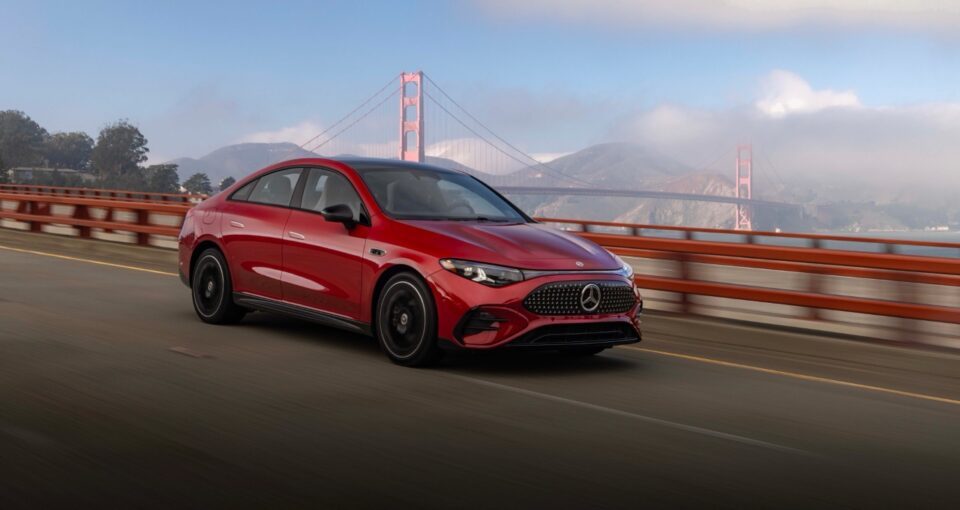
At CES 2026, Nvidia announced the introduction of Alpamayo, a cutting-edge autonomous driving model that incorporates Vision-Language-Action (VLA) AI into production vehicles, starting with the new Mercedes-Benz CLA. Alpamayo is designed to process raw camera input and generate driving actions while providing transparency into the decision-making process behind each action.
The core of Nvidia’s new DRIVE AV software stack, Alpamayo will debut in the Mercedes-Benz CLA in the U.S. before expanding to other vehicles in the automotive industry. This system supports advanced Level 2 point-to-point driving capabilities, including complex urban navigation, proactive collision avoidance, and automated parking, all powered by sophisticated reasoning models and a dual-stack safety architecture.
With a 10-billion-parameter architecture, Alpamayo 1 leverages video input to create driving trajectories while showcasing the logic behind each decision. This open architecture allows developers to customize the model for production vehicles and validation systems, enabling continuous improvement and adaptation.
Ali Kani, Vice President of Automotive at Nvidia, emphasized the significance of Alpamayo’s launch, highlighting the company’s role in advancing AI-defined vehicles. He stated, “Nvidia is the intelligence backbone that makes every vehicle programmable, updatable, and continually improving through data and software. With the introduction of the Mercedes-Benz CLA and Alpamayo, we are achieving a new standard in safety, design, engineering, and AI-driven driving.”
The Mercedes-Benz CLA, the first vehicle built on the new MB.OS platform, recently received a five-star Euro NCAP safety rating, with Nvidia’s active safety features contributing to this achievement. Nvidia’s DRIVE AV system combines an end-to-end AI driving stack with a parallel classical safety system based on the Halos safety framework, ensuring redundancy and safety in real-world deployment.
In addition to the Alpamayo announcement, Nvidia unveiled its next-generation Rubin AI chips, hailed by Tesla CEO Elon Musk as “a rocket engine for AI.” This development underscores Nvidia’s prominent role in the autonomy and robotics sectors, including its collaboration with Tesla on Full Self-Driving technology.
With Alpamayo, Nvidia is not only serving as a hardware supplier but also positioning itself as a comprehensive autonomy platform provider. This strategic move could shape the future of self-driving systems by enhancing their ability to think, reason, and communicate effectively on public roads.
Overall, Nvidia’s Alpamayo represents a significant leap forward in autonomous driving technology, paving the way for more advanced and intelligent self-driving systems that prioritize safety, transparency, and continuous improvement.