
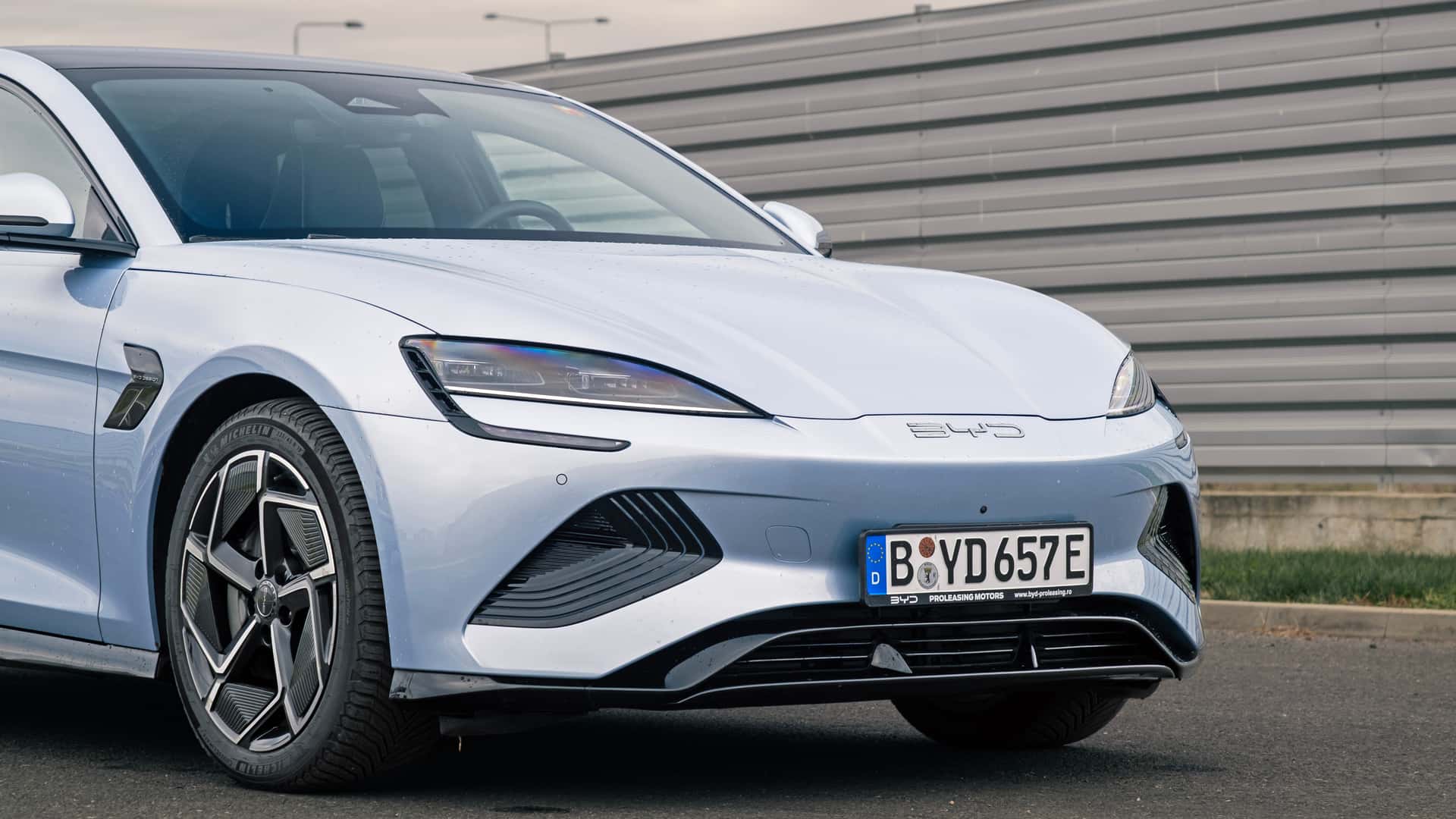
China’s electric vehicle (EV) exports have seen a remarkable surge in November, with a staggering growth rate of 87%. The data shared by the Chinese government and reported by Bloomberg indicates that nearly 200,000 EVs were exported in November alone, marking a significant increase from the previous year. This trend has been consistent throughout 2025, with almost 2 million EVs being exported from China in the first 11 months of the year.
The largest market for Chinese EV exports continues to be Asia, with almost 1 million EVs being shipped to various countries across the continent. However, other regions are also witnessing a rapid growth in Chinese EV imports. Mexico, in particular, experienced exponential year-over-year growth after BYD introduced a series of affordable models in the country. In November, Mexico saw a 2,367% increase in Chinese EV imports compared to the same month in 2024, bringing the total number of new Chinese EVs exported to the country to 96,194.
BYD, one of China’s leading automakers, has played a significant role in driving the growth of Chinese EV exports. The company launched a range of new models in Mexico and is now the EV market leader in the country. BYD aims to double its sales in Mexico to 100,000 units by the end of 2025 and is also looking to establish a major manufacturing facility in Mexico to cater to the entire Latin American region.
Latin America and the Caribbean have also witnessed a substantial increase in Chinese EV imports, with a 283% year-over-year growth in November. Mexico and Brazil are the largest markets in this region for Chinese-built EVs. Additionally, exports to Europe have been on the rise, with over 42,000 units exported in November and more than 600,000 units exported in 2025.
Despite facing challenges such as import tariffs and market-specific changes, Chinese EVs have made significant inroads into the European market. The United Kingdom and Belgium are the biggest European markets for Chinese EVs, with both countries seeing substantial growth in imports.
Looking ahead, while Chinese EV exports have been on an upward trajectory in 2025, there may be a potential slowdown in 2026. Western automakers are now introducing high-quality EVs that rival the best offerings from China, signaling increased competition in the global EV market. However, China’s strong foothold in the EV export market is a testament to the country’s technological advancements and manufacturing capabilities in the electric vehicle sector. The world of technology is constantly evolving, with new advances being made every day. From artificial intelligence to virtual reality, there are endless possibilities for what the future holds. One of the most exciting developments in recent years is the rise of blockchain technology.
Blockchain is a decentralized, distributed ledger that records transactions across multiple computers in a secure and transparent way. Originally created as the underlying technology for the digital currency Bitcoin, blockchain has since been adapted for a wide range of applications beyond just cryptocurrency.
One of the key features of blockchain is its ability to provide a high level of security. Each transaction is verified by multiple computers on the network, making it virtually impossible for hackers to manipulate the data. This has made blockchain particularly attractive for industries that require a high level of security, such as finance, healthcare, and supply chain management.
Another benefit of blockchain is its transparency. Because each transaction is recorded on a public ledger that can be accessed by anyone, there is a high level of accountability and trust in the system. This has the potential to revolutionize industries that rely on trust and transparency, such as voting systems, real estate, and intellectual property rights.
Blockchain technology also has the potential to streamline processes and reduce costs. By removing the need for intermediaries, such as banks or lawyers, transactions can be completed more quickly and with lower fees. This has the potential to revolutionize industries that rely on complex and time-consuming processes, such as cross-border payments and supply chain management.
In addition to its practical applications, blockchain technology also has the potential to empower individuals and promote financial inclusion. By providing a secure and transparent way to store and transfer value, blockchain has the potential to bring financial services to the millions of people around the world who are currently underserved by traditional banking systems.
Overall, blockchain technology has the potential to revolutionize the way we do business and interact with each other. Its high level of security, transparency, and efficiency make it an attractive option for industries looking to streamline processes and reduce costs. As the technology continues to evolve, we can expect to see even more exciting developments in the world of blockchain.