
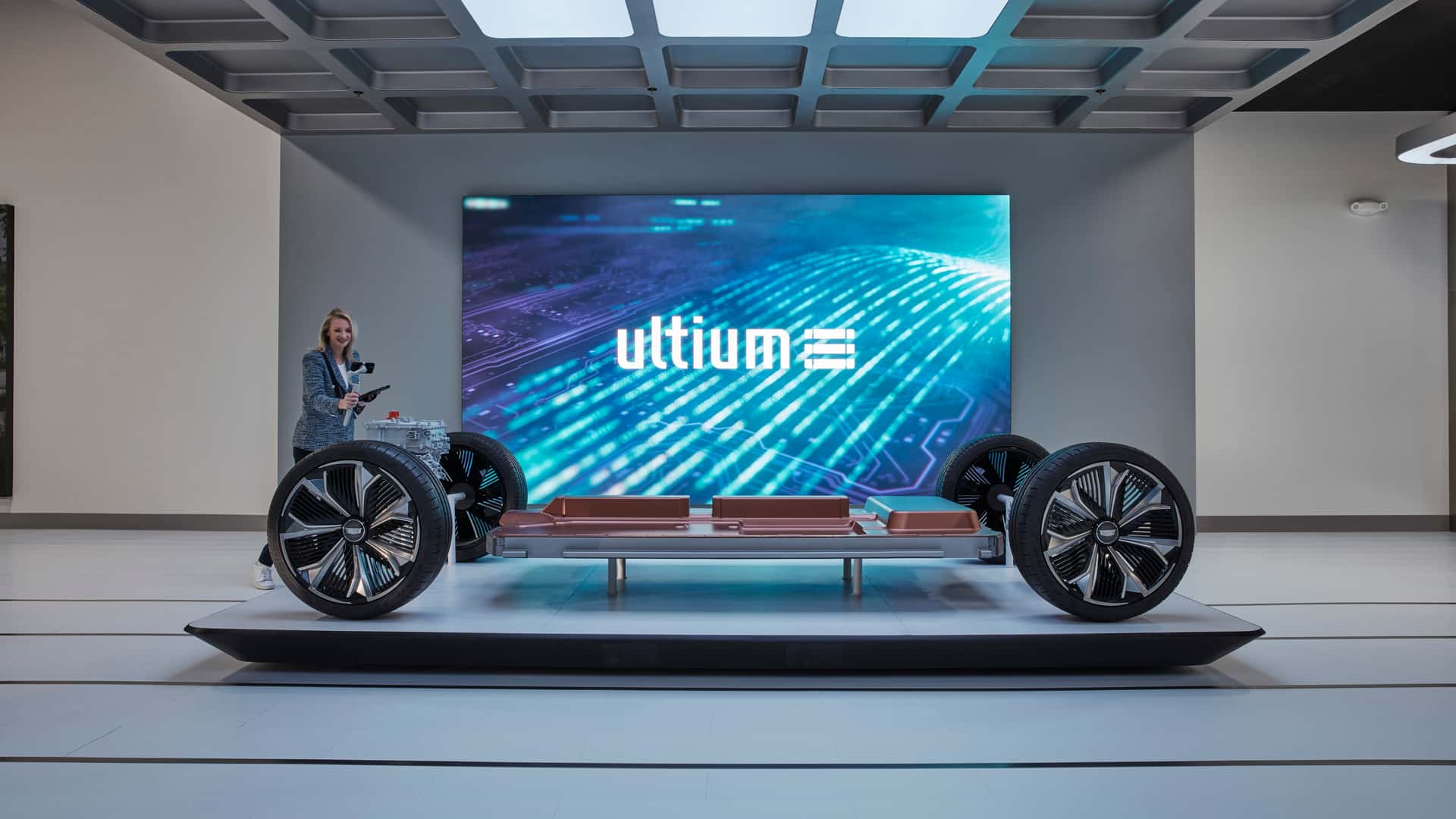
The lithium-ion battery plays a crucial role in the world of electric vehicles (EVs), similar to how the combustion engine is essential for traditional vehicles. It serves as the foundation for how EVs are constructed, marketed, and operated. Unlike the lengthy and costly development process required for new gas engines, a well-designed battery platform can revolutionize the EV industry with minimal resources. By strategically implementing and scaling a single EV architecture, automakers can streamline production, reduce costs, accelerate development, and potentially yield significant long-term benefits.
Leading the charge in this battery revolution is General Motors (GM), which has fully embraced this innovative approach. GM’s battery operations in the United States have expanded to a point where they now produce more cells than industry giant Tesla. According to a recent in-depth report by Bloomberg, GM’s Ultium Cells battery factory in Tennessee operates at full capacity, churning out an impressive 5,000 finished battery cells per hour across five football field-sized facilities. Additionally, a $2.3 billion plant in Ohio, co-owned by GM and LG Energy Solution, is also mass-producing EV batteries for popular models like the Chevy Equinox EV and Cadillac Lyriq.
One of the driving factors behind the increasing popularity of GM’s EVs is their competitive pricing. GM’s battery chief, Kurt Kelty, revealed at a recent summit that the company managed to reduce battery costs by $60 per kilowatt-hour last year. By ramping up production and enhancing manufacturing efficiency, GM aims to achieve another $30 drop by 2025, targeting a cost of around $100 per kWh. This substantial reduction in battery costs could position GM to compete with Tesla and even undercut prices in China, known for its cost-effective EV market.
Despite these advancements, there is still room for improvement. The current battery pack costs for models like the Blazer EV and Equinox EV are considerably higher than traditional engine and transmission costs for gas-powered vehicles. To address this disparity, GM plans to transition from its existing battery modules to prismatic cells. Through a joint venture with Samsung SDI, GM is constructing a state-of-the-art factory in Indiana to produce these rectangular brick-shaped cells, which offer improved efficiency and range for GM’s EV lineup.
While the Indiana plant’s production timeline has been delayed to 2027, GM’s commitment to EVs remains steadfast. The company’s massive scale, extensive resources, and unwavering investment indicate a long-term dedication to the electrification of its vehicle lineup. Despite potential challenges from political and regulatory hurdles, GM’s vision for an electric future appears firmly entrenched.
In conclusion, GM’s strategic investments in battery technology and production signal a significant shift towards a sustainable and electrified automotive industry. By prioritizing innovation, efficiency, and cost-effectiveness, GM is laying the groundwork for a future where electric vehicles are not only viable but also accessible to a broader market. The company’s bold EV initiatives are poised to shape the future of transportation and drive the automotive industry towards a more sustainable and environmentally friendly future.