
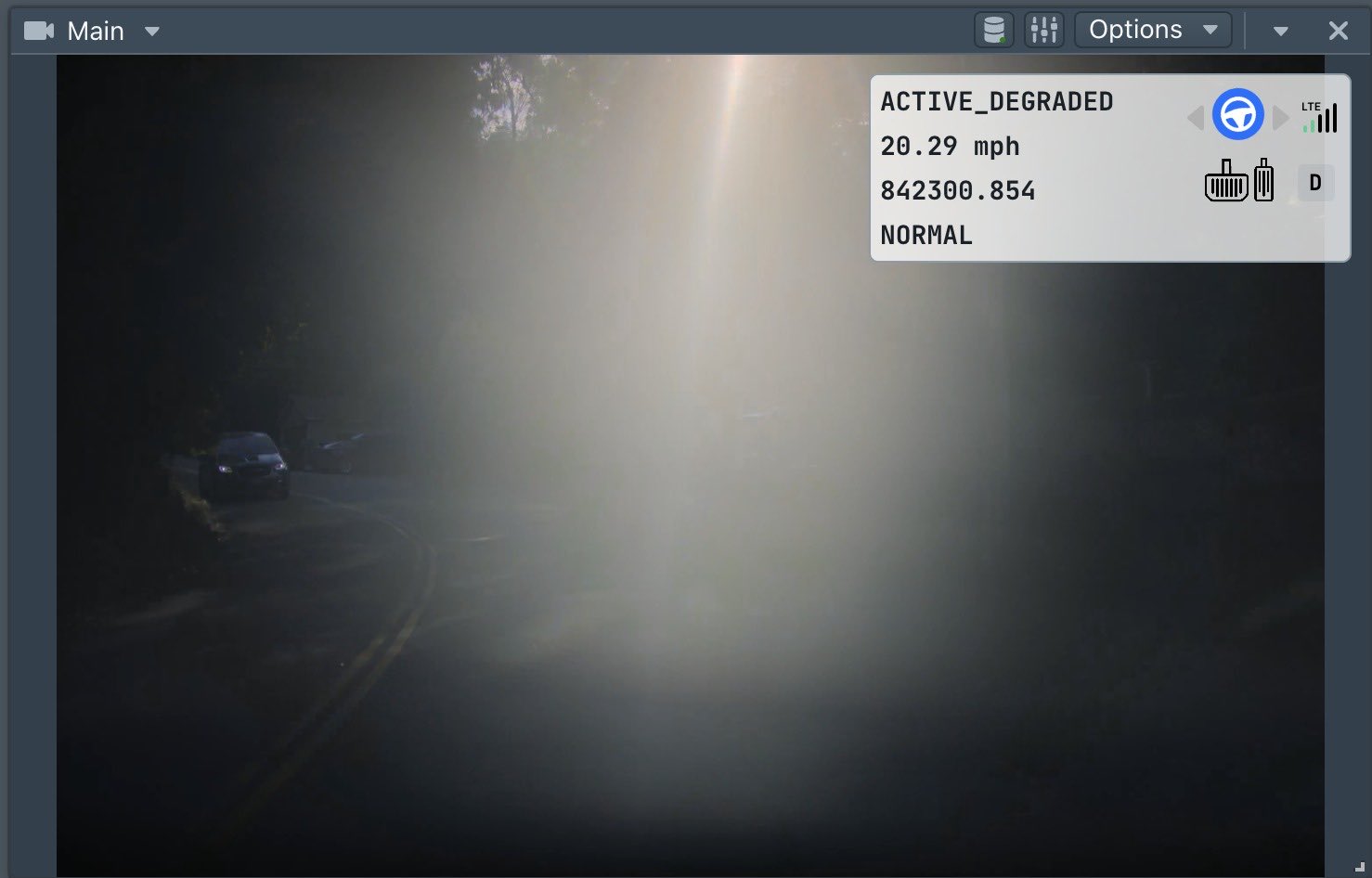
Tesla’s Full Self-Driving (FSD) software has recently showcased a remarkable new feature: the ability to see through challenging lighting conditions that would typically blind a human driver. Elon Musk shared side-by-side images on May 9, illustrating the stark contrast between a washed-out image due to sun glare and a clear, sharp image processed by Tesla’s AI. Despite the blinding light, the AI was able to identify cars and lane markings with precision.
The technology behind this capability involves Tesla’s neural networks bypassing the conventional image processing pipeline and directly interpreting raw photon counts. Unlike traditional cameras that convert light into a colour image for human viewing, Tesla’s AI works with the raw light data before it is transformed into a picture. This approach allows the AI to reconstruct the scene accurately, even in conditions where human perception is compromised by glare.
Elon Musk highlighted this advancement as a critical factor in improving FSD’s performance in challenging scenarios such as direct sunlight and nighttime driving. Moreover, it underscores Tesla’s commitment to a camera-centric approach, in contrast to competitors relying on lidar and radar technologies to address camera limitations. Tesla’s argument is that with sophisticated AI algorithms and comprehensive data, cameras have the potential to outperform human vision, not just provide alternative perspectives.
While this breakthrough signifies a significant technical achievement, some Tesla owners using Hardware 3 vehicles have reported ongoing challenges when the sun directly impacts the camera lens. This suggests that the hardware generation may influence how effectively the AI processes data in extreme lighting conditions.
In conclusion, Tesla’s innovative approach to processing raw photon data represents a significant leap forward in enhancing autonomous driving capabilities. By leveraging cutting-edge AI technology, Tesla continues to push the boundaries of what is possible in the realm of self-driving vehicles.