
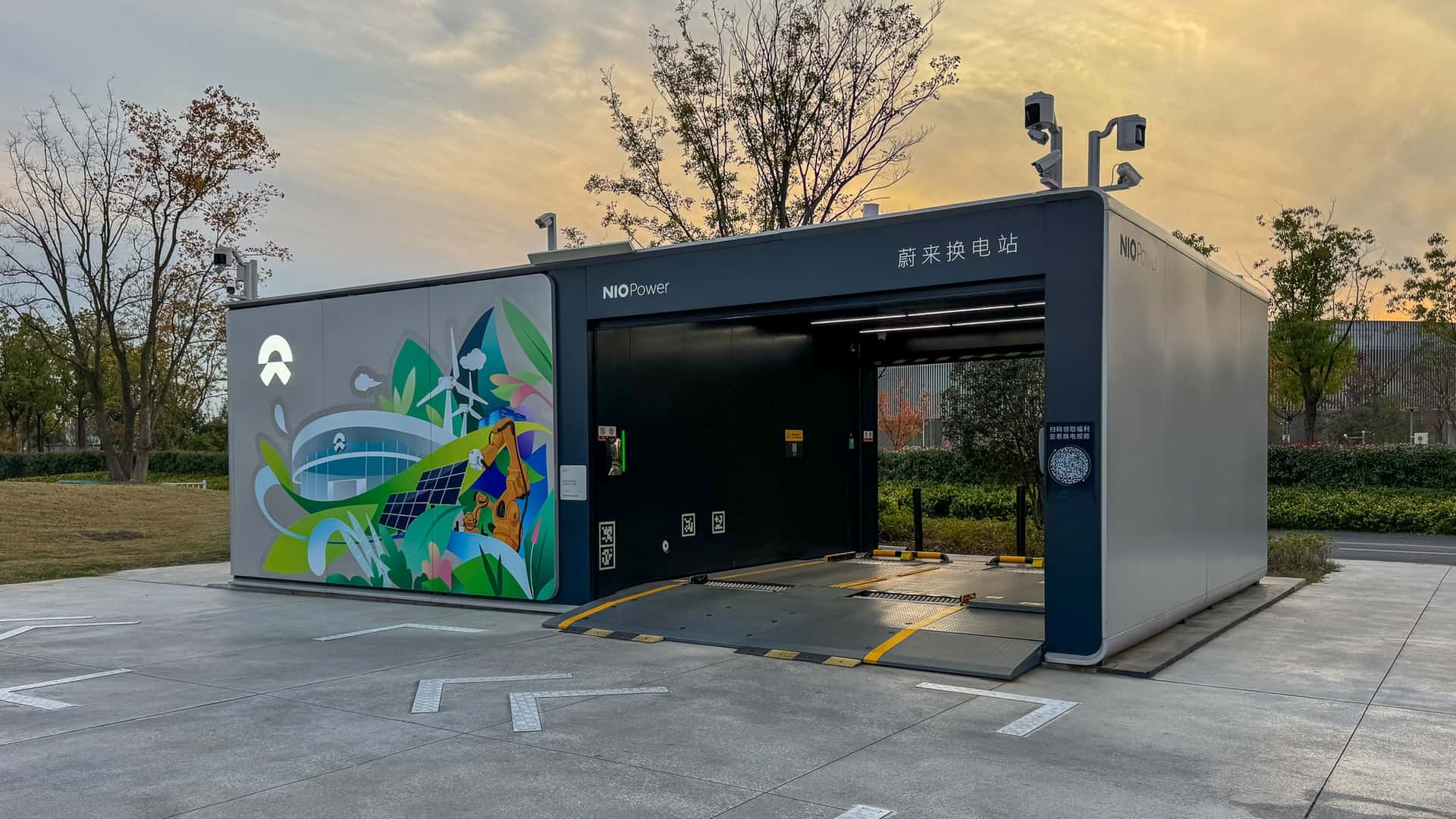
Nio, the Chinese electric vehicle manufacturer, has been making waves in the industry with its innovative battery swapping technology. In a recent surge of popularity, Nio’s customers managed to swap over 1 million batteries in just a week, showcasing the efficiency and convenience of this refueling method.
The process is simple and quick – drivers can pull into a Nio station, wait around three minutes, and leave with a fully charged battery pack. This method is revolutionizing the way people refuel their electric vehicles, making traditional charging stations seem outdated in comparison.
During China’s recent May Day travel rush, Nio completed an impressive 1,031,469 battery swaps between April 30 and May 6. This averages out to about 147,350 swaps per day across Nio’s 3,839 battery swapping stations, or roughly 40 swaps per site per day. The highest day of swaps during this period was May 1, with 170,585 batteries swapped out.
What’s even more impressive is the amount of power delivered through these stations. Nio provided 15.4 gigawatt-hours of energy from May 1 to May 5, accounting for around 16.3% of all energy delivered to EVs in China during that time frame.
Battery swapping offers several advantages over traditional charging methods, with speed being a key factor. While charging an EV can take anywhere from 20 to 40 minutes, a battery swap can be completed in just a few minutes. Additionally, the ability to offer different battery pack options for various use cases, such as longer range for road trips, adds to the appeal of this technology.
However, battery swapping does come with its challenges. Automakers must invest in a large number of spare batteries to store at swapping stations, and interoperability between different brands remains an issue. Nio’s stations currently only work with its own Nio and Onvo brands, highlighting the need for industry-wide standards for interchangeable battery packs.
In the United States, battery swapping technology has been slow to gain traction. While some startups have experimented with the concept, such as California-based company Ample, the industry has yet to see widespread adoption. Nio, on the other hand, is leading the charge in China and is actively working on establishing battery-swapping standards with Chinese battery giant CATL.
Overall, Nio’s success in battery swapping technology is a testament to the company’s commitment to innovation and efficiency in the electric vehicle market. As the demand for EVs continues to grow, advancements in refueling methods like battery swapping will play a crucial role in shaping the future of transportation. Nio, the Chinese electric vehicle manufacturer, has seen significant success with its battery swapping stations. Since 2018, Nio has completed over 100 million battery swaps, showcasing the popularity and efficiency of this technology.
The company is now gearing up to deploy its fifth-generation battery swapping facilities across China. These new stations will be able to accommodate larger wheelbases, making them more versatile and future-proof. This move demonstrates Nio’s commitment to staying ahead of the curve and ensuring that its technology can adapt to the evolving needs of electric vehicle drivers.
The success of Nio’s battery swapping stations can be attributed to their convenience and speed. Instead of waiting for a vehicle to be charged, drivers can simply swap out their depleted battery for a fully charged one in a matter of minutes. This not only saves time but also eliminates range anxiety, making electric vehicles more practical for everyday use.
In addition to the efficiency of the swapping process, Nio’s stations have also garnered praise for their reliability and ease of use. The seamless experience provided by these facilities has helped drive adoption of electric vehicles in China and beyond.
As Nio continues to expand its network of battery swapping stations, the company is poised to revolutionize the electric vehicle market. By offering a convenient and efficient solution to the challenges of charging infrastructure, Nio is paving the way for a future where electric vehicles are the norm rather than the exception.