
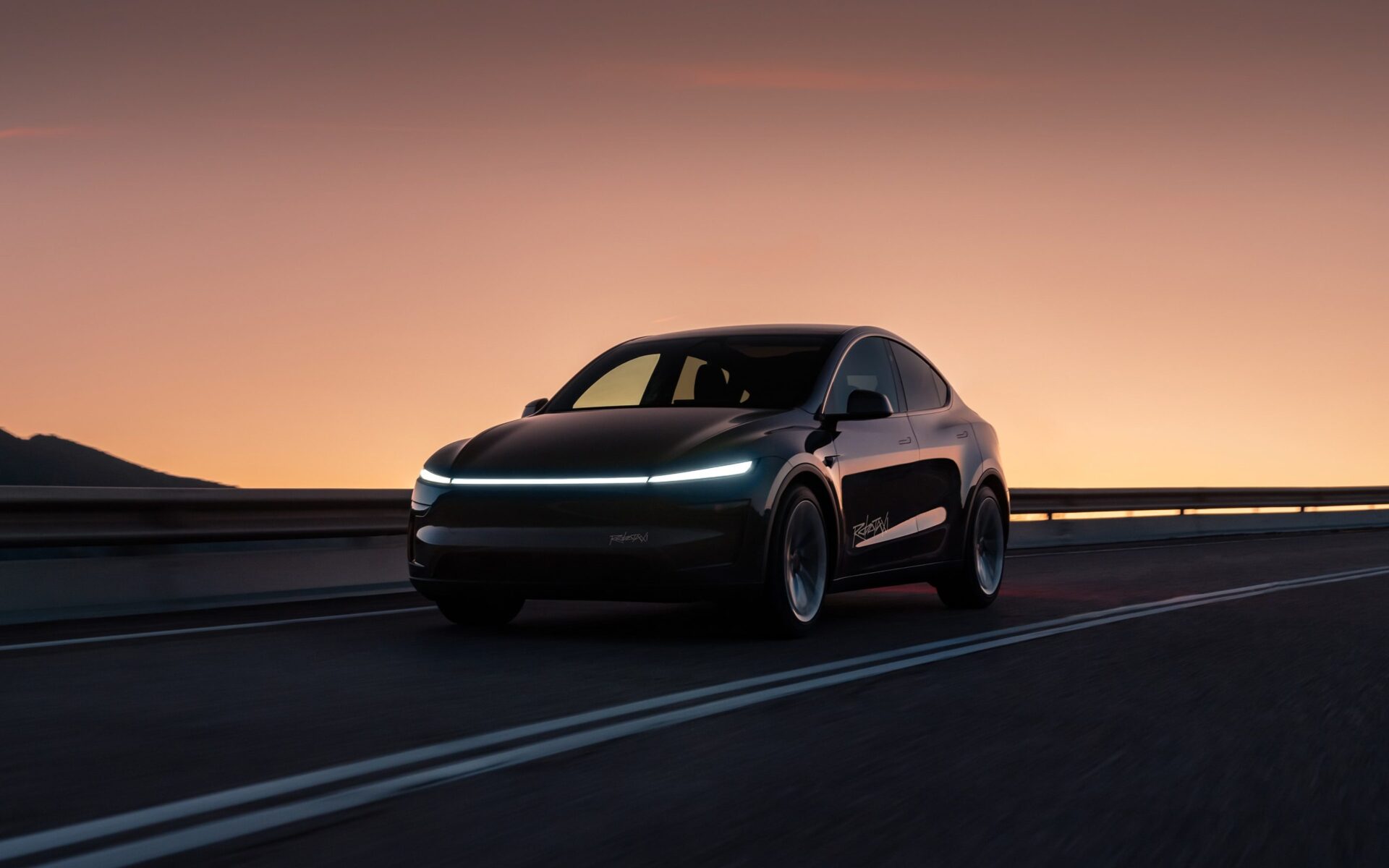
Tesla is forging ahead with plans to establish infrastructure for its autonomous fleet, as evidenced by the recent filing of pre-permits for large-scale charging sites in the Phoenix East Valley. Documents uncovered by MarcoRP reveal that the electric car manufacturer is set to construct numerous chargers that will not be accessible to the general public.
One of the key filings involves an industrial plot of land on S Roosevelt Ave in Chandler, where Tesla is proposing to install a total of 56 V4 charging stalls. Unlike traditional Supercharger stations that cater to all Tesla owners, these chargers are explicitly designated for private use. This begs the question: what purpose do these exclusive charging stations serve?
The sheer magnitude of the project hints at the creation of a dedicated hub tailored to servicing a substantial volume of vehicles, potentially a fleet of Cybercabs or autonomous Robotaxis. This strategic move aligns with Tesla’s broader vision for revolutionizing transportation through autonomous driving technology.
Moreover, the development appears to be part of a larger regional strategy, as Tesla simultaneously submitted a proposal for another site in Mesa. Situated in an industrial area on the east side of the city, this second location mirrors the private-use designation of the Chandler site.
The significance of these private high-capacity depots cannot be overstated. By establishing these specialized facilities instead of relying solely on public charging stations, Tesla is laying the groundwork for efficiently managing a commercial fleet of autonomous vehicles. These depots facilitate centralized cleaning, maintenance, and rapid charging of autonomous cars, all while safeguarding the integrity of the existing public Supercharger network.
In a landscape where public charging wait times can vary, these dedicated stalls ensure that a Robotaxi fleet can operate at optimal efficiency and swift turnaround times. This initiative is especially crucial in the Phoenix East Valley, a prominent testing ground for autonomous driving technologies in North America.
As Tesla continues to push the boundaries of innovation in the realm of autonomous vehicles, the establishment of these private charging hubs signifies a pivotal step towards realizing the full potential of a future where self-driving cars are the norm. By investing in the necessary infrastructure to support a burgeoning fleet of autonomous vehicles, Tesla is solidifying its position as a trailblazer in the realm of sustainable transportation.