
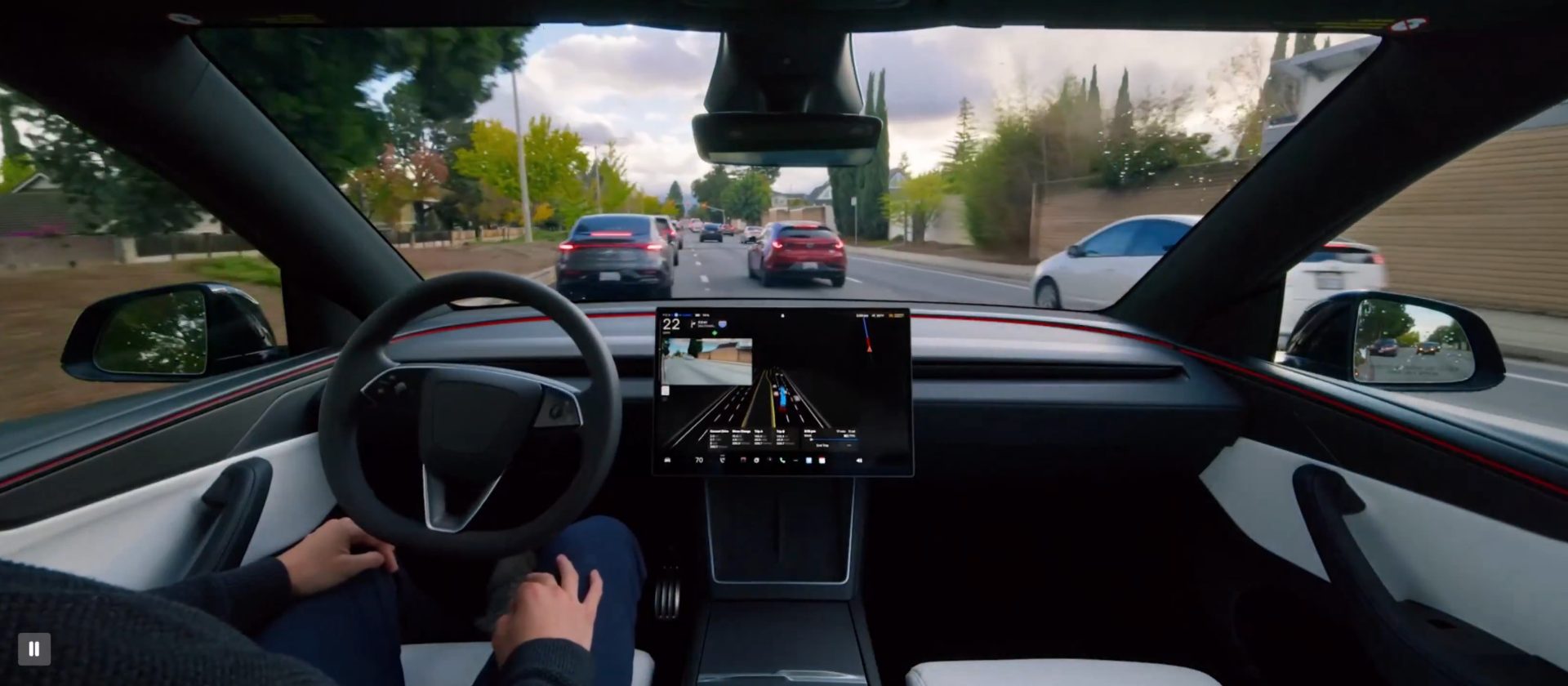
The Dutch vehicle authority RDW has officially granted type approval for Tesla’s Full Self-Driving (FSD) Supervised system, marking a significant milestone in the advancement of autonomous driving technology in Europe. This approval makes the Netherlands the first European country to greenlight Tesla’s advanced driver-assist technology, a move that has been celebrated by Tesla CEO Elon Musk.
The FSD Supervised system, which has been trained on billions of kilometres of driving data, is designed to handle complex tasks such as navigating city streets, residential roads, and highways. However, it is important to note that the system is not autonomous, and drivers are still required to remain alert and be prepared to take control of the vehicle at any moment.
In order to secure this approval, Tesla underwent rigorous testing on European roads, covering over 1.6 million kilometres and meeting hundreds of compliance requirements. This approval falls under the new UN R-171 regulation for Driver Control Assistance Systems (DCAS), which allows for more advanced manoeuvres that were previously restricted.
While the approval is currently only valid in the Netherlands, it paves the way for other European Union member states to recognize the Dutch approval through a process of mutual recognition. This means that Tesla owners in countries like Belgium, Germany, and France can expect to see the FSD Supervised system rollout in the coming weeks or months as regulators review the Dutch decision.
Elon Musk has expressed his excitement about this milestone, calling it the “first (supervised) FSD approval in Europe” and signaling that this is just the beginning of a broader rollout across the region. Tesla is aiming for full EU-wide approval by the summer of 2026, which would eliminate the need for country-by-country recognition.
Overall, the approval of Tesla’s FSD Supervised system in the Netherlands represents a significant step forward in the adoption of autonomous driving technology in Europe. As more countries in the region begin to follow suit, we can expect to see a greater integration of advanced driver-assist systems on European roads in the near future.