
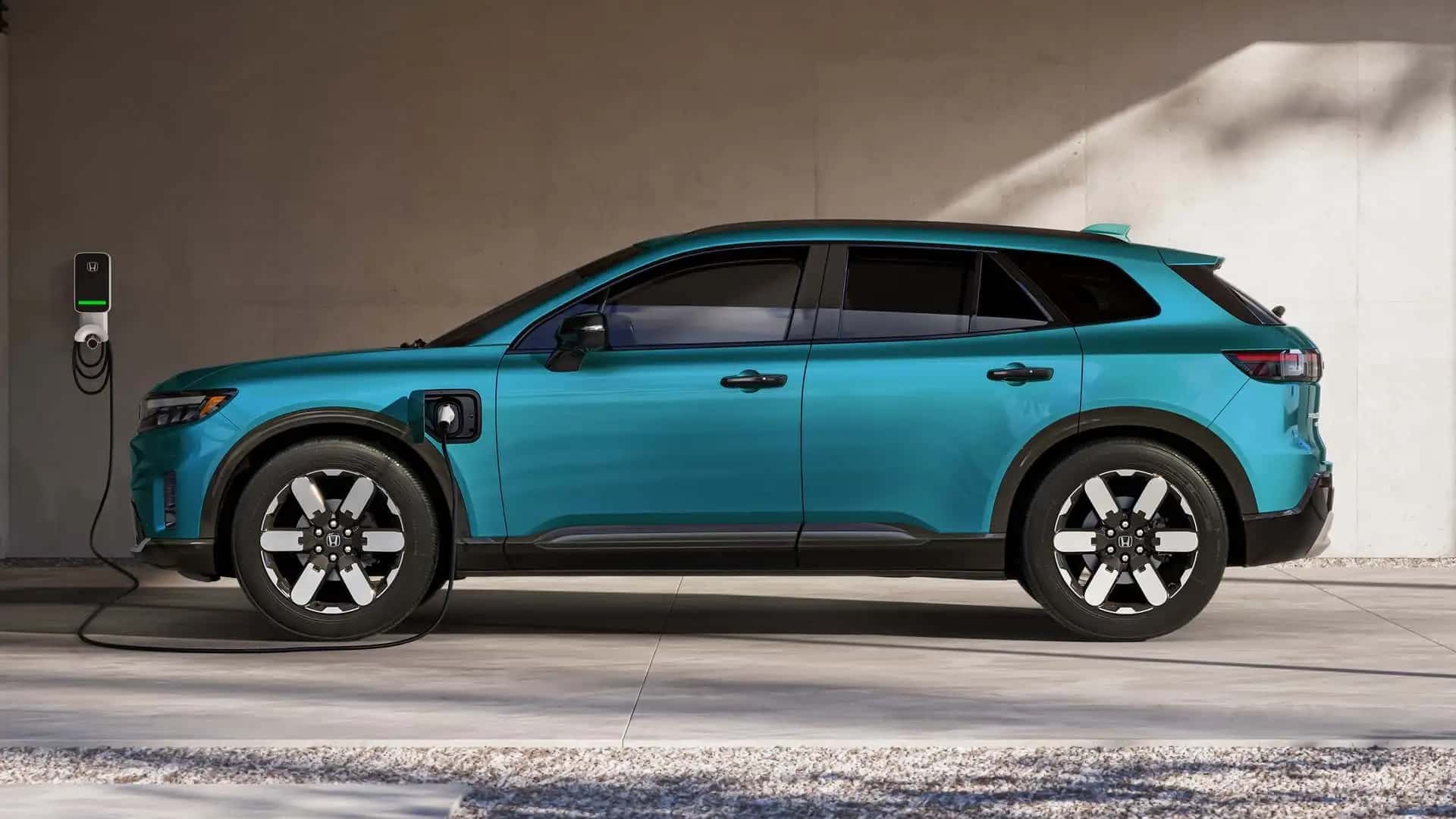
Honda has made a significant move in the electric vehicle market by dropping the price of its Prologue crossover by $7,500. This adjustment brings the starting price below $40,000, making the Prologue a highly attractive option for prospective buyers looking to go electric.
The Honda Prologue initially gained popularity as one of America’s best-selling EVs when it first launched in 2024. However, after the expiration of the $7,500 EV tax credit on September 30, sales took a hit. In Q1 of 2026, Prologue sales plummeted by over 65% year-over-year, with only 1,588 units sold. In response to these declining sales figures, Honda decided to implement a substantial price cut across all 2026 Prologue models.
By reducing the price of the Prologue, Honda aims to offset the impact of the expired tax credit and offer customers a more competitive deal in the EV market. The automaker’s spokesperson, Alvin Tsang, stated that the price adjustment was made to align with customer needs, market conditions, and long-term strategic goals. With the EV market facing uncertainty following the removal of the federal tax credit, Honda’s price drop on the Prologue comes as a strategic move to cater to customers considering an electric vehicle.
The base 2026 Prologue EX now starts at $39,900, excluding destination fees, offering a single-motor front-wheel-drive powertrain with 308 miles of range. This pricing makes the Prologue more accessible compared to the 2025 model, which started at $47,400 for the same trim. On the higher end, the Elite trim is now priced at $50,400, providing 283 miles of range with additional features like all-wheel drive, larger wheels, leather seats, a power tailgate, and a Bose sound system.
Despite the price cut, the Prologue remains competitive in its segment, offering a fair sticker price compared to other electric SUVs. In comparison to models like the Toyota bZ, Hyundai Ioniq 5, Tesla Model Y, and Volvo EX30, the Prologue stands out for its range and pricing. The adjustment places the Prologue in a competitive position, appealing to buyers who missed out on the EV tax credit and had the Prologue on their radar.
Ultimately, Honda’s decision to lower the price of the Prologue makes it a compelling option in the electric vehicle market. By offering a balance between affordability and features, the Prologue now stands as a strong contender among its peers, providing customers with a value proposition that is hard to ignore. The world is constantly changing, and with it, so too are the ways in which we interact and communicate with one another. In recent years, social media has become a dominant force in our lives, shaping the way we connect with friends, family, and even strangers. But with this rise in social media use comes a slew of new challenges and opportunities.
One of the biggest challenges of social media is the spread of misinformation and fake news. With the ability to easily share information with millions of people at the touch of a button, it can be difficult to discern what is true and what is not. This has led to the proliferation of fake news stories, which can have serious consequences for individuals and society as a whole.
But social media also presents a number of opportunities for individuals and businesses alike. For individuals, social media provides a platform to connect with others who share their interests, values, and beliefs. It can be a source of support and community in times of need, as well as a place to share ideas and experiences with a wider audience.
For businesses, social media offers a unique opportunity to engage with customers in a more personal and meaningful way. By creating a strong social media presence, businesses can reach new customers, build brand loyalty, and drive sales. Social media also allows businesses to gather valuable feedback from customers, which can be used to improve products and services.
But with great power comes great responsibility, and it is important for individuals and businesses alike to use social media in a responsible and ethical manner. This means being mindful of the information we share, fact-checking before reposting, and respecting the privacy and boundaries of others. It also means being aware of the impact our words and actions can have on others, and using social media as a force for good rather than harm.
In conclusion, social media is a powerful tool that has the potential to both connect and divide us. It is up to each of us to use it wisely and responsibly, in order to harness its full potential for positive change. By being mindful of the impact of our words and actions, we can create a more inclusive, connected, and informed society for all.