
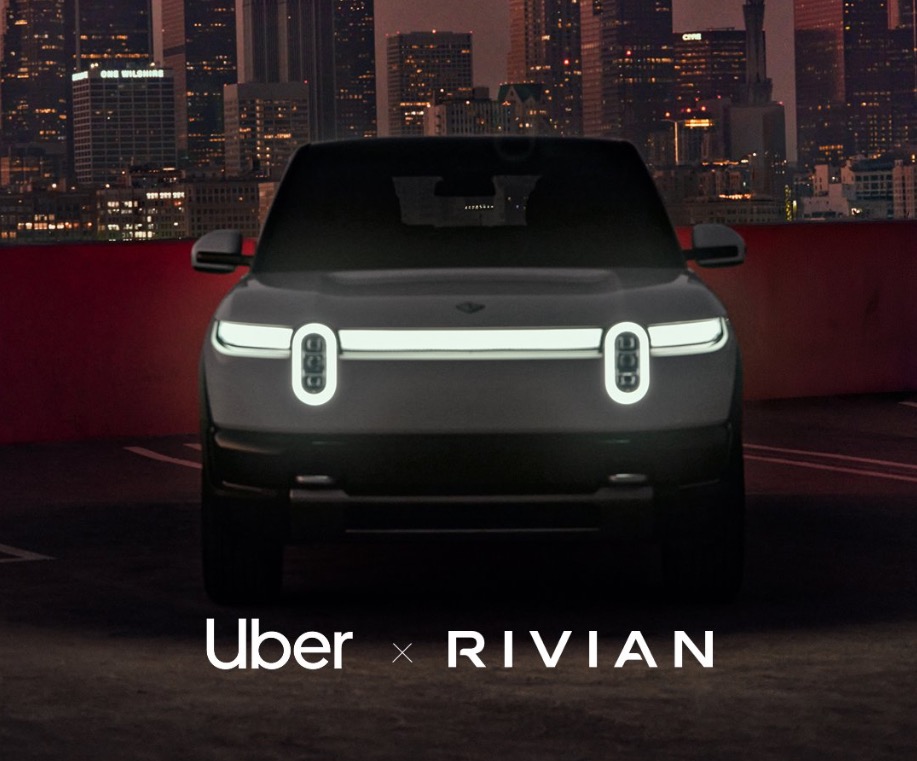
Rivian and Uber have recently announced a groundbreaking partnership to develop a massive fleet of self-driving electric vehicles, setting the stage for a major disruption in the autonomous vehicle industry. The collaboration aims to deploy a minimum of 10,000 fully autonomous R2 robotaxis in the United States, Canada, and Europe by the end of 2031, with the potential to expand the fleet to 50,000 vehicles.
Uber has committed to investing up to $1.25 billion USD in Rivian through 2031, contingent upon the automaker meeting specific technical milestones. The initial investment of $300 million has already been secured, with plans to launch the first wave of commercial robotaxis in San Francisco and Miami by 2028, eventually expanding to 25 cities.
This move positions Rivian as a direct competitor to industry giants like Waymo and Tesla. While Waymo currently leads the pack with its commercial service in cities such as Phoenix and Los Angeles, Tesla has been actively pursuing its own autonomous vehicle network with initiatives like the Cybercab and Robotaxi. Rivian’s partnership with Uber sets it apart by creating a dedicated fleet of autonomous vehicles based on the upcoming R2 platform.
Rivian’s strategy hinges on its vertical integration, with the R2 robotaxis incorporating the company’s proprietary RAP1 AI chips and a comprehensive sensor suite comprising 11 cameras, five radars, and LiDAR technology. This hardware-centric approach contrasts with Tesla’s reliance on cameras and neural networks for autonomous driving capabilities.
Uber CEO Dara Khosrowshahi expressed confidence in Rivian’s holistic approach to vehicle design, computing platform, and software stack, emphasizing the company’s commitment to domestic manufacturing and supply chain control. Rivian Founder and CEO RJ Scaringe echoed this sentiment, highlighting the partnership’s potential to accelerate the company’s progress towards achieving Level 4 autonomy.
While videos showcasing Rivian’s Universal Hands-Free system suggest significant advancements in autonomous technology, the road to fully autonomous driving is still a work in progress. The R2 consumer vehicle is slated for a late 2026 debut in the U.S., while the specialized robotaxis will be exclusively accessible through the Uber app. Canadian consumers can anticipate the arrival of the R2 in 2027, with autonomous Uber services projected to reach Canadian cities in the later stages of the 2031 rollout.
In conclusion, Rivian and Uber’s collaboration represents a significant leap forward in the autonomous vehicle industry, with the potential to reshape the future of transportation. By leveraging cutting-edge technology and strategic partnerships, these companies are poised to revolutionize the way we commute and pave the way for a new era of mobility.