
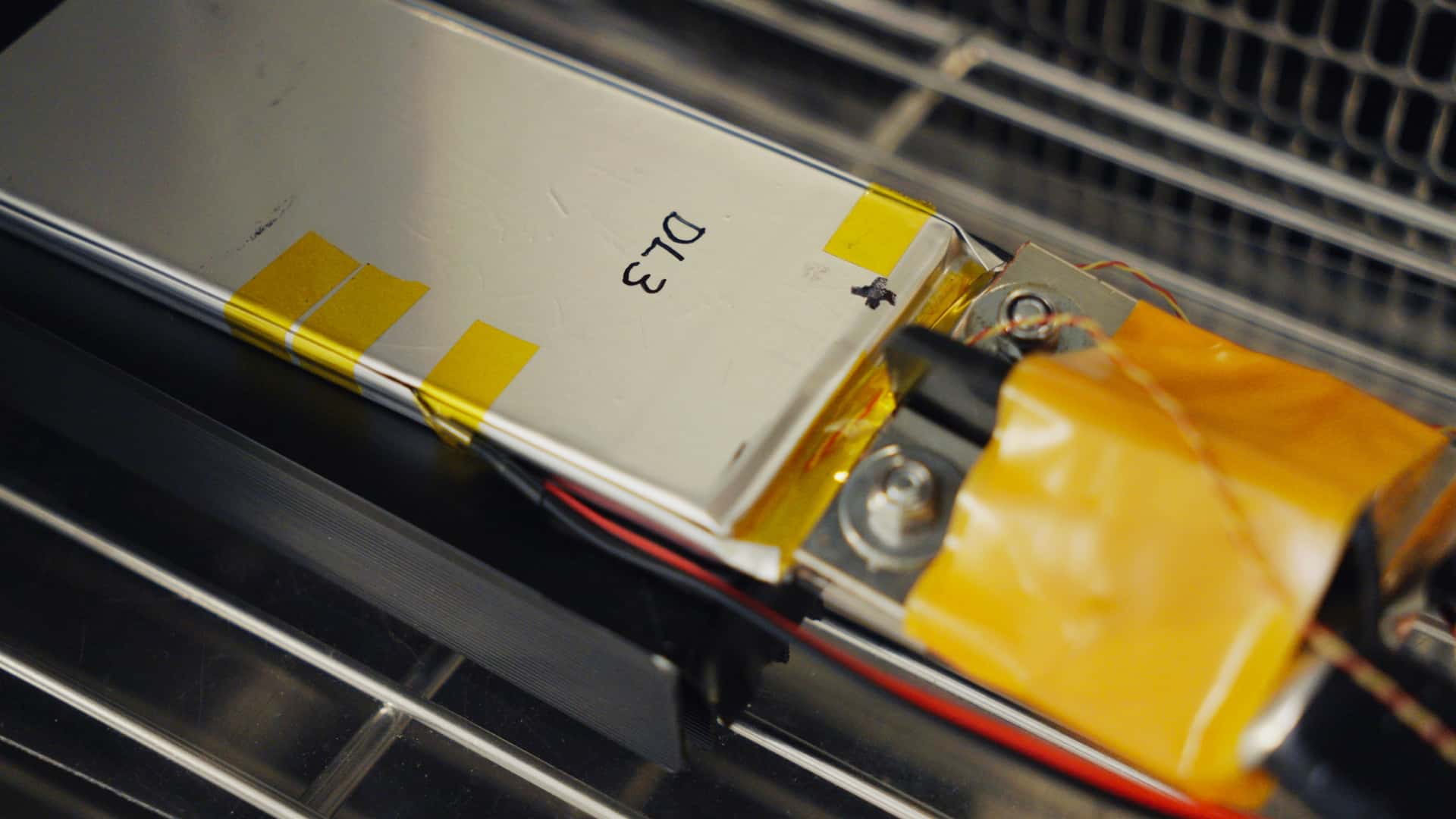
However, skepticism remains high in the scientific community. Donut Lab’s latest test results, while impressive at first glance, have not convinced experts of the battery’s real-world capabilities. The test subjected the pouch cell to extreme temperatures, far beyond what conventional lithium-ion batteries can handle.
Despite the cell’s apparent performance under such harsh conditions, battery scientist Eric Wachsman warns that the limited data provided by Donut Lab leaves much to be desired. Key information regarding battery chemistry and energy density, crucial factors in determining real-world performance, remain undisclosed.
Wachsman, a specialist in solid-state batteries, emphasizes that the test results do not accurately represent the challenges of using the battery in automotive applications. While the cells may not violate any laws of thermodynamics, the scant data provided by Donut Lab raises doubts about the battery’s practicality.
Solid-state batteries are widely seen as a game-changing technology in the electric vehicle industry, promising increased driving range, faster charging times, and reduced fire risk compared to traditional lithium-ion batteries. If successful, solid-state batteries could accelerate the adoption of electric vehicles and alleviate concerns about range anxiety.
However, the road to mass production of solid-state batteries is fraught with challenges. Many battery companies and automakers are investing heavily in research and development to overcome manufacturing defects and scale up production. Despite the hype surrounding Donut Lab’s claims, the scientific community remains cautious about the feasibility of their technology.
As the race to develop solid-state batteries intensifies, companies like Donut Lab face mounting pressure to prove the viability of their technology. While the latest test results may have sparked excitement in the EV industry, it will take more than just promising data to convince skeptics of the true potential of solid-state batteries.
The new Verge Motorcycles EVs are set to revolutionize the electric vehicle industry with their cutting-edge technology. The all-solid-state battery being introduced this quarter boasts impressive specifications that have caught the attention of experts and enthusiasts alike.
With a remarkable energy density of 400 watt-hours, which is approximately double that of current lithium-ion cells, these batteries offer a significant improvement in power storage capacity. Additionally, the five-minute charge time sets a new standard for convenience and efficiency in EV charging.
One of the most remarkable features of the Verge Motorcycles EVs’ battery is its wide operating range of -30C to 100C (-22F to 212F). This means that these batteries can perform optimally in extreme temperatures, making them suitable for a variety of climates and conditions.
Furthermore, the battery has a lifespan of 100,000 cycles, ensuring long-term durability and reliability for EV owners. Additionally, the absence of rare earth materials in the battery’s composition makes it a more sustainable and environmentally friendly option compared to traditional batteries.
Despite initial skepticism from the industry, the company has responded by providing independent test results from the VTT Technical Research Centre of Finland. These tests have demonstrated the battery’s fast-charging capabilities and stability at high temperatures.
In a recent test, the battery showed impressive performance at temperatures as high as 80C and 100C (176F and 212F). The battery delivered more energy at elevated temperatures, indicating efficient operation even in extreme heat conditions. Moreover, the battery exhibited no visible damage after high-temperature discharges, further proving its robustness.
However, one potential concern arose during the testing process when the battery’s outer pouch lost its “vacuum” after the 100C test. This may indicate a loss of hermetic seal, which could compromise the battery’s integrity. Despite this issue, the overall performance and capabilities of the all-solid-state battery remain highly promising.
In conclusion, the Verge Motorcycles EVs are set to make a significant impact on the electric vehicle market with their innovative and high-performance all-solid-state battery technology. As the company continues to refine and improve its battery technology, the future looks bright for EV enthusiasts and environmentally conscious consumers alike. After comparing fast-charging images from last week’s test to this week’s high-temperature results, it is evident that there was excessive swell experienced by the Donut Lab solid-state EV battery cells. The comparison clearly shows that the cells underwent significant changes after a few cycles, indicating potential issues with the battery’s stability and performance.
The question of whether this swelling is a major safety concern or a common occurrence in solid-state cells is still up in the air. However, experts seem to agree on one thing – the tests conducted so far do not show promising pack-level performance over the long term. Real-world usage requires cells to maintain stability and less than 10-20% capacity fade over thousands of cycles, a benchmark that these tests have failed to meet.
Professor Wachsman emphasized the importance of stability and longevity in battery cells for commercial viability. He mentioned that without consistent performance over thousands of cycles, these tests are essentially meaningless in determining the battery’s practical usability.
Donut Lab has assured that more independent results will be released in the coming weeks. The focus will be on energy density figures and battery chemistry disclosures, which are crucial indicators of the battery’s overall performance and reliability. These upcoming results will shed more light on the potential of Donut Lab’s solid-state EV battery cells in the market.