
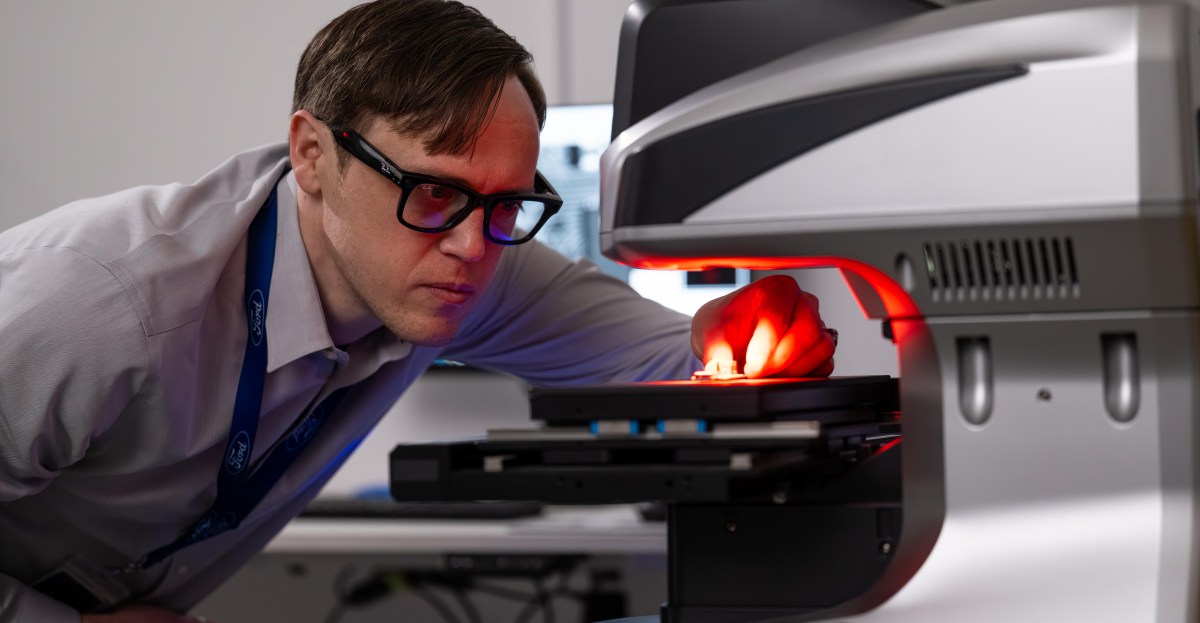
Ford has implemented a unique process where wiring harnesses are created using a semi-automated, modular system. This allows for customization based on the specific requirements of each vehicle model, reducing waste and ensuring efficiency. The system is capable of producing a variety of harnesses without the need for retooling, making it a versatile and cost-effective solution.
Furthermore, the facility is equipped with state-of-the-art testing equipment to ensure the quality and durability of each component. From impact testing to extreme temperature trials, every aspect of the vehicle is thoroughly evaluated to meet Ford’s rigorous standards. This commitment to quality is evident in the final product, as Ford aims to deliver reliable and long-lasting electric vehicles to its customers.
Overall, my visit to Ford’s Electric Vehicle Development Center left me impressed with the company’s dedication to innovation and sustainability. By streamlining the production process, reducing waste, and prioritizing efficiency, Ford is paving the way for a more sustainable future in the automotive industry. With its focus on affordability and quality, Ford is poised to make a significant impact in the electric vehicle market and beyond. Ford’s commitment to quality and innovation is evident in their approach to manufacturing electric vehicles. A team of skilled craftsmen work diligently in-house to assemble various components, from circuits to wiring harnesses, ensuring a quick turnaround on design changes and saving both time and money. This hands-on approach also eliminates potential supplier issues, allowing for greater control over the production process.
Oscar Lomeli, the lead technician in charge of electrical engineering, emphasized the shop’s extensive inventory of wire gauges, connectors, sleeves, and dressings, highlighting their readiness to tackle any project. The team’s involvement in all aspects of wiring and circuitry within the facility showcases their versatility and expertise in the field.
One of the most intriguing aspects of the manufacturing process is the testing phase for batteries and equipment. While specific details remain confidential, efficiency is a top priority, with a focus on creating a seamless integration of DC-to-DC and AC converters on the same board. Ford’s decision to stick with a 400V architecture, despite the rising popularity of 800V systems, speaks to their confidence in achieving fast charging and optimal energy consumption.
Once a prototype is constructed in the in-house fabrication shop, it undergoes rigorous testing in a controlled chamber that simulates a range of climates and driving conditions. From extreme temperatures to varying elevations, the vehicle is put through its paces to ensure its durability and performance under any circumstances. Additionally, individual control units are tested in a Faraday tent to assess their susceptibility to external signals.
Ford’s commitment to thorough testing is evident in their state-of-the-art labs, which enable engineers to evaluate every aspect of the vehicle’s performance and efficiency. Eric Kooinga, the range and performance testing manager, emphasized the importance of these tests in determining the vehicle’s impact on customers and its fuel economy range.
Interestingly, Ford’s decision to establish its facility in Long Beach, a location with a rich automotive history, reflects its dedication to leveraging local talent and expertise. With a workforce experienced in industries like aerospace, Southern California provides a wealth of skilled engineers capable of taking on complex projects like electric vehicle manufacturing.
As we concluded our tour, a prototype of a midsize pickup truck, cloaked in camouflage, passed by, hinting at Ford’s ongoing innovation in vehicle design. The shape of the truck, reminiscent of the Ford Explorer Sport Trac from the early 2000s, serves as a testament to Ford’s legacy of blending cutting-edge technology with iconic design elements. By harnessing the skills of their craftsmen and engineers, Ford continues to push the boundaries of electric vehicle manufacturing, setting new standards for innovation in the industry. Replicating and refining the formula for different classes of vehicle should take far less time than in the past due to all of the development invested in the UEV platform.
The advancements in the UEV platform have paved the way for faster replication and refinement of vehicle formulas across various classes. This is a game-changer for the automotive industry, as it significantly reduces the time and resources needed to develop new vehicle models.
One exciting development that hints at the potential of the UEV platform is the sighting of a Mark 1 Ford Escort racecar in the design area. This signals that some innovative and exciting projects may be in the pipeline, leveraging the capabilities of the UEV platform.
With the UEV platform at their disposal, automotive engineers and designers can now explore new ideas and concepts more efficiently. The platform provides a solid foundation for creating a wide range of vehicles, from compact city cars to high-performance sports cars.
By leveraging the UEV platform, automakers can streamline the development process, reduce costs, and bring new vehicles to market faster than ever before. This not only benefits the manufacturers but also consumers who can look forward to a diverse range of vehicles that are built on a solid and reliable platform.
In conclusion, the UEV platform is revolutionizing the way vehicles are designed and developed. With its advanced capabilities and flexibility, automakers can now replicate and refine vehicle formulas across different classes with greater speed and efficiency. The future of automotive innovation looks bright with the UEV platform leading the way. The COVID-19 pandemic has brought about many changes in our daily lives, from wearing masks to practicing social distancing. One of the biggest impacts of the pandemic has been the shift to remote work for many people around the world. As businesses and organizations were forced to close their physical offices to adhere to safety guidelines, employees had to quickly adapt to working from home.
Remote work has now become the new normal for many people, with some companies even considering making it a permanent option for their employees. While working from home has its benefits, such as saving time on commuting and having a more flexible schedule, it also comes with its challenges.
One of the biggest challenges of remote work is maintaining a work-life balance. With no clear boundaries between work and home, many employees find themselves working longer hours and feeling burnt out. It can be difficult to switch off from work when your home is also your office, leading to feelings of constant stress and exhaustion.
Another challenge of remote work is the lack of social interaction. Working from home can be isolating, as employees miss out on the camaraderie and collaboration that comes with being in a physical office. Virtual meetings can only do so much to replicate the experience of face-to-face interactions, and employees may begin to feel disconnected from their colleagues and the company culture.
Furthermore, remote work can also impact productivity. Without the structure and routine of a physical office, employees may struggle to stay focused and motivated. Distractions at home, such as household chores or family members, can disrupt workflow and lead to decreased productivity.
To address these challenges, employers need to support their remote employees by providing the necessary resources and tools for success. This could include setting clear expectations and boundaries, encouraging regular breaks, and promoting virtual team-building activities to foster a sense of connection among employees.
Employees also need to take steps to prioritize their well-being while working from home. This could involve creating a designated workspace, establishing a daily routine, and setting boundaries between work and personal time. Finding ways to stay connected with colleagues, such as scheduling virtual coffee breaks or team-building activities, can also help combat feelings of isolation.
As remote work continues to be a prevalent option for many employees, it is important for both employers and employees to adapt to this new way of working and find ways to overcome the challenges it presents. By prioritizing communication, well-being, and productivity, remote work can be a successful and sustainable option for the future.