
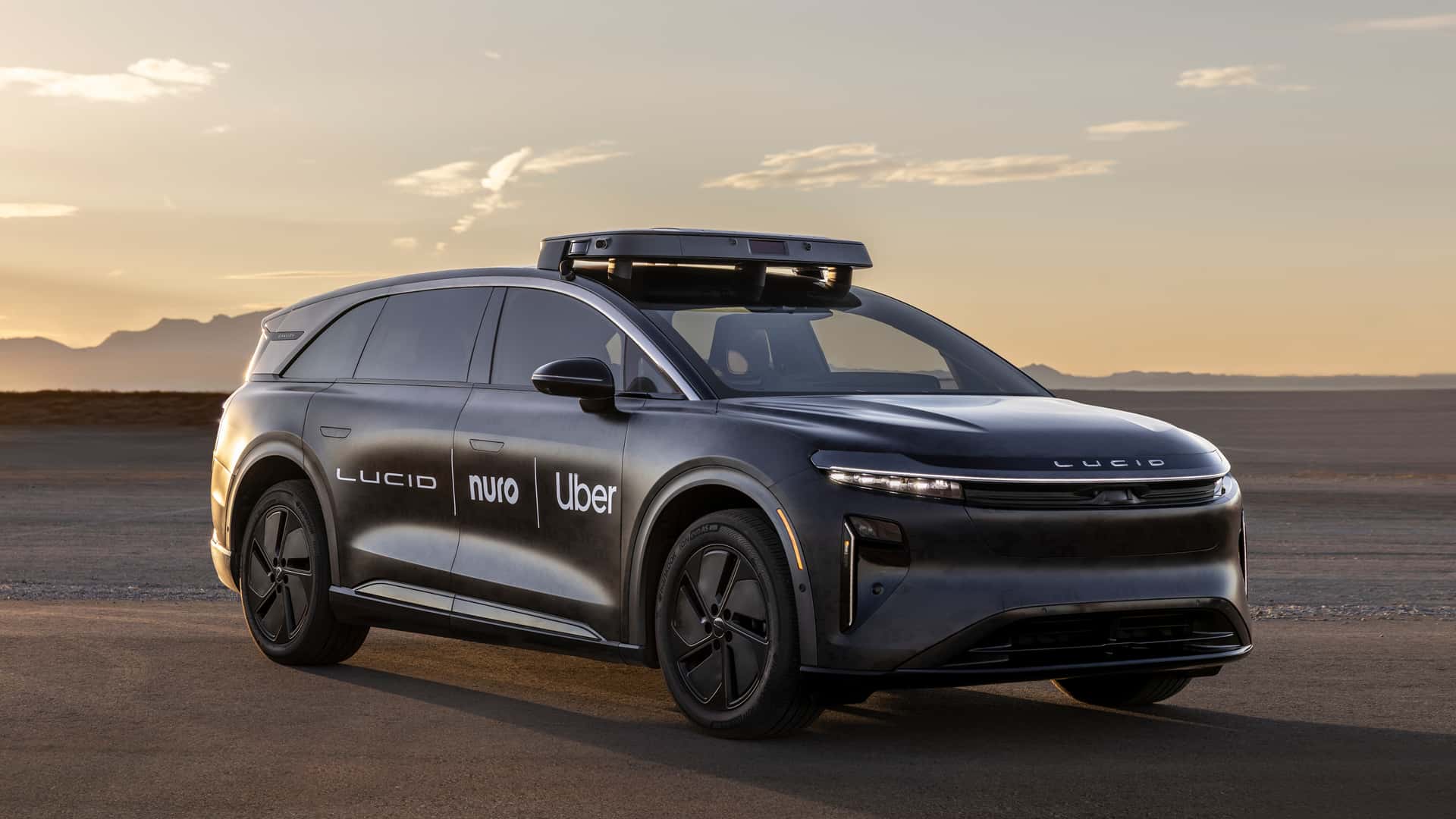
Uber’s partnership with Lucid and Nuro to launch driverless rides in the U.S. and overseas markets has raised eyebrows in the industry. The decision to use the Lucid Gravity SUV as a robotaxi has sparked curiosity, especially given the competitive nature of the rideshare business.
Lucid CFO Taoufiq Boussaid shed light on why Uber chose the Gravity for its next-generation robotaxis during the UBS Global Industrials and Transportation Conference. He emphasized that the Gravity boasts a fit-for-purpose design with a redundant architecture that meets all the safety requirements for autonomous driving applications. This redundancy is crucial for ensuring the safety of passengers and pedestrians, as multiple automakers have previously highlighted.
Autonomous vehicles need to adhere to stringent safety standards, requiring redundant steering systems, braking systems, duplicate control units, and additional communication pathways. The Gravity’s existing systems align with these requirements, reducing the need for costly retrofitting to meet safety standards. Boussaid emphasized that the Gravity’s redundant electrical and controls architectures make it an ideal choice for operationalizing robotaxis quickly.
Compared to other solutions in the market that necessitate the addition of multiple sensors like lidar, the Gravity required minimal modifications to operate as a robotaxi. In addition to its safety features, the Gravity also offers a Level 2 advanced driver-assistance system called DreamDrive Pro, further enhancing its appeal for autonomous driving applications.
With Uber’s ambitious foray into the robotaxi race, the partnership with Lucid and Nuro signifies a significant step towards revolutionizing the rideshare industry. By leveraging the advanced capabilities of the Lucid Gravity SUV, Uber aims to deliver a safe and efficient autonomous driving experience for its customers. As the landscape of transportation continues to evolve, Uber’s strategic partnerships and innovative technologies position it as a key player in the future of mobility. Robotaxis have been a hot topic in the automotive industry for several years now, with companies like Uber leading the charge towards fully autonomous ridesharing services. However, achieving true driverless capabilities requires far more advanced systems than what is currently available. This is where Nuro comes in as the autonomy provider that can take robotaxi technology to the next level.
Nuro, a company known for its innovative autonomous delivery vehicles, is now stepping into the world of robotaxis. Recently, Lucid Motors announced a partnership with Nuro to integrate its full hardware stack, including lidar, radar, and cameras, onto the Lucid Gravity SUV. This collaboration will enable Lucid to offer autonomy-ready vehicles that can be ordered exclusively through the Uber app.
While the Lucid Gravity may not be the most cost-effective option for a robotaxi due to its high price tag, there is potential for more affordable alternatives in the future. Lucid is already working on a midsize EV platform that is expected to be priced around $50,000 and will be capable of eyes-off self-driving thanks to Nvidia’s autonomous driving technology.
According to Nuro’s CEO, Jiajun Boussaid, the midsize vehicle from Lucid will be even more advanced in its ability to serve as a robotaxi. This next step in the program promises to push the boundaries of autonomous driving technology and offer a more accessible option for ridesharing services.
Uber, which has been at the forefront of the robotaxi movement, has partnered with over a dozen companies to develop its autonomous driving capabilities. From Waymo and Avride to May Mobility and Momenta, Uber is working with a diverse range of partners to bring driverless ridesharing to the masses.
As the race towards fully autonomous robotaxis continues to heat up, companies like Nuro and Lucid Motors are playing a crucial role in pushing the boundaries of what is possible. With their cutting-edge technology and innovative solutions, they are paving the way for a future where self-driving cars are not just a dream, but a reality.