
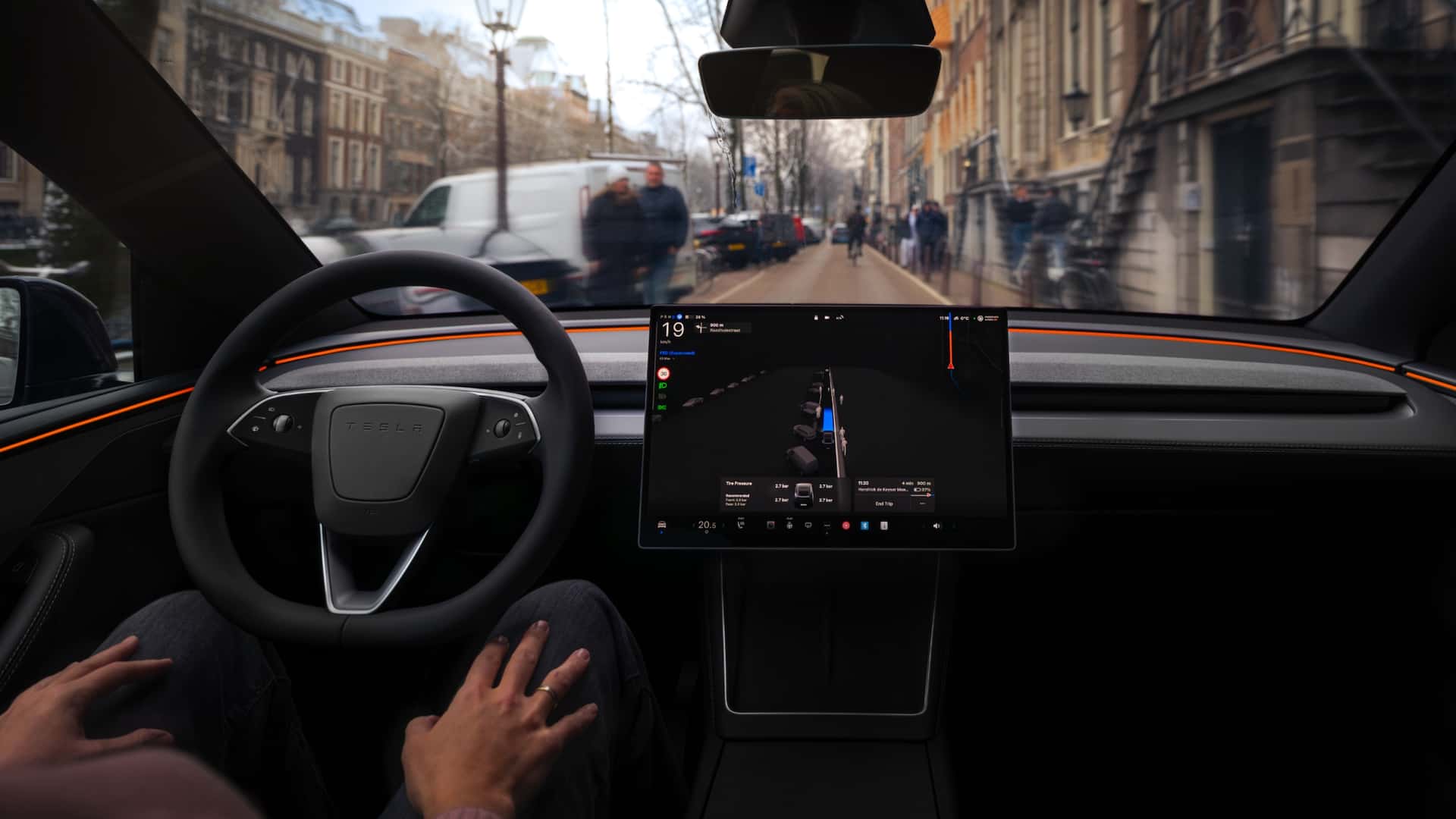
This approval sets the stage for broader European approval, but it’s important to note that Tesla’s FSD in Europe is still a supervised driver assist system and not true autonomous driving. The Euro version of FSD does have some differences compared to the U.S. version, such as speed profiles being replaced with ‘Max Speed’ and ‘Max Speed Offset’ settings.
Tesla has been working towards European approval for over 18 months, conducting extensive testing and analysis on public roads and test tracks. The company has produced thousands of pages of documentation, track test scenarios, research studies, and demos for regulators in almost every EU country. This approval from the RDW in the Netherlands marks a significant milestone for Tesla, paving the way for safer roads in Europe.
In the U.S., automakers can essentially self-certify their systems for public road use, with regulators intervening only if issues arise. This allowed Tesla to use its customers as beta testers for years before launching FSD. However, European regulations require a more rigorous approval process, which has slowed Tesla’s rollout in Europe.
Tesla initially launched the FSD beta in October 2020, limited to employees and approved testers. The program expanded over time, with over 100,000 active users by April 2022. While the system has evolved, the latest version is still considered ‘supervised’ and requires active driver supervision at all times.
Before deploying FSD in Europe, Tesla conducted extensive internal testing, covering over 1.6 million kilometers with FSD active. The company offered ride-along experiences to over 13,000 people in Europe to prepare for a wider rollout. Tesla claims that collisions are up to 7 times less likely per kilometer driven with FSD compared to manual driving alone.
While Tesla’s FSD system may outperform human drivers in certain situations, it is not yet a fully autonomous driving system. Detailed data and transparency are crucial to verify Tesla’s safety claims and performance metrics. The approval from RDW is a significant step for Tesla in Europe, but the road to fully autonomous driving is still a long one.
Overall, Tesla’s approval for FSD in the Netherlands is a significant milestone, but it does not signal a complete shift towards robotaxis and unsupervised self-driving in Europe. The differences in regulatory processes between the U.S. and Europe highlight the need for thorough testing and scrutiny before deploying advanced driver assist systems on public roads.
The world of technology is constantly evolving, with new advancements and innovations being made every day. One area that has seen significant growth in recent years is artificial intelligence (AI). AI is a branch of computer science that focuses on creating machines that can perform tasks that typically require human intelligence, such as visual perception, speech recognition, decision-making, and language translation.
One of the most exciting developments in AI is the creation of deep learning algorithms. Deep learning is a subset of AI that uses neural networks to simulate the way the human brain works, allowing machines to learn from large amounts of data and improve their performance over time. This technology has been used in a wide range of applications, from self-driving cars to medical diagnosis to natural language processing.
Another area where AI is making a big impact is in the field of robotics. Robots powered by AI are becoming increasingly common in industries such as manufacturing, healthcare, and agriculture. These robots are able to perform a variety of tasks with precision and efficiency, leading to increased productivity and cost savings for businesses.
AI is also being used to improve the customer experience in many industries. Chatbots, for example, are AI-powered programs that can interact with customers in real time, providing them with information, answering their questions, and even helping them make purchases. This technology has been embraced by companies in a wide range of industries, from retail to banking to healthcare, as a way to improve customer service and streamline operations.
In the healthcare industry, AI is being used to revolutionize the way diseases are diagnosed and treated. Machine learning algorithms are able to analyze medical images, such as X-rays and MRIs, and identify patterns and abnormalities that may be missed by human doctors. This technology has the potential to improve the accuracy and speed of diagnosis, leading to better outcomes for patients.
While the potential benefits of AI are vast, there are also concerns about the ethical implications of this technology. For example, there are concerns about the impact of AI on the job market, as machines become increasingly capable of performing tasks that were once done by humans. There are also concerns about bias in AI algorithms, as they may reflect the biases of the data they are trained on.
Overall, AI is a powerful and transformative technology that has the potential to reshape industries and improve our lives in countless ways. As researchers continue to push the boundaries of what is possible with AI, it will be important to consider the ethical implications of this technology and ensure that it is used in a way that benefits society as a whole.