
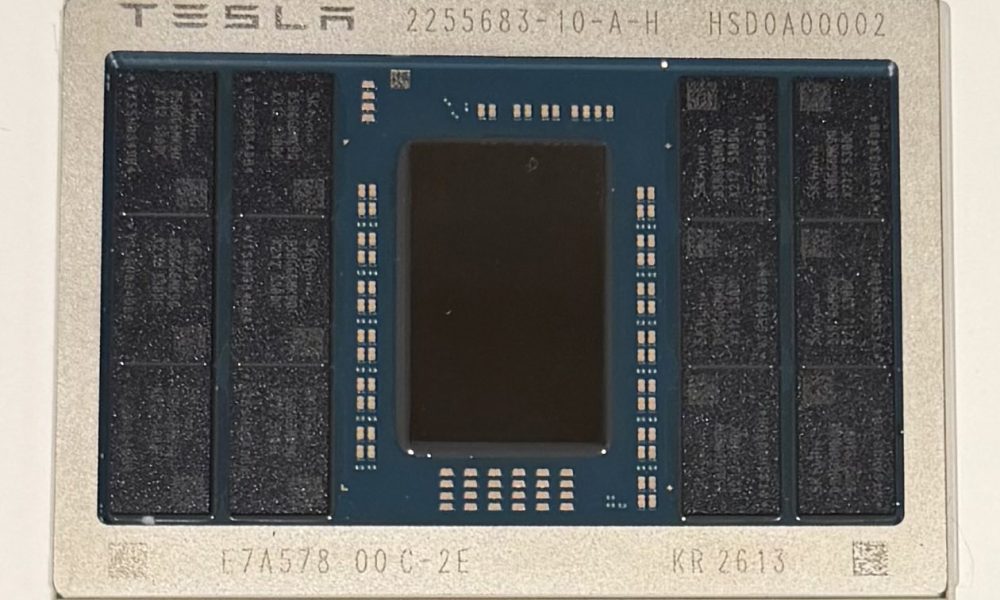
Tesla has recently completed the design of its new AI5 chip, with CEO Elon Musk confirming that the chip has entered the tape-out stage, marking the final step before mass production. However, Musk clarified that the AI5 chip will not be utilized for achieving “much better than human safety” for Full Self-Driving (FSD), as the existing AI4 chip is already capable of doing so.
Instead, the AI5 chip will be focused on Tesla’s future projects, specifically Optimus and supercomputer clusters. Musk expressed his gratitude to TSMC and Samsung for their support in the production of the AI5 chip, stating that it has the potential to become one of the most produced AI chips ever. This strategic shift indicates that Tesla is moving away from using bleeding-edge silicon in vehicles and redirecting its next-generation compute towards higher-value applications like dexterous robots and training clusters.
The decision to focus on AI5 for future projects is based on the fact that the existing AI4 hardware, which is already deployed in hundreds of thousands of Teslas, surpasses human drivers in terms of safety metrics for FSD. Musk’s emphasis on software-hardware co-design and optimizing compute performance aligns with Tesla’s approach of over-provisioning compute early and then optimizing rigorously.
While AI4 may enable unsupervised self-driving from a technical standpoint, regulatory approval remains a significant barrier. Agencies like the NHTSA require extensive validation, liability frameworks, and public trust before granting approval for unsupervised autonomy. Tesla’s fleet-scale, vision-only approach presents a more ambitious challenge compared to competitors like Waymo, who operate limited unsupervised fleets in geofenced areas.
In summary, Musk’s pragmatic yet bullish approach suggests that AI4 is capable of unsupervised FSD technically. Whether regulators and consumers will agree and how quickly remains to be seen. Tesla’s capital-efficient strategy of keeping existing cars relevant while investing in future compute for robots could potentially accelerate the arrival of unsupervised autonomy sooner than expected.