
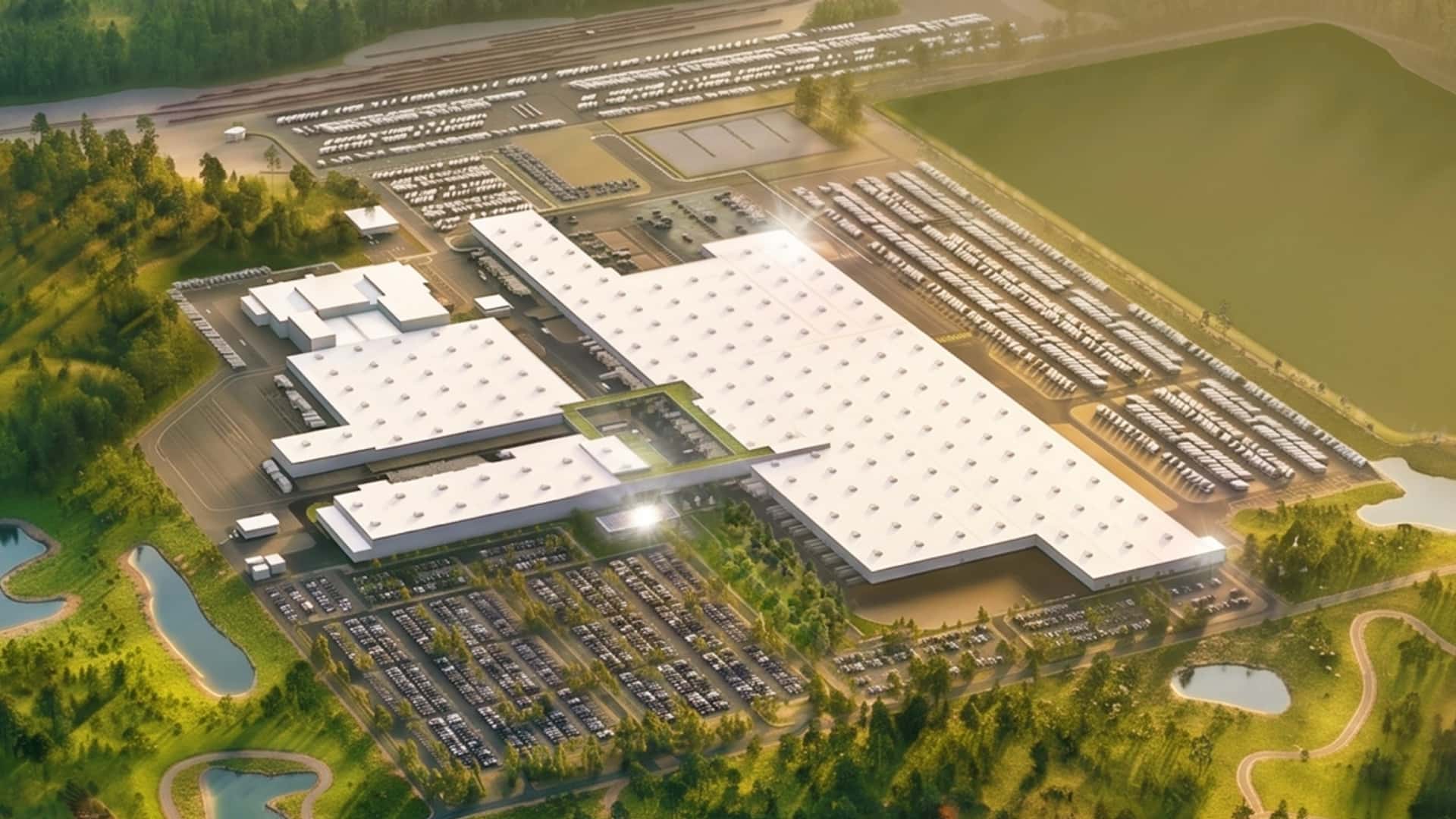
However, the company has now decided to consolidate its plans into a single phase with a capacity of 300,000 units annually. This decision reflects Rivian’s confidence in the demand for its electric vehicles and the potential for growth in the market.
The Georgia plant is expected to play a crucial role in Rivian’s expansion strategy, allowing the company to increase production and meet the growing demand for its vehicles. With a capacity of 300,000 units, the plant will significantly boost Rivian’s overall production capabilities and help it achieve economies of scale.
Production at the Georgia plant is set to begin in late 2028, according to Rivian’s confirmation. The company remains on track to start operations at the facility, which will focus on manufacturing vehicles based on Rivian’s midsized platform. This includes the R2, as well as a robotaxi variant that is part of a partnership with Uber to produce 50,000 vehicles.
Rivian’s decision to increase the capacity of its Georgia plant reflects its commitment to scaling up production and meeting the growing demand for electric vehicles. The company’s focus on the R2 model as a key driver of economies of scale highlights its strategic approach to achieving profitability and sustainable growth.
Overall, Rivian’s expansion plans in Georgia signal its confidence in the future of electric vehicles and its position in the market. By increasing its production capacity and streamlining its construction plans, Rivian is setting itself up for success in the rapidly evolving automotive industry. Rivian’s recent earnings call provided some insight into the company’s future plans, particularly regarding the capacity of its Georgia plant. McDonough, during the call, mentioned that there will still be room for future expansions at the plant, indicating that Rivian is positioning itself for growth and scalability in the coming years.
This news is significant for Rivian as it continues to ramp up production of its electric vehicles, including the highly anticipated R1T and R1S models. With demand for electric vehicles on the rise and Rivian’s reputation for quality and innovation, the company is poised for success in the burgeoning EV market.
The expansion potential at the Georgia plant suggests that Rivian is thinking ahead and preparing for increased production volumes in the future. This flexibility and foresight will be crucial as the company looks to meet growing demand for its vehicles and stay ahead of competitors in the EV space.
Investors and industry analysts will likely view this news positively, as it signals Rivian’s commitment to long-term growth and success. The company’s ability to scale up production and expand its manufacturing capabilities will be key factors in its continued success in the EV market.
Overall, Rivian’s announcement regarding future expansions at its Georgia plant is a promising sign for the company and its stakeholders. By investing in capacity and infrastructure now, Rivian is setting itself up for a strong position in the rapidly evolving electric vehicle industry.