
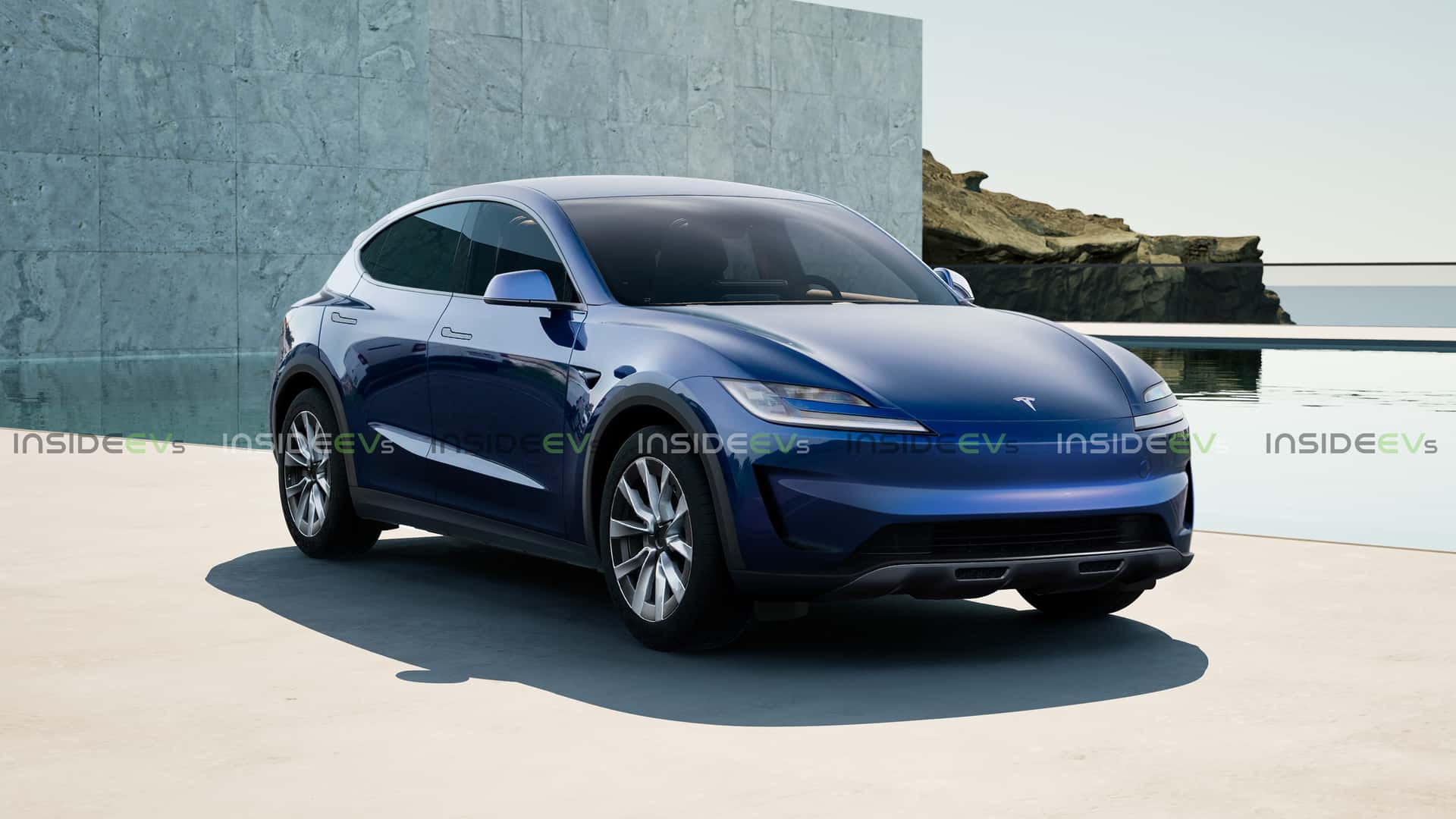
After years of speculation and anticipation, Tesla seems to be on the verge of making a major move in the electric vehicle market. Reports suggest that the company is working on developing an affordable compact SUV that will cater to a wider range of consumers. Unlike previous attempts to offer more budget-friendly options, this new model will not be a decontented version of existing models like the Model Y or Model 3. Instead, it will be a completely new vehicle designed from the ground up to be more accessible to the average consumer.
The implications of this new development could be huge for Tesla. The company has faced challenges in recent years, with global sales and profits on the decline due to increased competition and a lack of fresh offerings in its lineup. While Tesla has been focusing on other ventures such as humanoid robots and robotaxis, these investments have yet to yield significant returns. To sustain its growth and fund future endeavors, Tesla needs to continue selling passenger vehicles, making the introduction of an affordable compact SUV a strategic move.
According to reports, the compact SUV will be roughly 4.28 meters in length, making it comparable in size to the Chevy Bolt and significantly smaller than the existing Model Y and Model 3. This smaller size, combined with a smaller battery and a single electric motor, will likely result in a more affordable price point compared to Tesla’s current offerings. This move could potentially open up the electric vehicle market to a whole new segment of consumers who may have been priced out of Tesla’s existing models.
Production of the compact Tesla SUV is expected to begin at Gigafactory Shanghai, with plans to expand production to the U.S. and Europe in the future. It remains to be seen whether the vehicle will be designed primarily for use as a robotaxi or as a traditional consumer vehicle with manual driving capabilities. The ability to switch between autonomous and manual driving modes could be a key selling point, especially in markets where autonomous vehicle technology is still in its early stages of adoption.
Overall, the introduction of an affordable compact SUV from Tesla could mark a significant turning point for the company and the electric vehicle market as a whole. By offering a more accessible option that doesn’t compromise on quality or features, Tesla may be able to attract a whole new set of customers and solidify its position as a leader in the EV industry. Tesla’s dual-purpose platform is a strategic move that could potentially revolutionize the way the company operates its factories. By creating a platform that can serve both autonomous and non-autonomous vehicles, Tesla is ensuring that its production lines can continue running smoothly regardless of the pace at which autonomy rolls out in different regions.
This innovative approach addresses a major challenge that many automakers face when transitioning to autonomous vehicles. Traditional factories are designed to build vehicles that require human drivers, with steering wheels and pedals. As autonomous technology advances, these factories may become obsolete, leading to costly retooling and reconfiguration processes.
However, Tesla’s dual-purpose platform eliminates the need for such extensive changes. By designing a flexible manufacturing system that can accommodate both autonomous and non-autonomous vehicles, Tesla can keep its factories operational and efficient, regardless of the level of automation in any given region.
This approach also has significant implications for Tesla’s affordable EV plans. By leveraging a dual-purpose platform, Tesla can streamline its production processes and reduce costs, ultimately making it easier to produce and sell affordable electric vehicles to a broader market.
Of course, it’s important to approach these developments with caution, given Tesla’s track record of delays and cancellations. The company has faced challenges in bringing new products to market, such as the Roadster and the Semi truck, which have experienced significant delays in production.
Despite these challenges, the dual-purpose platform represents a promising step forward for Tesla’s manufacturing capabilities and its affordable EV plans. By creating a flexible and adaptable production system, Tesla is positioning itself for success in the rapidly evolving automotive industry. Only time will tell how this innovative approach will impact Tesla’s future, but for now, it’s a bold and forward-thinking strategy that could reshape the way the company operates its factories.