
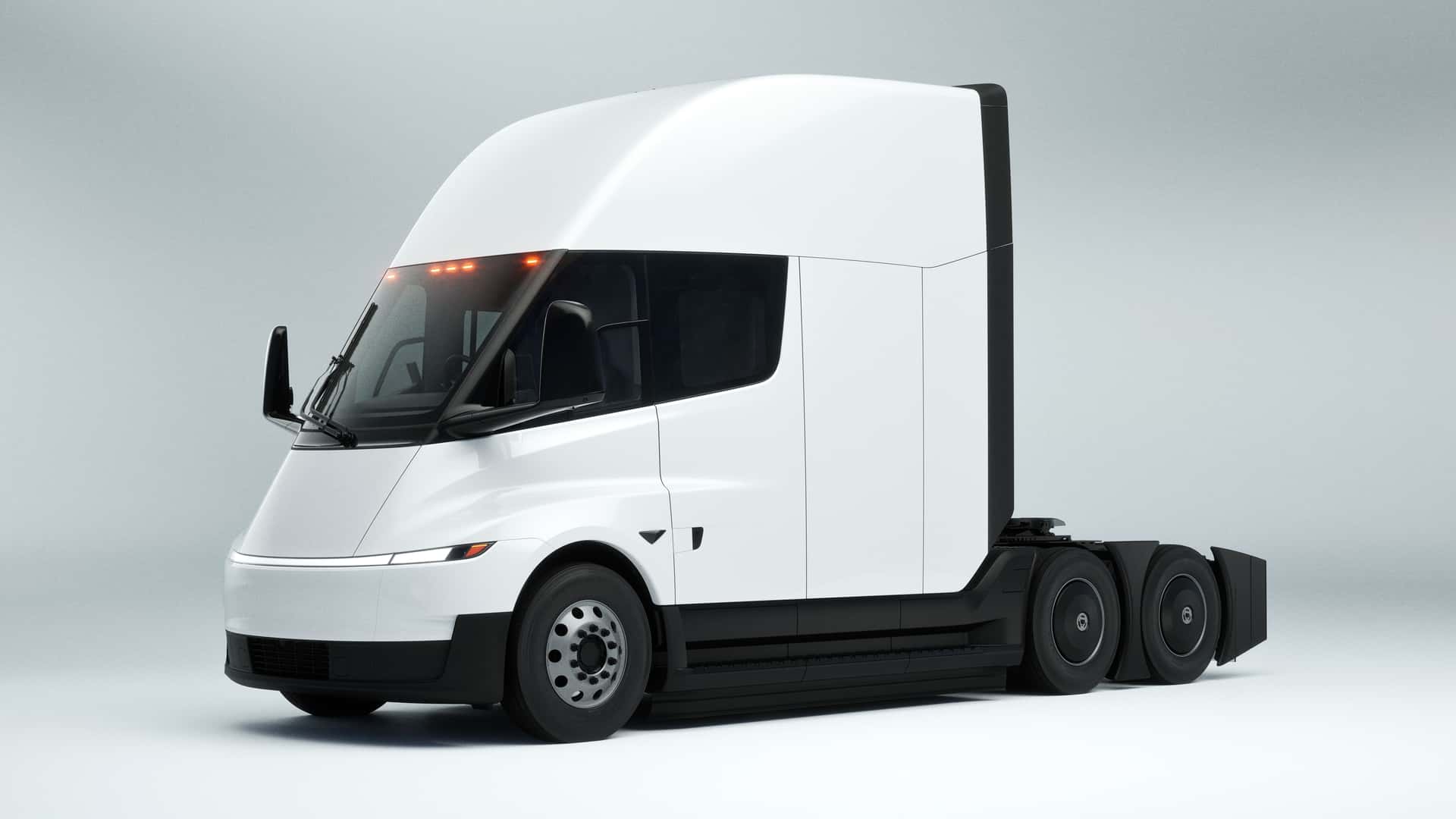
The official battery specs for the Tesla Semi have been revealed, and they are nothing short of massive. An official document published by the California Air Resources Board has unveiled the capacities for both the Standard Range and Long Range models of the electric truck.
The Tesla Semi has been known for its impressive range capabilities, with the Long Range model advertised as being able to drive up to 500 miles on a full charge while carrying a full load. However, until now, Tesla had not officially disclosed the battery capacities for the Semi, leaving many to rely on estimations. The document from CARB has now confirmed the details.
According to the document, the Tesla Semi Long Range model boasts an 822-kilowatt-hour usable battery capacity. With an energy consumption of 1.7 kWh/mile, the truck can theoretically achieve a maximum driving range of 483 miles. The Long Range model weighs 23,000 pounds and has a gross combination weight of 82,000 pounds. It is powered by three electric motors delivering a maximum output of 800 kW.
On the other hand, the Tesla Semi Standard Range model features a 548 kWh battery pack. With a similar energy consumption of 1.7 kWh/mile, the truck can achieve a maximum range of 322 miles. Despite having a lower power output of 525 kW, the Standard Range model shares the same gross combination weight of 82,000 pounds with its Long Range counterpart.
Both variants of the Tesla Semi utilize the same 4680 lithium-ion, nickel manganese oxide cells as the Cybertruck. They are capable of accepting a maximum charging power of 1.2 megawatts through an MCS 3.2 charge port. The battery packs are strategically installed in the floor of the truck to keep the center of gravity low. The Long Range model features a longer tractor chassis to accommodate the larger battery pack.
Tesla has recently commenced mass production of the Semi, with customer deliveries expected to begin later this year. The company has also introduced a 1.2 MW Megacharger specifically designed for fast-charging the Semi, allowing it to reach a 60% state of charge in just 30 minutes. With these massive battery capacities and impressive specs, the Tesla Semi is set to revolutionize the electric trucking industry. The world of technology is constantly evolving, with new innovations and advancements being made every day. One such advancement that has been making waves in recent years is artificial intelligence, or AI. AI is the simulation of human intelligence processes by machines, especially computer systems. It has the ability to learn, reason, and adapt based on data it receives, making it incredibly powerful and versatile.
One of the key areas where AI is being utilized is in the field of healthcare. AI has the potential to revolutionize healthcare by improving patient outcomes, reducing costs, and increasing efficiency. One way AI is being used in healthcare is through the development of diagnostic tools. AI can analyze medical images, such as X-rays and MRI scans, to detect abnormalities and assist doctors in making accurate diagnoses. This can help to catch diseases at an earlier stage, leading to better treatment outcomes for patients.
AI is also being used to personalize treatment plans for patients. By analyzing a patient’s medical history, genetics, and lifestyle factors, AI can recommend personalized treatment options that are tailored to the individual. This can lead to more effective treatment and better outcomes for patients.
Another area where AI is making a big impact in healthcare is in the field of drug discovery. AI can analyze vast amounts of data to identify potential drug candidates and predict their effectiveness. This can significantly speed up the drug discovery process, leading to the development of new treatments for diseases at a much faster rate.
In addition to improving patient care, AI is also being used to streamline administrative tasks in healthcare. AI-powered chatbots can assist patients with scheduling appointments, answering questions, and providing information about their healthcare needs. This can help to reduce the workload on healthcare staff and improve the overall patient experience.
Despite the many benefits of AI in healthcare, there are also challenges and concerns that need to be addressed. One of the main concerns is the ethical implications of using AI in healthcare, such as privacy and data security issues. There is also the concern that AI may replace human healthcare providers, leading to job loss and a decrease in the quality of care.
Overall, the potential of AI in healthcare is vast and exciting. By harnessing the power of AI, we can improve patient outcomes, reduce costs, and increase efficiency in healthcare. However, it is important to proceed with caution and address the ethical and societal implications of using AI in healthcare to ensure that it is used responsibly and ethically.