
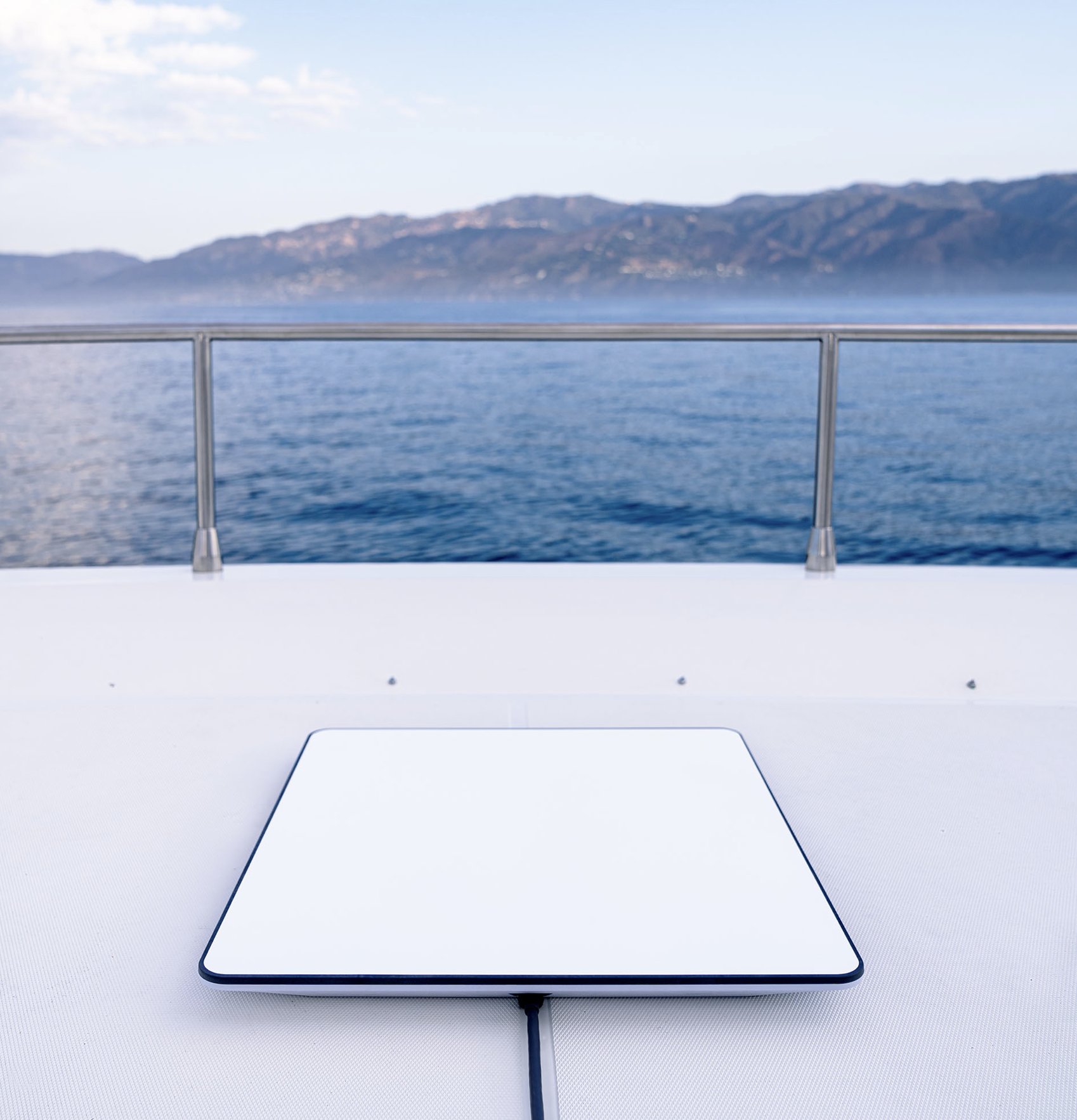
SpaceX’s Starlink service is making waves in the maritime industry, with Hyundai Glovis announcing the installation of the satellite internet service on its global shipping fleet. The move comes as part of a broader trend of integrating advanced connectivity solutions into the maritime sector to enhance operations and safety.
Hyundai Glovis has embarked on equipping 45 vessels, including car carriers and bulk carriers, with Starlink. The installations are already underway on ships bound for Korean ports this year, representing a significant upgrade in onboard communication for the Hyundai Motor Group logistics arm.
The appeal of Starlink in the shipping industry lies in its low Earth orbit (LEO) satellite network, which allows for faster data transmission compared to traditional geostationary satellite systems. While conventional satellites orbit at around 36,000 kilometers above Earth, Starlink’s constellation operates at a much lower altitude of approximately 550 kilometers. This difference translates into tangible performance benefits, with Hyundai Glovis reporting significantly faster download speeds with Starlink compared to traditional satellite internet.
Beyond improved internet connectivity, Hyundai Glovis intends to leverage Starlink to bolster its maritime safety response capabilities. The enhanced coverage and low-latency communication offered by Starlink will enable vessels to maintain seamless contact with onshore operations during emergencies, such as equipment malfunctions and adverse weather conditions. The company also aims to enhance its emergency response protocols for long-distance voyages.
Looking ahead, Hyundai Glovis views Starlink as a foundational technology for the next generation of smart shipping. High-bandwidth connectivity is essential for enabling autonomous navigation, AI-driven predictive maintenance, and other data-intensive systems crucial for the digital transformation of the maritime industry.
While Starlink’s recent partnerships with airlines have garnered attention, the Starlink Maritime division continues to expand rapidly and quietly. In addition to the collaboration with Hyundai Glovis, SpaceX has also partnered with the Japan Coast Guard, and over 150,000 vessels worldwide are now connected to the Starlink network. The proliferation of satellite internet at sea is evident, with Starlink providing connectivity to over 20 million cruise passengers in 2025 alone.
In conclusion, the integration of Starlink into the maritime industry signifies a shift towards advanced connectivity solutions that enhance operational efficiency and safety at sea. As technology continues to evolve, satellite internet services like Starlink are poised to become a standard feature in the maritime ecosystem, paving the way for a more connected and efficient maritime industry.