
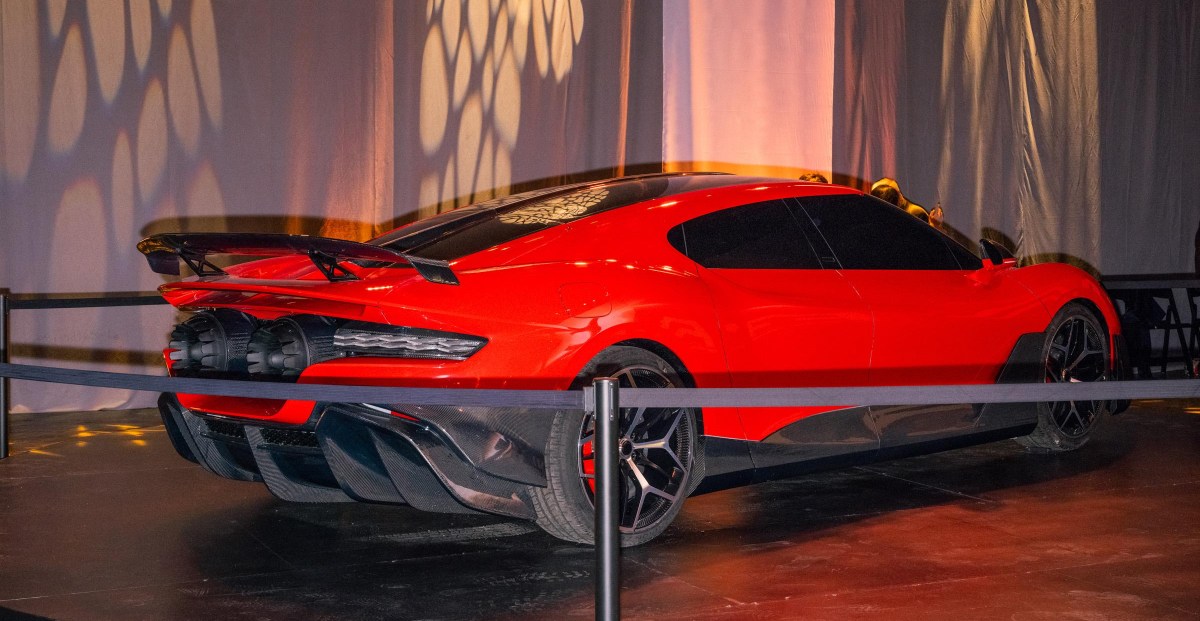
Dreame, a Chinese household appliance company, has made headlines with its latest creation – the Nebula NEXT 01 Jet Edition, a rocket-powered electric vehicle that boasts some truly mind-boggling performance specs. With claims of going from 0 to 60 mph in just 0.9 seconds, this car has certainly caught the attention of automotive enthusiasts worldwide.
However, skepticism abounds regarding the feasibility of such incredible acceleration. Modern tires simply do not have the grip to handle the immense force required for sub-1-second acceleration. Even in all-wheel drive configurations, the limiting factor is the traction that tires can provide, and achieving such speeds on normal pavement seems highly improbable.
Dreame’s solution to this traction problem is the use of custom-built dual solid rocket boosters, which purportedly deliver 100 kilo-Newtons of force. While this amount of force theoretically could propel the car to such speeds, the practicality of applying this force to the road surface remains in question. In real-world conditions, the laws of physics still apply, and achieving sub-1-second acceleration is a significant challenge.
The skepticism surrounding Dreame’s claims was further fueled by an engineer’s assessment of the Nebula NEXT 01 at a recent expo in San Francisco. Describing the rocket boosters as fabricated and questioning their functionality, the engineer’s conclusion cast doubt on the car’s performance capabilities.
While ambitious endeavors are commendable, Dreame faces an uphill battle in establishing itself as a serious player in the automotive industry. The Chinese EV market is fiercely competitive, making it challenging for niche brands to gain traction. Moreover, the focus on sub-1-second acceleration times as a benchmark for performance may be leading automakers down a rabbit hole of unrealistic expectations.
In a landscape where companies like Tesla are also touting rocket-powered advancements in their vehicles, the race to market with such technology is heating up. Whether Dreame can deliver on its promises of rocket-boosted power remains to be seen. As the automotive industry continues to push boundaries, the line between reality and fantasy becomes increasingly blurred.