
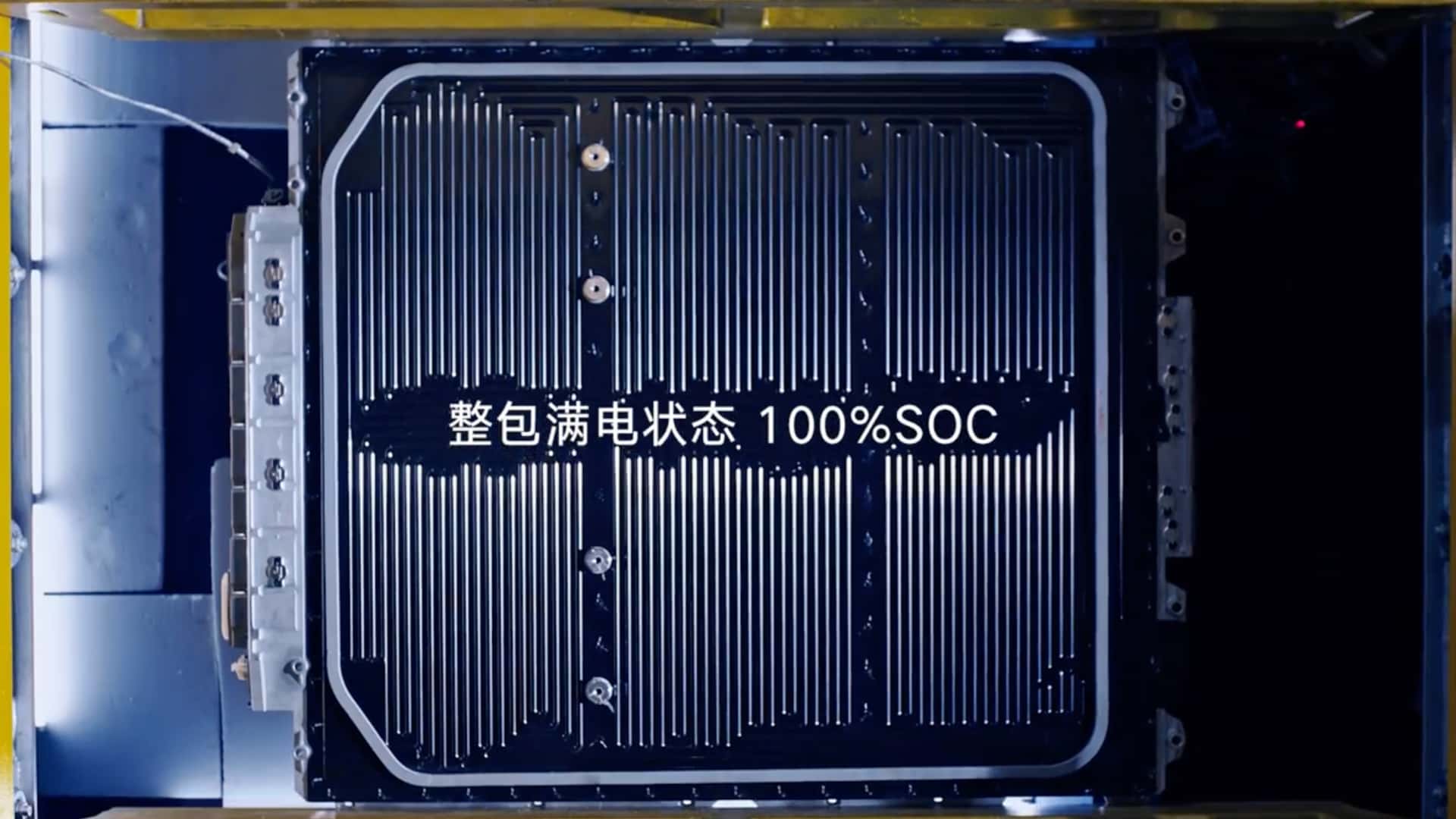
BYD, the world’s largest EV maker, has made headlines with the unveiling of its second-generation Blade lithium iron phosphate (LFP) batteries. These new batteries are 5% more energy dense and significantly more efficient than the first-generation packs. They are set to be integrated into roughly ten production models, marking a significant advancement in battery technology.
The company is not stopping there, as it is also introducing its new Flash charging stations to support these cutting-edge batteries. These charging stations are capable of dispensing more power than the megawatt chargers we saw last year, showcasing BYD’s commitment to pushing the boundaries of fast-charging technology.
Despite facing a steep sales decline of 41% in February, BYD is looking to bounce back by democratizing its latest technological advancements. The second-generation Blade battery boasts ultra-fast charging speeds, with the ability to charge from 10-70% in just five minutes and from 10-97% in under 10 minutes. Even more impressively, the battery demonstrated flawless charging from 20-97% at -22°F (-30°C) in just around 12 minutes, a mere three minutes slower than at normal temperatures.
This level of efficiency is especially noteworthy as traditional lithium-ion batteries struggle to charge quickly in extreme cold conditions. The transfer of electrons within the battery slows down in frigid weather, impacting charging efficiency. However, the second-generation Blade battery from BYD seems to have overcome this challenge, setting a new standard for fast-charging capabilities.
In a recent video posted on China’s social media platform Weibo, BYD showcased the capabilities of its new batteries and charging stations. A Denza Z9GT luxury electric wagon and a Yangwang U7 high-performance premium electric sedan were both charged from 9% to 97% in just 9 minutes and 51 seconds using the company’s 1,500-kilowatt Flash charging stations. The range prediction on the gauge cluster displayed an impressive 1,008 kilometers (626 miles) after the rapid charging session.
With these advancements in battery technology and fast-charging infrastructure, BYD is positioning itself as a key player in the electric vehicle market. By making these innovations accessible to a wider range of models, the company is paving the way for a more sustainable and efficient future in transportation. It is already being used in BYD’s flagship Han EV and will also be featured in the upcoming Tang EV. The Blade 2.0 battery boasts a higher energy density compared to its predecessor, providing a longer driving range on a single charge. This advancement is crucial in meeting the growing demand for electric vehicles with longer ranges.
Moreover, BYD’s confidence in the safety of its Blade 2.0 battery is a significant milestone for the Chinese electric vehicle industry. As the country aims to become a global leader in electric mobility, ensuring the safety and reliability of EV batteries is paramount. By exceeding the stringent safety standards set by the Chinese government, BYD is setting a high bar for other automakers to follow.
While the China Light-Duty Test Cycle may be more optimistic than the EPA test cycle in the U.S., it is essential to note that the performance and efficiency of electric vehicles can vary based on driving conditions and individual usage patterns. However, the introduction of advanced battery technologies like the Blade 2.0 battery is a step in the right direction towards making electric vehicles more practical and appealing to consumers.
As the global shift towards electrification continues to gain momentum, innovations in battery technology will play a crucial role in shaping the future of transportation. With companies like BYD leading the way in developing safer and more efficient batteries, the outlook for electric vehicles looks promising. The Blade 2.0 battery is not just a technological advancement; it is a testament to China’s commitment to sustainable transportation and a cleaner future for all.