
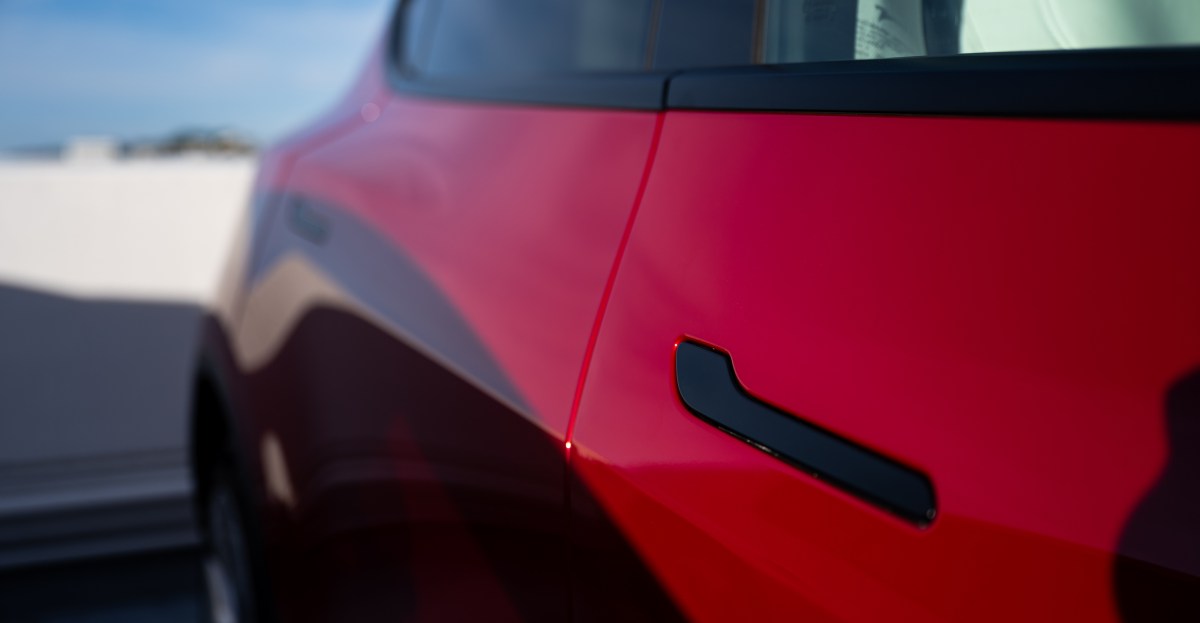
The tragic death of a 20-year-old man, Samuel Tremblett, who was unable to escape his burning Tesla Model Y after a crash has led to a lawsuit against Tesla. The mother of the victim is suing the company over its electronic door handles, which have been a subject of numerous complaints over the years and are currently under investigation by federal safety regulators.
The incident took place on October 29, 2025, in Easton, Massachusetts, where Tremblett crashed his Model Y into a tree and became trapped inside the vehicle. In a desperate call to 9-1-1, he pleaded for help, saying, “I can’t breathe. It’s on fire. Help. Please. I’m going to die.” This tragic event has shed light on the dangers of Tesla’s electronic door handles, which have been linked to multiple fatalities since 2016.
The lawsuit, filed in US District Court in Massachusetts, accuses Tesla of designing, manufacturing, and marketing dangerously defective vehicles. It references CEO Elon Musk’s commitment to safety but points out the flaws in the electronic door handles that have led to numerous deaths. The lawsuit also highlights China’s recent ban on electronic door handles, citing safety concerns and mandating the use of mechanical ones instead.
In response to these safety concerns, Tesla has announced plans to redesign the door handles to incorporate both electronic and manual release mechanisms into one button. This move comes after reports of more than 140 incidents in the US related to Tesla’s doors getting stuck since 2018. The National Highway Traffic Safety Administration is investigating complaints from Tesla owners, particularly focusing on instances where occupants, including children, have been locked inside the vehicle with no means of escape.
The tragic death of Samuel Tremblett has brought attention to the potential dangers of Tesla’s electronic door handles and the need for improved safety measures in the design of electric vehicles. As Tesla works towards redesigning its door handles to enhance safety, it is essential for vehicle manufacturers to prioritize the well-being of their customers and ensure that their products meet the highest safety standards.