
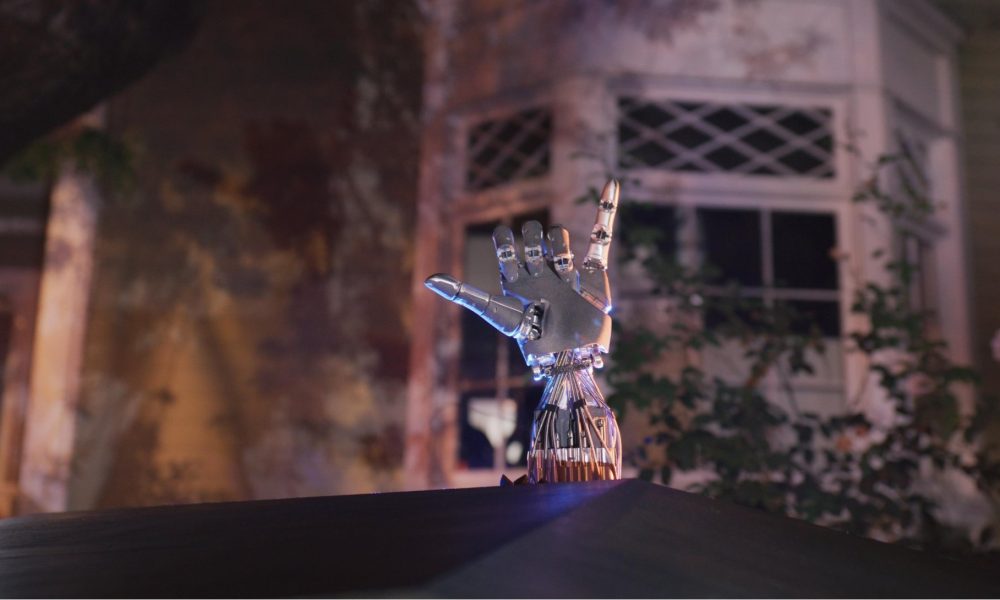
For months, Tesla’s Optimus robot has been judged by a single detail that captured the internet’s attention: its hands.
Videos of robotic fingers flexing, pinching, rotating, and mimicking human motion sparked a wave of reactions ranging from awe to skepticism. To many observers, the hands looked like proof that humanoid robots were on the brink of real-world usefulness.
Then Elon Musk quietly reset the narrative.
In a recent clarification, Musk revealed that the highly discussed hand demonstrations were not showcasing Tesla’s next-generation Optimus at all. They were demonstrating an earlier iteration. That single detail reframes nearly every assumption people have been making about Tesla’s progress and exposes how misunderstood robotics development really is.
Why Everyone Focused on the Hands
Humanoid robots live or die by manipulation. Walking gets attention, balance looks impressive, but hands are where usefulness begins. Without reliable dexterity, a robot can’t work in factories, homes, hospitals, or warehouses.
That’s why the Optimus hand demos mattered so much. Fine motor control is one of the hardest problems in robotics. The human hand has more than two dozen degrees of freedom, complex force feedback, and an almost instinctive ability to adapt to unfamiliar objects. Replicating even a fraction of that capability is brutally difficult.
So when Tesla showed hands that appeared smooth, coordinated, and precise, many assumed they were seeing a preview of Optimus’s future capabilities.
They weren’t.
The Misunderstanding Musk Addressed
Musk’s clarification was simple but important: the hand demonstrations people were reacting to were not part of a future Optimus release. They belonged to an earlier version that had already been surpassed internally.
That means two things can be true at the same time.
First, the demo was real engineering work, not a fake or staged trick.
Second, it was not the ceiling of Tesla’s humanoid robotics program.
In other words, what the public saw was not where Tesla believes Optimus is going. It was where it had already been.
Why Robotic Hands Are the Hardest Part
Legs can be engineered to repeat predictable motion. Vision systems can be trained with enough data. But hands must operate in chaotic, unpredictable environments.
Every object is different.
Every grip is different.
Every failure risks damage.
A robotic hand must sense pressure, adjust in milliseconds, and recover gracefully from mistakes. Humans do this subconsciously. Robots must do it through layers of software, sensors, and control systems that all have to work in perfect coordination.
This is why Musk has repeatedly described hands as one of the most difficult components to get right. The revelation that Tesla is already beyond what the public saw suggests the company is prioritizing the hardest problems first rather than polishing surface-level demonstrations.
Why This Matters More Than the Demo Itself
Public demos often create false expectations. People assume what they see is the final product or at least close to it. In reality, demos are snapshots frozen in time.
Musk’s comment highlights a deeper truth about Tesla’s approach. The company is building Optimus the same way it builds vehicles and autonomy systems: iteratively, internally, and often ahead of what it chooses to reveal.
That doesn’t mean Optimus is ready for widespread deployment. It means public perception is lagging internal progress, not the other way around.
Skepticism Isn’t Wrong But It Is Incomplete
Skeptics are right to question what is autonomous versus assisted, what is repeatable versus one-off, and what works reliably versus what works once.
Those questions are healthy.
What Musk’s clarification adds is context. Judging the entire program based on a single visible component misses the reality of long-term robotics development. Optimus is not being built to impress on stage. It is being built to operate in environments where failure has real cost.
That kind of system doesn’t advance linearly, and it doesn’t always look impressive in early public snapshots.
The Bigger Picture for Tesla and Robotics
If Tesla succeeds with Optimus, it won’t be because of a viral hand video. It will be because thousands of boring, difficult engineering problems were solved quietly and methodically.
Hands are one of those problems.
Musk’s revelation reframes the conversation. Instead of asking why Optimus isn’t perfect yet, the more interesting question becomes how far Tesla has progressed beyond what it has chosen to show.
And if the most impressive part of the demo was already outdated internally, the next phase of Optimus development may look very different from what critics and fans alike are expecting.