
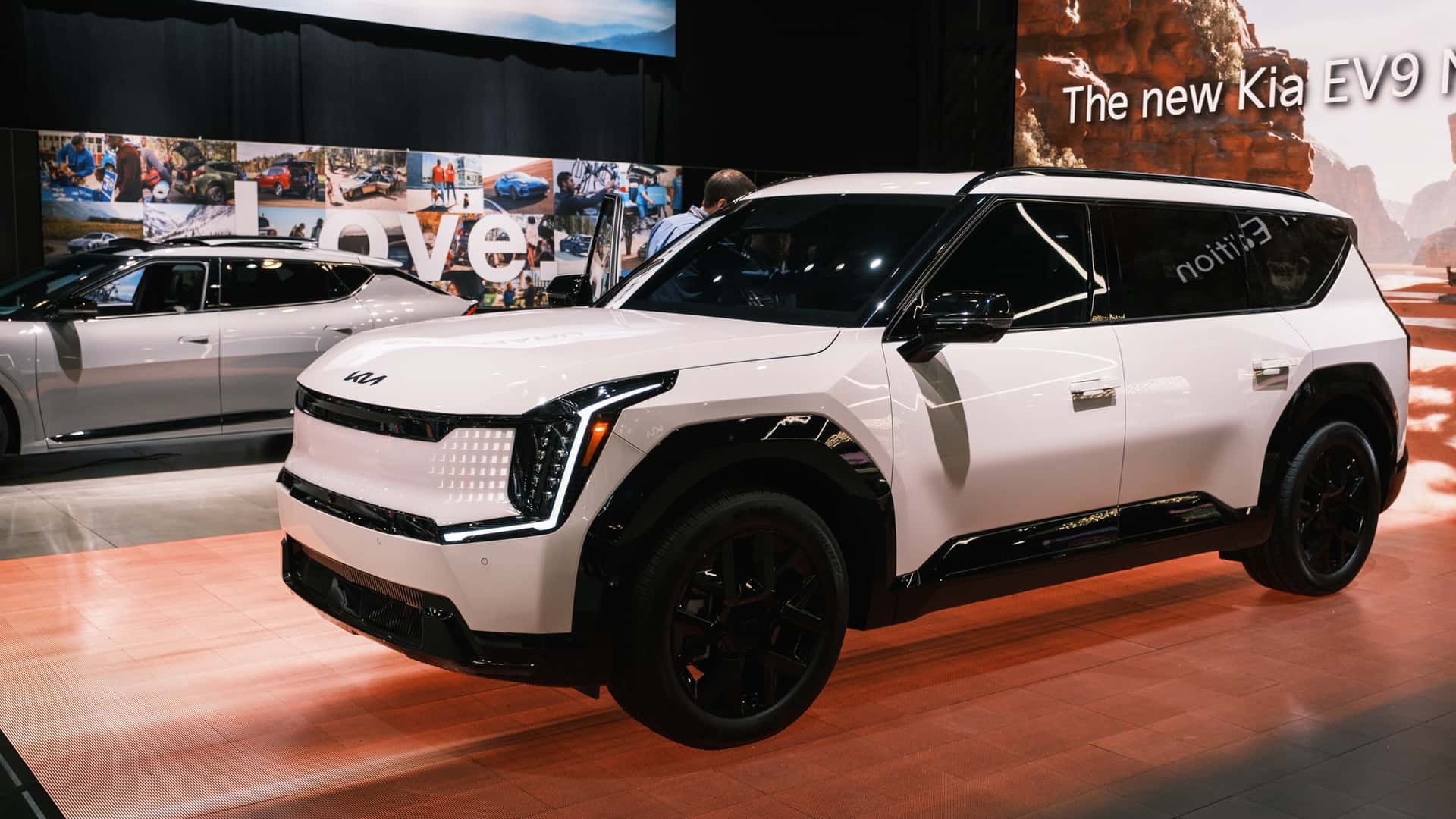
The problem is that we can’t just switch production between models on a whim. We have to plan ahead for months at a time. And right now, with the Telluride and Sorento still red-hot, we just can’t make enough EV6s to satisfy demand.”
It’s a fair point. The Telluride, especially, has been a runaway success for Kia, with demand outstripping supply for months. The company has invested heavily in expanding production, but that takes time. In the meantime, the EV6 and EV9 are left on the backburner.
But there’s also a question of brand perception. Hyundai has done a better job of positioning the Ioniq 5 as a premium product, with a more upscale interior and better standard features. The EV6, by comparison, is seen as more of a mainstream offering, despite its impressive performance and features.
Kia will need to address these issues if it wants to maintain its position as a leader in the EV space. The company has promised more electric models in the coming years, including a new electric crossover and a production version of the Imagine concept.
But for now, the EV6 and EV9 are struggling to find their footing in a crowded market. It’s a reminder that success in the EV space is far from guaranteed, even for legacy automakers with strong track records. Kia will need to adapt quickly if it wants to stay ahead of the curve.
The Kia EV9 and Hyundai Ioniq 9 are two popular family haulers in the market. Both models have seen success in their respective segments, with the Telluride and Sportage breaking sales records while the EVs have seen a slight decline. This shift in demand has led Kia to adapt its production mix at its plant to meet consumer needs.
Hyundai, on the other hand, is not constrained by the same production limitations as Kia. The company has focused on producing as many Ioniq 5s and Ioniq 9s as possible to justify its new EV-oriented “Metaplant” in Georgia. The flexibility of Hyundai’s production line allows them to meet the demand for these popular models.
The Ioniq 5 and Ioniq 9 are both manufactured at Hyundai’s Georgia plant, the Metaplant. Kia acknowledges that the capacity of this plant is a major contributing factor to the success of the Ioniq 5 in comparison to the EV6 on the sales charts.
In 2023, Hyundai sold 33,918 Ioniq 5s compared to the 18,879 EV6s sold by Kia over the same period. This significant difference in sales figures could be attributed to volume constraints at the plant where the EV6 was manufactured.
Consumer preference may also play a role in the success of the Ioniq 5 over the EV6. The Ioniq 5’s design, spacious interior, and ergonomic features make it a popular choice among consumers. Its SUV-like appearance and user-friendly controls contribute to its appeal in the market.
In conclusion, the success of the Hyundai Ioniq 5 and Ioniq 9 can be attributed to Hyundai’s production flexibility, consumer preference, and the overall design and features of the vehicles. Kia’s adaptation to changing demands and production constraints has also influenced the sales performance of its models. The Kia EV6 has introduced a unique and innovative solution that has sparked some controversy among consumers. The EV6 has taken a different approach compared to its counterpart, the Ioniq 5, which has been dominating the electric vehicle market and gaining popularity among consumers. The EV6’s unconventional solution has raised eyebrows and left many wondering about the future of this electric vehicle.
One of the key factors in driving product sales is visibility. The more a product is seen and used by consumers, the more likely it is to sell well. This snowball effect has certainly been true for the Ioniq 5, which has become a common sight on the roads, especially in areas where electric vehicles are popular. However, this success has created a challenge for Kia, as the EV6 has struggled to gain the same level of recognition and popularity as its competitor. The EV6 seems to have faded from the public conversation, with the Ioniq 5 stealing the spotlight and receiving more attention both online and in real-life scenarios.
The lack of promotion and marketing for the EV6 has contributed to its decline in popularity. Hyundai has actively advertised the Ioniq 5, showcasing its improvements and features to the public. In contrast, Kia has not put the same effort into promoting the EV6, causing it to fall behind in the competitive electric vehicle market.
Furthermore, the introduction of the Hyundai Ioniq 9, a three-row electric SUV, has added to Kia’s woes. While the EV9 initially received praise for being the first mainstream three-row electric SUV, the Ioniq 9 has quickly caught up in sales numbers. With Hyundai’s new offering gaining traction in the market, the EV9’s position is at risk of being overtaken by its sister brand.
As Kia focuses on its gas and hybrid SUVs, the EV6 and EV9 are losing visibility and presence on the roads. This shift in focus may be a strategic move given Kia’s current sales performance, but it raises questions about the company’s commitment to the electric vehicle market. Kia has been known as an EV innovator, with the EV6 being a symbol of their dedication to sustainable transportation. However, the diminishing presence of their electric vehicles raises concerns about their future direction in the EV market.
In conclusion, Kia’s EV6 has faced challenges in gaining traction in the competitive electric vehicle market. With the Ioniq 5 stealing the spotlight and the introduction of the Ioniq 9 posing a threat to the EV9, Kia’s electric vehicles are at risk of being overshadowed by their Hyundai counterparts. Kia’s focus on gas and hybrid SUVs may be a successful strategy in the short term, but it raises questions about their long-term commitment to electric vehicles. As Kia navigates these challenges, it remains to be seen how they will position themselves in the evolving electric vehicle market.