
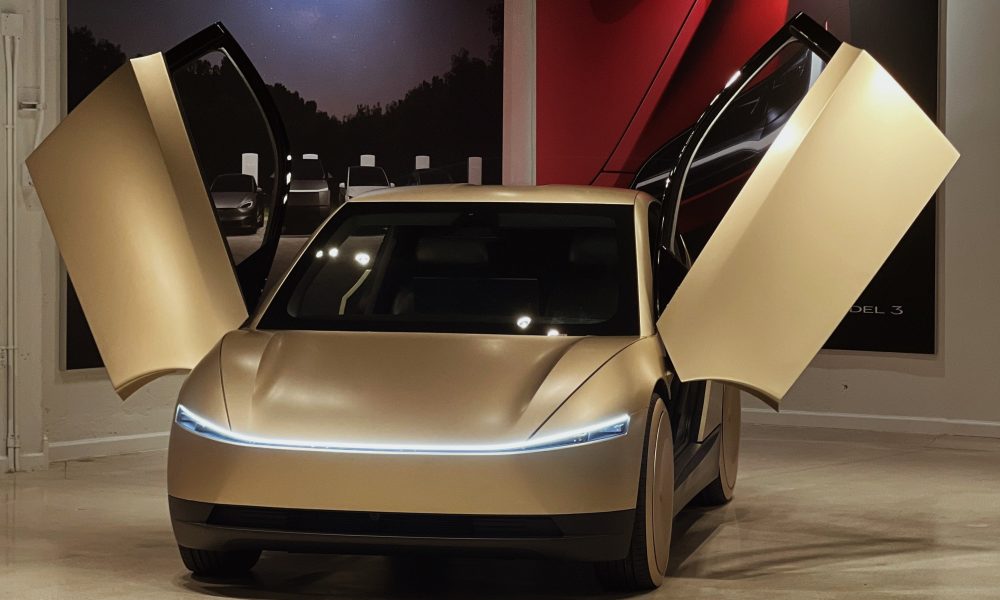
Elon Musk recently shared an exciting detail about the potential efficiency of the Tesla Cybercab, hinting that it could be one of the most cost-effective vehicles to operate on a per-mile basis. This revelation comes as no surprise, as Tesla has been known for its innovation and commitment to creating sustainable transportation solutions.
ARK Invest, a prominent investment firm, released a report that delved into the incremental cost per mile of various Robotaxis that will soon hit the market. The report highlighted the Cybercab, slated for release in 2030, as having an exceptionally low cost of operation. This aligns with Tesla’s initial unveiling of the vehicle at the “We, Robot” event in Los Angeles, where they showcased their vision for the future of autonomous transportation.
Musk has reiterated Tesla’s goal of achieving a groundbreaking $0.20 cents per mile operating cost with the Cybercab. This figure includes all expenses such as energy, maintenance, cleaning, depreciation, and insurance. The recent report from ARK Invest indicated that the Cybercab’s cost would be roughly half that of Waymo’s 6th Gen Robotaxi in 2030, coming in at $0.40 per mile compared to Cybercab’s $0.20 per mile at scale.
This significant decrease in operational costs would not only benefit Tesla but also be passed on to customers who choose to utilize the ride-sharing service for their transportation needs. Compared to the average U.S. cost of new vehicle ownership at $0.77 per mile, Uber and Lyft rideshares costing between $1 and $4 per mile, and Waymo’s costs ranging from $0.60 to $1 or more per mile, Tesla’s Cybercab stands out as a cost-effective option.
Tesla’s engineering prowess and focus on efficiency have been pivotal in achieving these cost savings. The company aims to achieve an impressive 5.5-6 miles per kWh with the Cybercab, showcasing their commitment to creating a sustainable and affordable transportation solution. Additionally, Tesla’s unboxed manufacturing process, lower initial cost, and reduced labor costs further contribute to the vehicle’s overall affordability.
While there may be initial challenges in scaling production, Musk remains optimistic about the future of the Cybercab. He acknowledged that early production may be slow due to the introduction of new parts and processes but expressed confidence in eventually achieving rapid production rates. With Tesla’s dedication to innovation and sustainability, the Cybercab is poised to revolutionize the transportation industry and set new standards for cost-effective, eco-friendly mobility.