
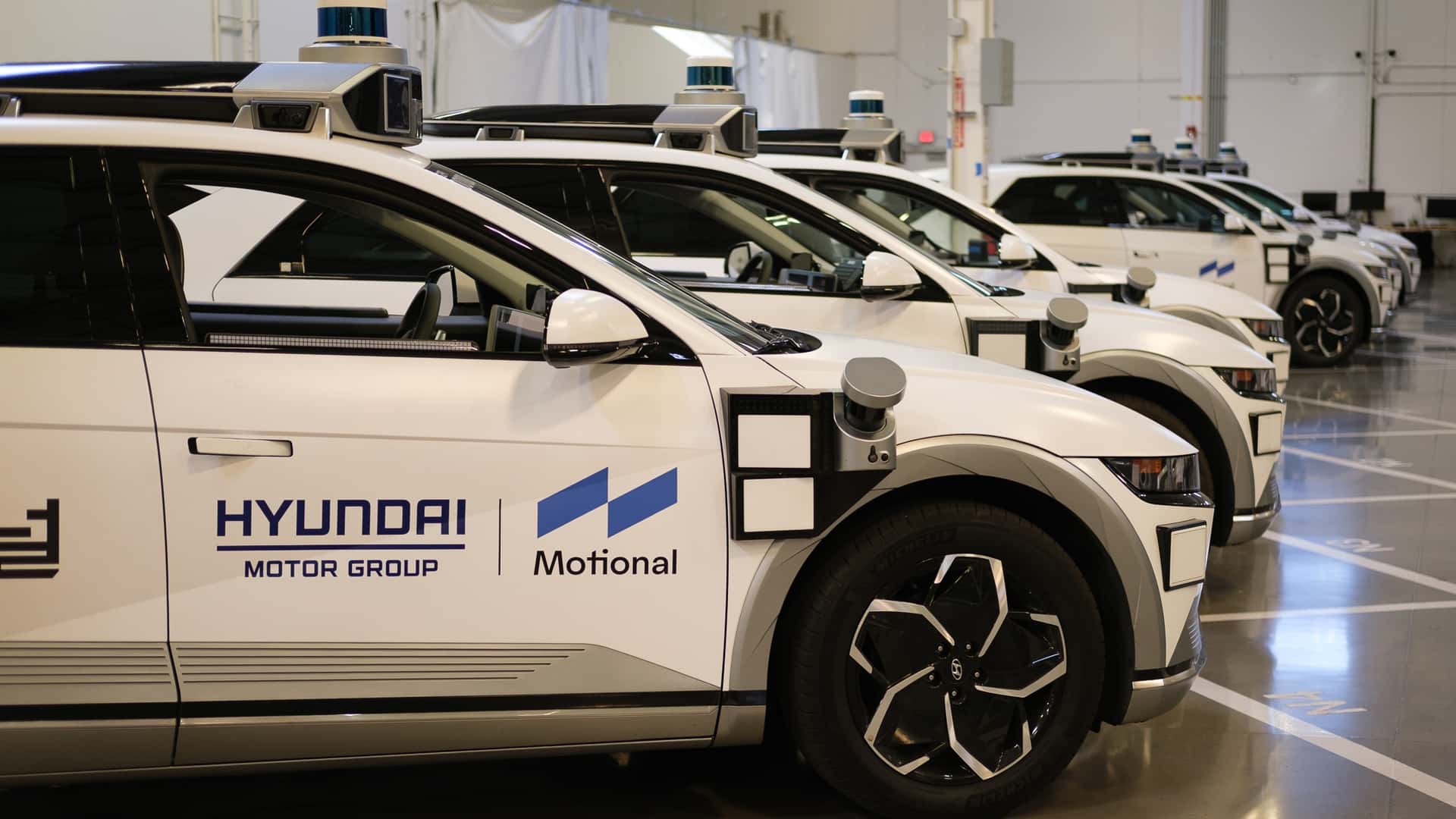
Hyundai’s Motional autonomous division has made a bold move by announcing its plans to launch a robotaxi service in Las Vegas by the end of this year. This initiative marks a significant step forward for the company, which has been testing autonomous vehicles since 2021 but is now looking to make a serious impact in the industry.
The Hyundai Ioniq 5, which has previously been used by startups for autonomous taxi services, will now be deployed by Motional for this new venture. Equipped with advanced sensors, software, AI systems, and hardware developed in collaboration with Hyundai, the Ioniq 5 will serve as the primary vehicle for the robotaxi service in Las Vegas.
CES 2026 was a pivotal moment for Motional, as it officially unveiled its plans to launch a commercial robotaxi service in partnership with a major ride-hailing network in Las Vegas. This move signifies Hyundai’s commitment to establishing a successful in-house autonomous taxi division, despite the challenges faced by other automakers in the past.
Laura Major, CEO of Motional, emphasized Hyundai’s long-term vision for robotics, autonomy, and AI, highlighting the company’s belief in the transformative impact of these technologies. Major stated that autonomy is expected to revolutionize the world, with robotaxis serving as the first step towards this future.
However, Hyundai’s robotaxi service will face stiff competition from industry giants like Waymo, who are also gearing up to use Ioniq 5 autonomous vehicles for their fleets. With technological advancements and market dominance at stake, Hyundai will need to demonstrate the viability and success of its robotaxi service in Las Vegas to establish itself as a major player in the autonomous vehicle industry.
As Waymo continues to expand its autonomous vehicle operations to more than two dozen cities by the end of 2026, another player in the autonomy wars, Motional, is working on ramping up its operations in just one city. With Hyundai’s backing, Motional is striving to make a mark in the competitive autonomous vehicle industry. The question remains, can Motional distinguish itself as the competition heats up, or will the true impact of its efforts be seen in the next car purchased from the Korean automaker?
Motional’s Slow-Burn Rise
While Motional may now be a division of Hyundai, its origins trace back to nuTonomy and Ottomatika, two early pioneers in the autonomous vehicle space founded at MIT and Carnegie Mellon in the early 2010s. The company was later acquired by Delphi, which then formed a $4 billion joint venture with Hyundai. Following this partnership, the company was rebranded as Motional, and over 100,000 public pilot rides were conducted through platforms like Uber and Lyft. The initial plan was to launch a commercial autonomous taxi service in 2022.
However, challenges arose along the way. Despite ongoing testing with human safety operators, financial losses accumulated, leading to a reduction in Aptiv’s stake in the venture, layoffs, and ultimately the suspension of commercial operations in 2024. Subsequently, in 2025, Laura Major was appointed as the company’s CEO, transitioning from her previous role as CTO.
Major reflected on the company’s journey, stating, “We realized that while we could achieve a safe driverless system, the technology at that time was not cost-effective enough to sustain a profitable business. The notion that a driverless system could be deployed globally with ease was not feasible.” This experience mirrors the challenges faced by many players in the autonomous vehicle industry during what has been referred to as the “autonomous winter,” a period marked by the decline of several prominent companies in the sector following significant investments and hype in the 2010s.
Major highlighted a key turning point for Motional, emphasizing the impact of advancements in artificial intelligence, particularly the emergence of neural networks. These developments enabled vehicles to adapt to new environments without the need for extensive retraining, offering a more scalable and efficient approach to deploying autonomous systems.
Looking ahead, Major expressed optimism about the future of Motional, emphasizing the importance of leveraging cutting-edge technologies to achieve a safe and reliable driverless system that can be deployed across various locations. As Motional continues to navigate the evolving landscape of autonomous vehicles, its partnership with Hyundai and commitment to innovation position the company to make a meaningful impact in the industry.
Motional, a leading autonomous vehicle (AV) company, is making significant strides in the development of fully autonomous vehicles. The company’s CEO recently stated that their technology can move much more fluidly, thanks to their integration of traditional rule-based software with end-to-end AI models. This unique approach allows Motional to navigate the tricky edge cases that often challenge fully autonomous vehicles.
One key aspect that sets Motional apart from other AV taxi companies is its close relationship with Hyundai. Motional’s in-house Ioniq 5 Robotaxi showcases this collaboration. The Ioniq 5 taxi is equipped with over 30 sensors, including cameras, radar, and a lidar array, providing a comprehensive view of its surroundings. Unlike some other autonomous vehicles, the Ioniq 5 retains a steering wheel and pedals, but adds a set of screens for rear-seat passengers to interact with the vehicle. Additionally, the doors of the Ioniq 5 Robotaxi close automatically, enhancing passenger safety and convenience.
What makes Motional’s approach unique is the development of its technology stack in collaboration with Hyundai. Unlike other companies that rely on third-party technology providers, Motional’s AVs are fully integrated with technology developed by Hyundai. This close partnership ensures that the AI-powered systems on Motional’s vehicles are tailor-made for optimal performance and seamless integration with the vehicle’s hardware.
In conclusion, Motional’s innovative approach to AV technology, combined with its strategic partnership with Hyundai, positions the company as a key player in the autonomous vehicle industry. By integrating traditional robotics software with cutting-edge AI models and leveraging Hyundai’s expertise, Motional is paving the way for safer and more efficient autonomous transportation solutions. According to a recent study published in the Journal of Psychology, researchers have found that practicing gratitude can have a significant impact on mental health and well-being. The study, which involved over 500 participants, found that those who engaged in daily gratitude exercises reported higher levels of positive emotions, greater satisfaction with life, and lower levels of depression and anxiety.
Gratitude exercises typically involve keeping a gratitude journal, where individuals write down things they are thankful for each day. This simple practice has been shown to shift focus away from negative thoughts and emotions, and instead, cultivate a more positive outlook on life.
Dr. Sarah Johnson, lead researcher on the study, explains that gratitude can act as a protective factor against mental health issues. “When we take the time to focus on the things we are grateful for, we are training our brains to look for the positive aspects of our lives. This can help buffer against stress and negative emotions, ultimately leading to better mental health outcomes.”
In addition to improving mental health, practicing gratitude has also been linked to physical health benefits. Studies have shown that individuals who regularly practice gratitude have lower blood pressure, better immune function, and even improved sleep quality.
So how can you incorporate gratitude into your daily routine? Dr. Johnson recommends starting small by setting aside a few minutes each day to reflect on things you are grateful for. This could be as simple as appreciating a beautiful sunrise, a kind gesture from a friend, or a delicious meal. Keeping a gratitude journal can also be a helpful tool in tracking your progress and staying committed to the practice.
In conclusion, the research is clear – gratitude is a powerful tool for improving mental health and overall well-being. By taking the time to cultivate a sense of gratitude in our lives, we can reap the numerous benefits that come with it. So why not give it a try? Start practicing gratitude today and see how it can positively impact your life. The advancement of technology has revolutionized every aspect of our lives, and the field of education is no exception. With the rise of e-learning platforms, online courses, and virtual classrooms, students now have access to a wealth of educational resources at their fingertips.
One of the key benefits of technology in education is the ability to personalize learning experiences. With the use of artificial intelligence and machine learning algorithms, educators can tailor lessons to meet the needs and preferences of individual students. This not only helps students learn at their own pace but also ensures that they are engaged and motivated throughout the learning process.
Furthermore, technology has made education more accessible than ever before. Online courses and virtual classrooms eliminate the barriers of time and distance, allowing students to learn from anywhere in the world. This is particularly beneficial for those who may not have access to traditional educational institutions, such as rural or remote communities.
In addition to making education more accessible, technology has also made it more interactive and engaging. Virtual reality and augmented reality technologies allow students to immerse themselves in virtual environments, making learning more hands-on and experiential. This not only enhances retention and understanding but also makes learning more enjoyable for students.
Another benefit of technology in education is the ability to track and assess student progress more effectively. With the use of learning management systems and data analytics tools, educators can monitor student performance in real-time and provide targeted interventions when necessary. This helps ensure that students are receiving the support they need to succeed academically.
Overall, the integration of technology in education has transformed the way students learn and teachers teach. By personalizing learning experiences, making education more accessible, enhancing interactivity, and improving assessment methods, technology has the potential to revolutionize the way we educate future generations. As we continue to embrace new technologies in the classroom, the possibilities for innovation and improvement are endless.