
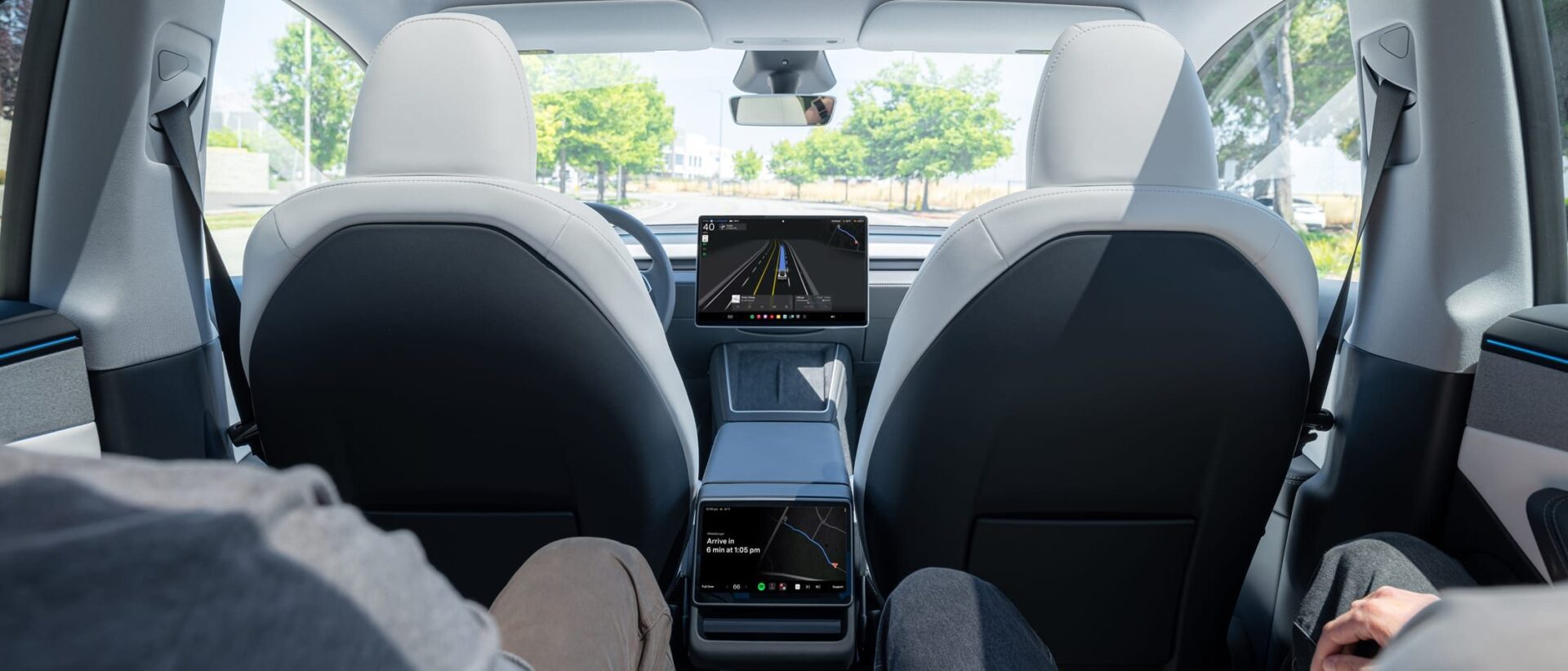
Elon Musk recently sparked a heated debate between Tesla and Waymo in the realm of autonomy, asserting that Waymo “never really had a chance” against Tesla’s approach to self-driving technology. This statement was made in response to Google DeepMind Chief Scientist Jeff Dean, who highlighted Waymo’s impressive data-driven safety record and its lead in fully driverless miles.
Dean pointed out that Waymo has accumulated an impressive 96 million rider-only autonomous miles and recently shared a detailed technical overview of its Foundation Model, closed-loop simulator, critic systems, and vast repository of real-world driverless data. The company has provided 14 million paid trips in 2025, with plans to reach 20 million lifetime rides by the end of the year and an average of one million rides per month. Waymo also aims to scale up to one million rides per week in 2026 and expand to 20 new cities, including international locations like London and Tokyo.
Waymo’s strategy has been methodical, focusing on meticulously mapping cities, conducting shadow-mode testing, and gradually transitioning from safety-driver rides to fully driverless service. On the other hand, Tesla has taken a different approach, leveraging the extensive data collected from its 6-million-vehicle fleet to power its Full Self-Driving (FSD) system. This data-driven approach enables Tesla to potentially launch Robotaxis wherever regulatory approval is granted, without the need for extensive city-specific mapping processes. Elon Musk recently announced that Tesla has made significant progress in achieving unsupervised FSD and plans to introduce driverless Robotaxis in Austin in the near future.
As both companies gear up for major expansions in 2026, the fundamental differences in their philosophies are becoming more apparent. Waymo emphasizes controlled scaling and provable safety, while Tesla believes that a massive volume of data and generalization will give them a competitive edge. With Waymo showcasing exceptional safety metrics and Tesla racing towards global unsupervised autonomy, the stage is set for a pivotal year in the evolution of autonomous driving technology.