
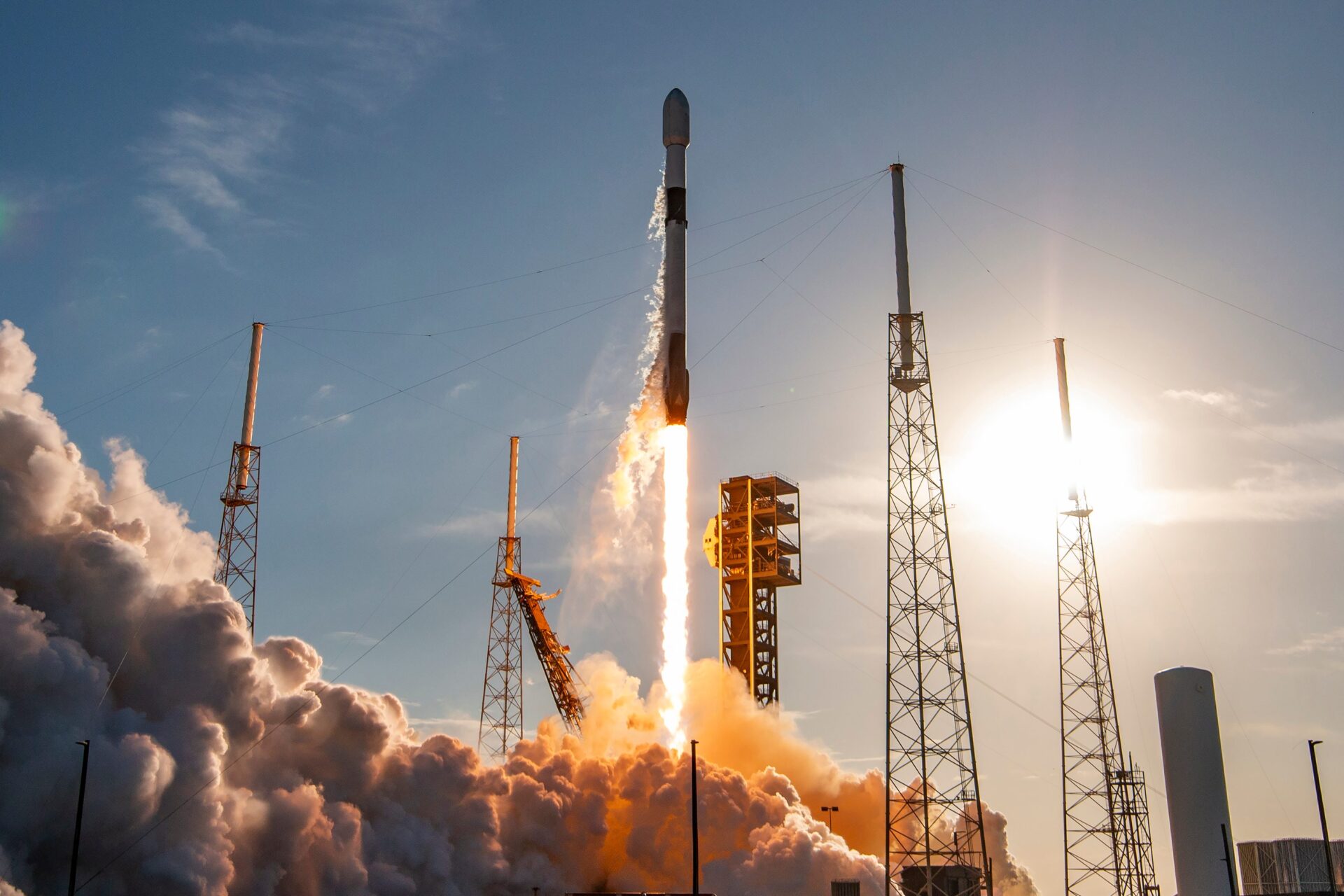
SpaceX Successfully Launches Northrop Grumman’s NG-23 Resupply Mission to ISS
SpaceX recently completed a successful launch of Northrop Grumman’s NG-23 resupply mission to the International Space Station (ISS). The mission involved a Falcon 9 rocket carrying Northrop Grumman’s latest Cygnus XL cargo spacecraft, which took off from Space Launch Complex 40 (SLC-40) at Cape Canaveral Space Force Station in Florida on September 14 at 3:11 p.m. PT/6:11 p.m. ET.
The Cygnus XL cargo spacecraft is Northrop Grumman’s largest yet, with a capacity of up to 11,000 pounds (4,990 kg) of supplies to orbit. This marks a significant upgrade from the previous version, which could only carry 8,500 pounds. The NG-23 mission includes various science payloads such as materials for producing semiconductor crystals in microgravity, tools for improving cryogenic fuel tanks, a UV system to combat microbial growth in water, and pharmaceutical crystal experiments aimed at developing new cancer treatments.
Named the S.S. William “Willie” McCool, in honor of the late NASA astronaut who tragically lost his life in the 2003 Space Shuttle Columbia accident, the Cygnus XL is scheduled to reach the ISS on September 17 at 3:35 a.m. PT/6:35 a.m. ET. Once there, it will be captured by Canadarm2 and berthed to the orbiting lab, where it will remain attached until March 2026 before burning up in Earth’s atmosphere.
This mission also marked the fourth flight of the Falcon 9 booster supporting NG-23, with the rocket’s first stage having previously launched Ax-4, Crew-11, and a Starlink mission. Following stage separation, the booster successfully landed on Landing Zone 2 at Cape Canaveral.
In addition to the NG-23 mission, SpaceX also launched 24 Starlink satellites from Vandenberg Space Force Base in California on the same day, marking its 300th Starlink mission milestone. With Starlink deployments continuing and the successful debut of Northrop Grumman’s Cygnus XL in orbit, SpaceX’s launch cadence remains strong.
Looking ahead, SpaceX has ambitious plans for 2026, including the launch of its Starship V3 vehicle on heavy flights and the first-ever “catch” attempt of the fully reusable spacecraft. SpaceX’s future in space exploration looks promising, with exciting developments on the horizon.