
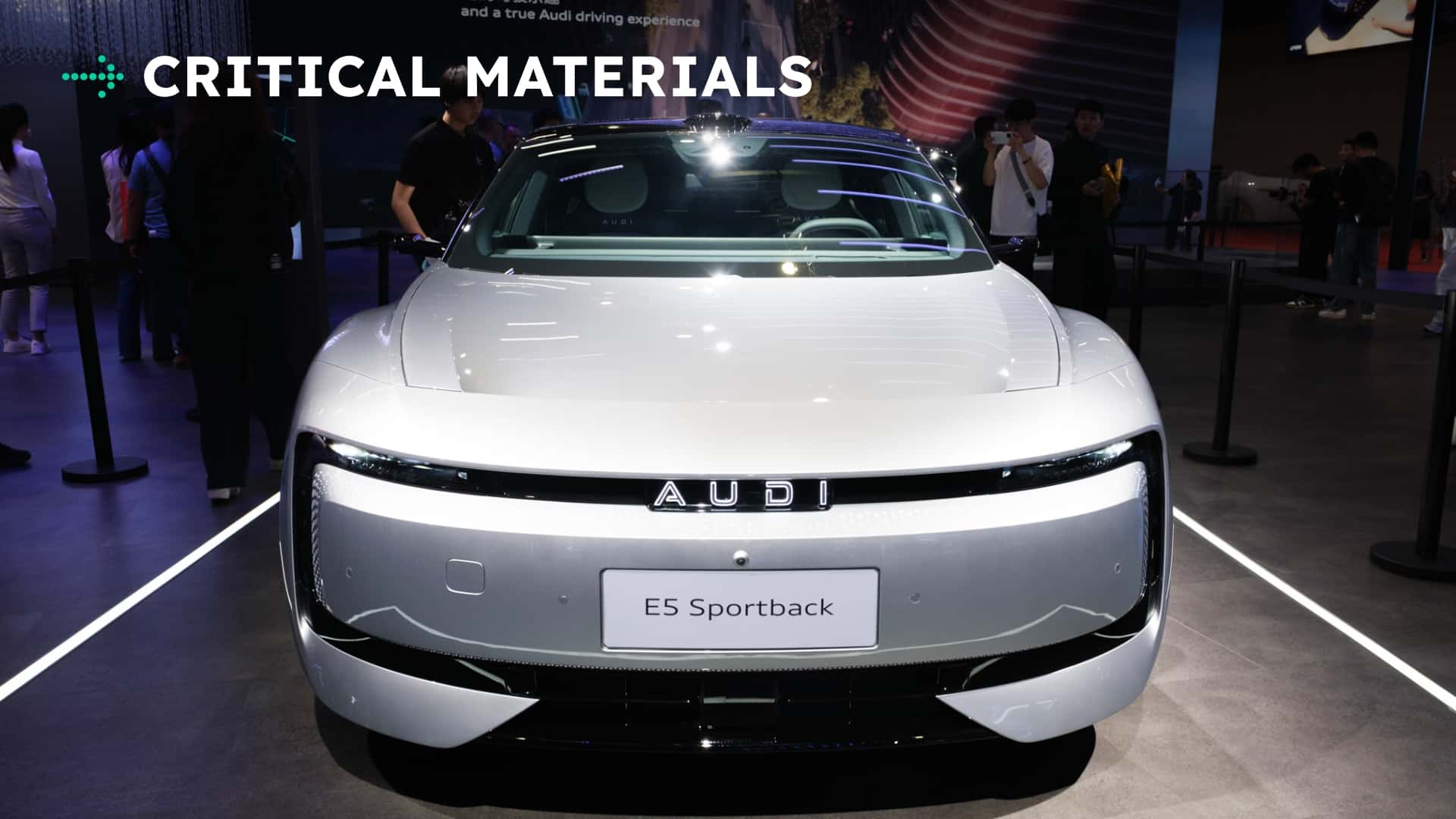
The concept of automation has been around for quite some time, but its true potential is often underestimated until seen in action. Audi, a renowned car manufacturer, recently had a firsthand experience with the power of automation when it set up operations in China. Initially, Audi thought it was going to China to showcase its German engineering prowess, but little did they know that China would completely revolutionize the way they built cars.
The partnership between Audi and China turned out to be a game-changer, as the efficiency, policies, and the integration of robots completely transformed their manufacturing process. Audi’s operation in Changchun quickly became the epitome of automation within their factories. This transformation was largely thanks to the Chinese government’s decade-long push towards promoting domestic manufacturing through efficient modernization, primarily with the help of robots.
The utilization of robots in Audi’s factories in China was a significant leap forward for the company. With the help of industrial robots from Chinese-owned companies, Audi was able to automate various processes, reducing costs and increasing efficiency. The sheer number of robots present in the production line was a testament to China’s commitment to automation. In fact, China now boasts more robots per 10,000 workers than Germany, showcasing the extent of their technological advancements.
The introduction of robots in manufacturing processes is not a new concept, with companies like Tesla also looking to incorporate humanoid robots in their production plants. However, Audi quickly realized that humanoid robots might not be as effective as initially thought. Audi’s head of manufacturing engineering at the Changchun plant, Tobias Liebeck, mentioned that they preferred robots with multiple arms for increased efficiency.
The robotic revolution that Audi experienced in China is a testament to the country’s industrialization efforts and its impact on local manufacturing. The cost-effectiveness and efficiency brought about by automation have enabled local automakers to produce electric vehicles at a rapid pace. This, coupled with Chinese state-backed incentives and subsidies, has further fueled the growth of the EV market in China.
Companies like BYD, a Chinese EV startup, have leveraged these incentives to expand their operations globally. The influx of new automakers in China’s market is a clear indication of the opportunities presented by automation and government support. Audi’s experience in China serves as a valuable lesson for companies worldwide, emphasizing the importance of embracing technology and automation for sustainable growth and efficiency in manufacturing processes. The global auto manufacturing industry is currently in a state of flux, with other countries closely monitoring the rapid growth in China and the impact it is having on the market. As China continues to dominate in the auto manufacturing sector, other countries are now resorting to political measures to slow down this growth.
Camille Boullenois, associate director at Rhodium Group, highlighted the market distortions in China that are hindering fair competition in the industry. She emphasized that higher trade barriers may be necessary to protect nascent industries in other countries, as the Chinese market continues to expand at an unprecedented rate.
One notable example of the impact of Chinese auto manufacturing is Audi’s partnership in China, where they localized production and tooling alongside domestic partners. This collaboration allowed Audi to accelerate its own automation roadmap and implement smart factory technologies in its production lines back in Germany. This exchange of knowledge and technology showcases how China’s influence in the industry is reshaping global manufacturing practices.
In a recent UBS survey, it was revealed that Tesla, once considered a leader in the EV market, has lost its position to local players in China. Both BYD and Xiaomi have overtaken Tesla as the preferred EV brands among Chinese consumers. The decline in consumer interest in Tesla’s brand is a clear indication of the changing dynamics in the Chinese market, where local companies are gaining prominence.
UBS analyst Joseph Spak noted that Tesla’s brand image has been tarnished by political involvement, particularly in Europe. The fierce competition in China’s EV industry has propelled local champions to outshine established brands like General Motors, Toyota, and Tesla. Chinese automakers are producing more appealing and cost-effective models, attracting consumers away from foreign brands.
Tesla’s struggle in China reflects a broader trend where Chinese-built vehicles are becoming more desirable to local consumers. This shift poses a significant challenge for foreign automakers trying to establish a foothold in the Chinese market. While Tesla still holds some appeal in its home market, it is facing increasing competition and a loss of market share in China.
The rise of local brands in China is a wake-up call for foreign automakers to innovate and adapt to the changing landscape of the global auto industry. As China continues to lead in EV production and technology, other countries will need to reassess their strategies to remain competitive in the evolving market. The lessons learned from China’s rapid growth serve as a cautionary tale for the auto manufacturing industry worldwide. As Tesla continues to dominate the electric vehicle market, other automakers are struggling to keep up. One such company is Nissan, which is currently facing a series of challenges that are putting significant pressure on its bottom line.
Despite having a new CEO at the helm, Nissan is still reeling from a failed merger with Honda. The new captain, Ivan Espinosa, is working tirelessly to keep the company afloat, resorting to drastic measures to reduce operating costs. In a recent email to staff, Nissan announced that it would be offering buyouts to workers and suspending all merit-based raises in an effort to cut costs.
This move comes as Nissan continues to face weak sales, particularly in North America. Last year, the company spent a staggering 99% of its Q2 profits trying to entice customers to purchase its vehicles. The ongoing struggles have prompted Nissan to implement a new round of cost-cutting measures, including closing seven production sites globally and cutting 11,000 more jobs.
The decision to offer buyouts to workers and freeze raises is just the latest in a series of strategic moves aimed at helping Nissan weather the storm. The company has acknowledged that layoffs are necessary to “right-size” the organization and pave the way for a comeback. However, with an aging product lineup, limited technical innovation, and a lack of EV and hybrid options, Nissan’s road to recovery is looking increasingly challenging.
While Nissan has expressed optimism about its future, with a new CEO who is described as a “real car guy,” the reality is that the company is facing an uphill battle. Recent project cancellations, layoffs, and an uncertain future have cast a shadow over the once-promising Japanese brand. As Tesla continues to soar, Nissan finds itself struggling to stay afloat in a market that is increasingly dominated by electric vehicles and cutting-edge technology. The United States has always been a pioneer in automotive innovation, and the EV market is no exception. Tesla, led by the visionary Elon Musk, has been at the forefront of the electric vehicle revolution for years. With their sleek designs, cutting-edge technology, and impressive performance, Tesla has set the bar high for other manufacturers to follow.
But recently, there has been a shift in the EV landscape. Other players have started to emerge as leaders in innovation, challenging Tesla’s dominance. One such company is Lucid Motors, with their luxurious and high-performance electric vehicles. The Lucid Air, with its stunning design and impressive range, has garnered attention and praise from critics and consumers alike.
So if this truly is a turnaround, maybe it’s time to show the world that someone actually has a steering wheel. Who is actually leading EV innovation now? Is it still Tesla, with its mass-market appeal and loyal fanbase? Or is it Lucid Motors, with its focus on luxury and performance? Only time will tell, but one thing is for sure: the electric vehicle market is more exciting and competitive than ever before.