
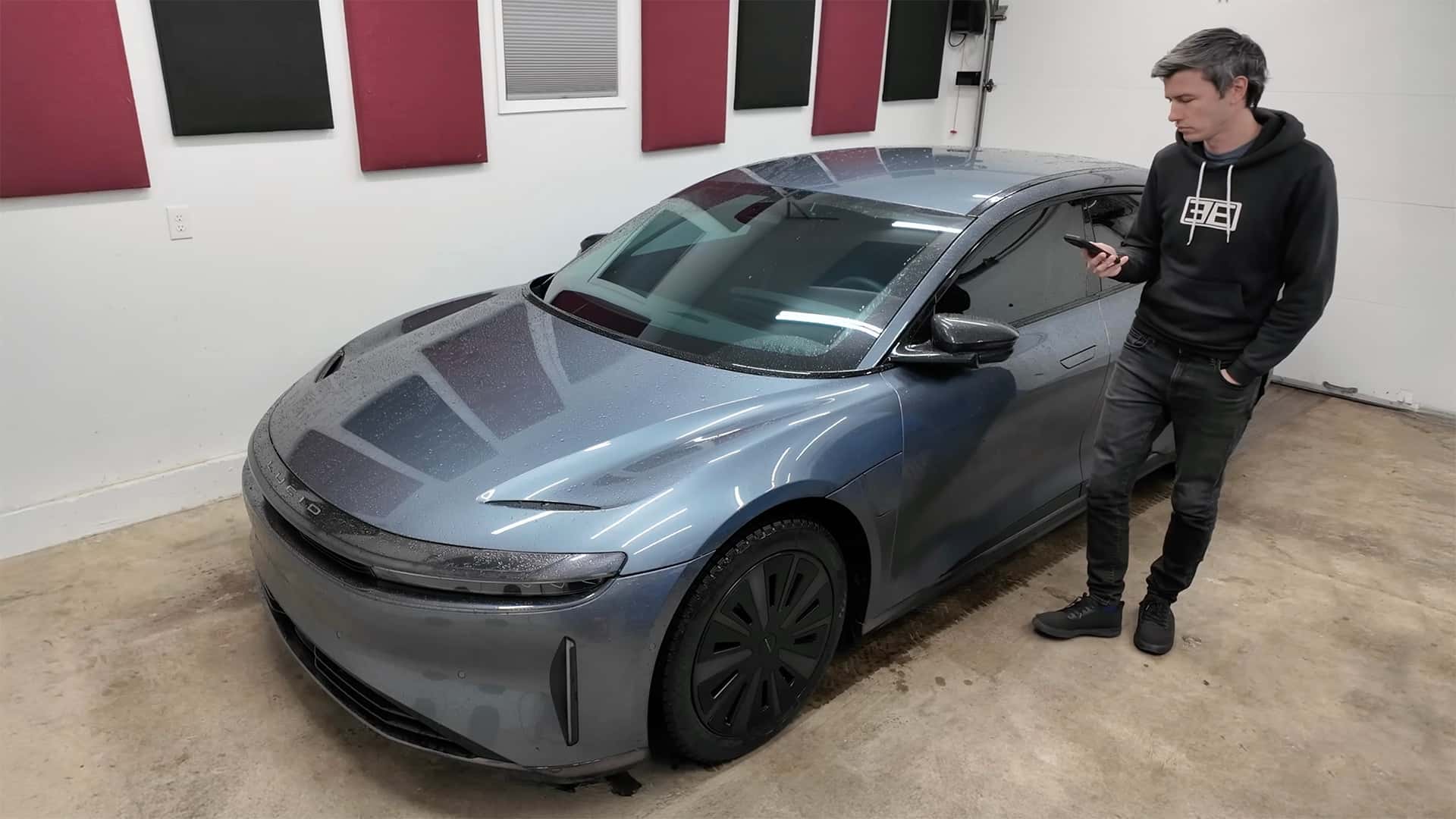
Lucid Motors has recently made headlines after buying back an Air Touring model from a customer due to recurring software glitches. The customer, Jason Fenske from the Engineering Explained YouTube channel, had the car for 11 months and experienced a multitude of issues with doors, cameras, audio, climate control, CarPlay, and drive settings.
Despite the Lucid Air being on sale for around five years, the software issues faced by Fenske highlight that even a technically advanced electric vehicle can be undermined by basic functionality problems. Fenske reported numerous issues during his ownership, including doors not opening, inconsistent climate control, disappearing camera guides, and malfunctioning Apple CarPlay.
One particularly frustrating incident occurred during a 400-mile weekend trip, where Fenske encountered eight different issues. Over the course of nearly a year of ownership, he faced over 20 software-related problems. While the car never left him stranded, the constant software issues led Fenske to accept Lucid’s offer to buy back the vehicle and receive a full refund for all payments made.
Lucid initially offered to replace the problematic Air with another identical model, but due to the unique configuration of Fenske’s vehicle and the risk of receiving another faulty car, he opted for a full refund instead. The small size of the company and the low-volume production of the vehicle made finding a suitable replacement challenging.
Instead of leasing another Air, Fenske was provided with a long-term loaner Gravity SUV by Lucid until he finds a suitable replacement. Despite his positive feelings towards the car’s performance and design, Fenske did not want to risk encountering the same software issues with a new vehicle.
Reports from other Lucid owners on forums and social media suggest that similar software glitches have been experienced by others. Issues with settings changing on their own, CarPlay failures, audio malfunctions, and door handle problems have been reported by multiple owners.
While Fenske’s experience may have been more severe than others, it underscores the importance of reliable software functionality in electric vehicles. Despite the excellent engineering of the Lucid Air, the ownership experience can be significantly impacted if basic functions do not work as expected. When it comes to getting a car bought back by the manufacturer, the process can be quite challenging for the average customer. This was highlighted by Fenske, who admitted that his profession made it easier for him to navigate the process of having his car bought back. However, he also expressed his gratitude towards Lucid for doing the right thing in his case.
Fenske’s acknowledgment sheds light on the fact that not everyone has the same resources and platform to facilitate the buyback of their vehicle. For individuals who do not have a significant platform or industry connections, navigating the buyback process can be daunting and complex.
Despite the challenges that others may face, Fenske’s positive experience with Lucid serves as a testament to the importance of companies doing the right thing for their customers. By prioritizing customer satisfaction and taking responsibility for any issues that may arise, companies like Lucid can build trust and loyalty among their customer base.
It is essential for all companies, regardless of size or industry, to prioritize customer satisfaction and uphold ethical standards in their business practices. By doing so, they not only ensure the happiness and loyalty of their customers but also contribute to a positive reputation in the market.
In conclusion, Fenske’s experience with Lucid highlights the importance of companies going above and beyond to do right by their customers. While the process of getting a car bought back may not be straightforward for everyone, companies that prioritize customer satisfaction and ethical business practices ultimately benefit both their customers and their brand reputation.