
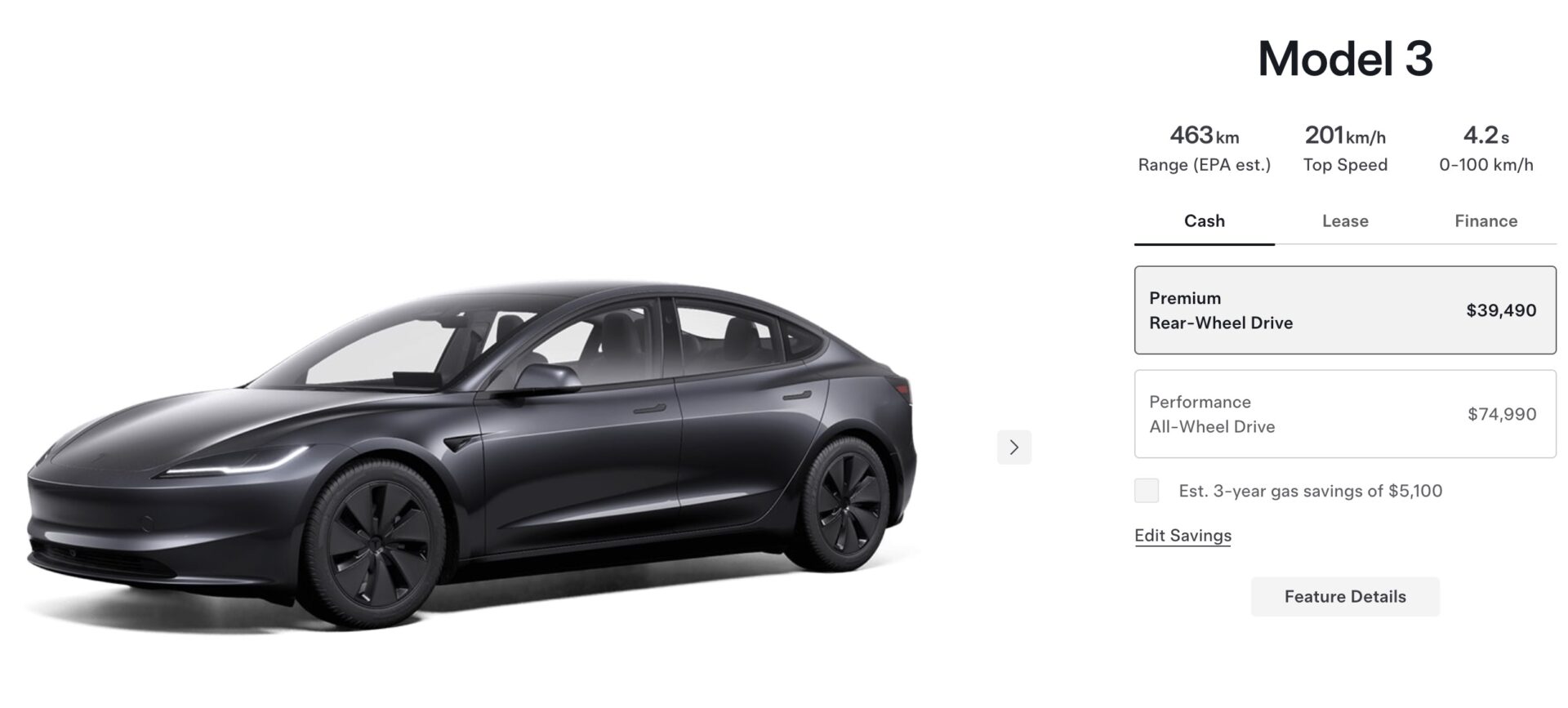
Tesla has recently made some changes to the specifications of the Model 3 Rear-Wheel Drive (RWD) in Canada, causing frustration among customers who had recently placed orders. These changes include adjustments to the charging speed, warranty coverage, and acceleration of the vehicle. It appears that these modifications are related to Tesla’s decision to shift the Canadian supply back from Gigafactory Shanghai in order to qualify for Canada’s new lower tariff on EVs from China.
One of the most significant changes involves the vehicle’s battery and charging capabilities. The maximum DC fast-charging speed has been reduced from 250 kW to 175 kW. Additionally, the battery and drive unit warranty has been shortened from 192,000 km to 160,000 km. The acceleration time from 0-100 km/h has also been revised to 5.2 seconds, up from the initial listing of 4.2 seconds.
These alterations can be attributed to the use of Lithium Iron Phosphate (LFP) battery chemistry in the Shanghai-built Premium RWD variant. This type of battery typically offers lower peak charging speeds and different thermal characteristics compared to the nickel-based batteries previously sourced from the U.S.
The changes have led to backlash on social media, particularly on Reddit’s r/teslacanada community. Customers have expressed disappointment and frustration over the revised specifications. Tesla support has acknowledged the changes and stated that the previous specifications were listed in error on the website.
In response to the backlash, Tesla is offering full refunds of deposits to customers who no longer wish to proceed with their orders under the new terms. Despite the adjustments, the new Model 3 Premium RWD is now the most affordable Tesla ever sold in Canada, starting at $39,490 CAD. However, it no longer qualifies for the $5,000 federal rebate because it is manufactured in a country without a free trade agreement with Canada.
Overall, these changes highlight the complexities of the global EV market and the challenges that manufacturers face in navigating trade agreements and supply chain logistics. Tesla’s decision to shift production to China has implications for both the company and its customers, underscoring the importance of transparency and communication in the automotive industry.